

VS1 12kV Vacuum Circuit Breaker Exporter: A Comprehensive Buyer's Checklist
2026-10-01
When sourcing VS1 12kV vacuum circuit breakers internationally, even seasoned procurement specialists can miss critical details that later turn into costly delays or compliance headaches. That’s where a structured buyer’s checklist becomes essential—and where MOLDVOLT has earned its reputation as an exporter you can rely on. In this guide, we’ll walk through the key points to verify before signing off, from technical specs to after-sales support, so your next purchase is both safe and smart.
Reading the VS1 Mechanism Before You Commit
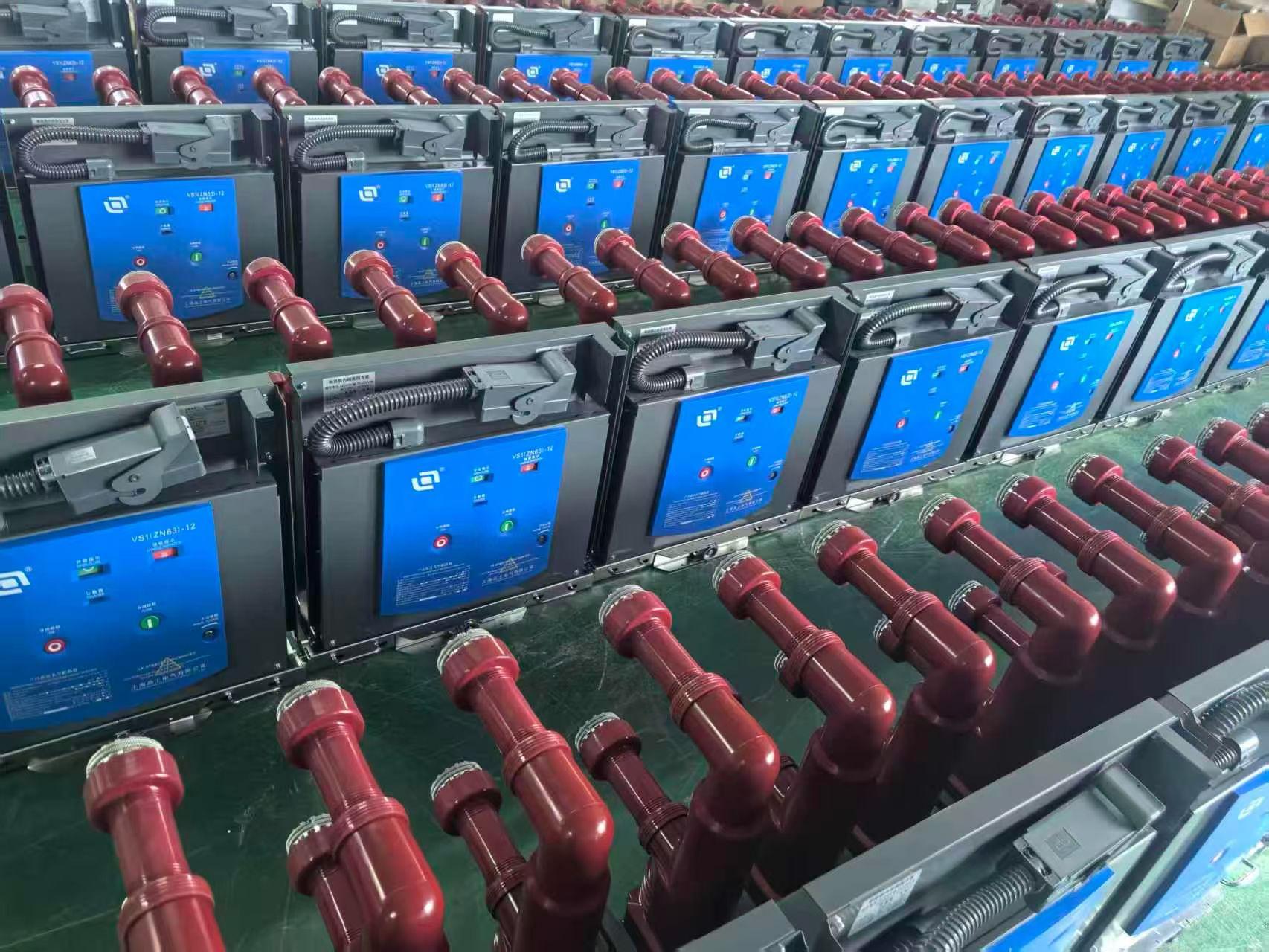
A closer look at the VS1 mechanism often reveals details that generic specification sheets leave out. The arrangement of the closing latch, trip-free linkage, and the energy storage spring isn't just engineering trivia—it determines how the breaker behaves during a fault, how much force reaches the contacts, and whether the interlock logic holds up under repeated operations. Spending time with the drawings and the actual unit before signing off can save you from discovering an operational mismatch after installation.
One point worth checking is the manual charge and close sequence. On some VS1 variants the manual charging handle has a narrow engagement window, and forcing it past the stop can damage the ratchet pawl. The anti-pump circuit may be present in the wiring, but the mechanical anti-rebound feature depends on precise adjustment of the trip latch reset spring. If that spring is set too stiff, closing time drifts; too soft, and you get bounce after a trip. These are the kinds of things you only notice when you study the mechanism rather than relying on datasheet values.
Also confirm how the mechanism handles a close command while the breaker is already in the service position and charged. The interlock between the racking handle port and the closing shaft is not always identical across manufacturers, even when the VS1 designation is the same. Ask for the mechanical interlock drawing and trace the path from the closed contact position to the key lock. A few extra minutes reading this before you commit can prevent a field retrofit that costs more than the breaker itself.
Contact Wear Margins and Erosion Curves Most Buyers Skip
Contact wear margins and erosion curves rarely make the shortlist when buyers compare contactors or relays, but they reveal how long the device will actually survive under load. The wear margin is the thickness of contact material that can be lost before the gap opens too wide or resistance climbs beyond acceptable limits. Erosion curves plot that material loss against the number of switching operations, typically showing separate lines for different currents and voltages.
Most spec sheets lead with amp ratings, coil voltage, and mechanical life. That mechanical life number, though, often assumes no current through the contacts. Once you apply a real load, arcing erodes the surface much faster. Buyers who skip the erosion curve end up replacing devices at half the advertised cycles, or worse, dealing with intermittent connections that are hard to diagnose. Checking the curve for your expected current level takes a minute but can prevent thousands of dollars in downtime.
A quick look at the erosion curve also tells you when to schedule preventive replacement. If the curve shows a steep rise after a certain operation count, set your maintenance window before that point. This is especially critical in high-cycling equipment like HVAC compressors, motor starters, or EV charging contactors, where unexpected failure shuts down an entire process.
What Type Test Reports Reveal When You Read Past the Cover Page
Most people flip to the final page, glance at the four-letter code or the bar chart, and assume they've gotten the point. But type test reports are rarely that simple. The real signal often hides in the subscale breakdowns, the percentile ranks, and the narrative interpretations that follow. Those sections show where your traits cluster in unexpected ways—like a high score in "structure" coupled with a low score in "routine adherence"—and that tension is where self-awareness starts.
Beyond the headline type, the report usually contains descriptions of behaviors under stress, communication preferences, and growth edges. These passages can read like a mirror you didn't ask for. You might see that your tendency to avoid conflict isn't just introversion; it's a learned pattern with consequences the report names explicitly. Reading past the cover page means sitting with those less flattering details, because they point to what actually changes when you try to develop.
The most useful insight is often buried in the comparison data—how your responses shift across different contexts, like work versus home. That variance doesn't invalidate the results; it reveals your adaptability and the environments that drain or energize you. Skipping those sections is like reading a map but ignoring the terrain lines. The cover page gives you a label; the full report gives you a route.
Crating, Climate Control, and Handling Risks That Delay Deliveries
Proper crating is not just about building a wooden box around an item. The materials, cushioning, and even the way braces are positioned determine whether a shipment survives the first transfer or becomes a damage claim. Gaps in the crate allow movement, and movement leads to abrasion, cracked housings, or worse. When crates are built too heavy, they can exceed forklift limits at cross-docks, causing unexpected re-handling that pushes delivery windows back by days.
Climate control adds another layer of complexity. Many products—electronics, pharmaceuticals, fine art, certain composites—require stable temperature and humidity bands during transit. Without active monitoring and properly sealed enclosures, condensation can form inside the crate when a truck moves from a cold dock into warm, humid air. Thermal blankets and desiccants help, but they must be specified for the route and season, not thrown in as an afterthought. A missed temperature excursion can force a quarantine inspection or a full rejection at the receiving dock.
Handling risks are where delays quietly accumulate. Every cross-dock, hub, or last-mile transfer introduces multiple touchpoints—forklifts, pallet jacks, conveyor rollers. Poorly marked crates with unclear center of gravity or missing tilt indicators invite rough treatment. Even well-packaged goods get set aside when handlers cannot quickly identify whether a load is fragile or which side must stay upright. That confusion often means a shipment misses its scheduled linehaul, and once a delivery slips, it can take days to recover because capacity on the next outbound leg is already booked.
Spare Parts, Fault Diagnosis, and Response After the Containers Arrive
Once the containers hit the warehouse floor, the real work begins. We start with a physical inspection of every critical spare part—filters, seals, sensors, drive belts—checking for transit damage, moisture intrusion, or misalignment. Any part that shows even minor deformation gets flagged immediately, because a compromised seal on a pump housing can lead to a cascade of failures once the system goes live. Our technicians cross-reference the packing list against the actual contents, logging discrepancies into a shared fault register instead of just noting them on paper.
Fault diagnosis doesn’t wait for a scheduled maintenance window. We run a series of bench tests on actuators, control modules, and power distribution units, simulating load conditions that replicate the end-user environment. When a fault code surfaces, we don’t just reset it—we trace the wiring harness, check ground continuity, and compare the part’s behavior against its expected signature from the OEM datasheet. This often reveals issues that wouldn’t show up in a static visual check, like a hairline crack in a solder joint that only fails under thermal cycling.
Our response protocol is tiered to avoid unnecessary downtime. For critical spares that test within spec, we tag and stage them for immediate installation. For parts that fail diagnostics, we initiate a containment hold and pull from the local stock buffer if available. If a fault points to a systemic issue—say, a batch of pressure transducers with the same calibration drift—we don’t just replace the units; we quarantine the lot and issue a corrective action request to the supplier. Every action is logged with a time stamp and the technician’s initials, so the audit trail stays clean without turning into bureaucratic bloat.
Factory Audit Points That a Datasheet Simply Cannot Show
A spec sheet will happily list tensile strength, tolerance bands, and surface finish, but it stays silent on the habits that make or break a production line. During a factory audit, you notice whether operators cross-check the first-off sample against a physical master, or simply glance at the monitor. You see if the CMM sits in a temperature-controlled room or beside a rolling bay door. These are not bullet points; they are behavioural evidence of how seriously a shop treats its own numbers.
Walk the floor and watch what happens when a nonconformance appears. Does the line stop, or does someone sign a deviation and keep shipping? Ask to see the reject cage, not just the final inspection log. Count how many parts are in it and compare that to the monthly output claim. A factory that hides its scrap is hiding its real process capability. The datasheet may promise zero defects, but the red bins tell you whether that promise is engineered or editorial.
Finally, look at tool storage, gauge calibration stickers, and the age of the maintenance whiteboard. If six months of preventive checks are initialled with the same pen and the same date, you have found the gap between the quality manual and the night shift. No datasheet can falsify a workbench, but plenty of factories can polish a PDF. Your job is to trust the trip hazard, not the brochure.
FAQ
Check rated voltage, rated current, breaking capacity, operating mechanism type, and whether the unit meets IEC 62271-100 or equivalent standards. Also confirm the pole spacing and overall dimensions match your switchgear.
Ask for factory audit reports, production line photos with date stamps, and a list of major components they make in-house. A genuine manufacturer will also share test certificates from type tests and routine tests without hesitation.
Expect a complete dossier: type test reports, routine test reports, operating manuals, wiring diagrams, packing lists, and a certificate of origin. If any of these are missing or offered only on request, treat it as a red flag.
Absolutely. Ask for a witnessed routine test at the factory before dispatch, either in person or via third-party inspection. That way you catch issues like incorrect wiring or mechanical misalignment before the goods leave the port.
Look for a written commitment covering spare parts availability for at least ten years, technical troubleshooting support, and a clear procedure for warranty claims. Avoid exporters who only offer email support and no local service partner.
Each unit should be packed in a sealed wooden crate with internal bracing, desiccant bags, and vacuum-sealed plastic wrapping. The crate must be marked with keep dry, fragile, and the exact center of gravity to prevent forklift accidents.
A balanced approach is 30% advance payment and 70% against a copy of shipping documents, or a letter of credit with clear inspection clauses. Avoid full upfront payments, especially with a new exporter, no matter how attractive the price looks.
Conclusion
A VS1 12kV vacuum circuit breaker may look identical across supplier brochures, but the real purchasing decision hinges on details that rarely make it into a polished PDF. Before locking in an order, ask the exporter for a walk-through of the operating mechanism: how the closing springs charge, what the trip latch geometry looks like after ten thousand cycles, and whether the anti-pumping logic is mechanical or relay-based. Then move to the interruption core. Contact wear margins and erosion curves are not optional extras; they tell you how much of the arc-contact travel remains after short-circuit duties. If the seller cannot produce dated wear curves and a clear go/no-go gauge specification, treat that silence as a risk. Type test reports deserve a careful read past the cover page—look for the actual laboratory name, the test sequence, and whether X-ray or partial discharge figures match the claimed insulation class.
Logistics and after-sales support separate serious exporters from box movers. Confirm crating materials, internal bracing, and whether the breaker ships upright with desiccant packs and shock indicators; a low freight quote means nothing if the mechanism arrives misaligned from humidity or rough handling. Once the containers land, the conversation should already include spare parts stock, remote fault diagnosis procedures, and guaranteed response times for opening or closing coil failures. Finally, a factory audit matters more than any datasheet. Walk the assembly line to see torque-controlled fastening, interlock testing, and clean-room conditions for vacuum interrupter storage. Ask to witness a random unit pass a mechanical endurance run and a high-potential test. If the exporter welcomes that level of scrutiny, you are likely buying from a partner rather than a trading company.
Contact Us
Contact Person: Hellen
Email: [email protected]
Tel/WhatsApp: 86-13634205622
Website: https://www.voltcabinet.com