

Top Photovoltaic Carport Suppliers in China Worth Partnering With
2026-09-30
China has quietly become the global powerhouse behind solar carport innovation, but with so many manufacturers claiming to be 'the best,' finding a partner you can actually trust isn't easy. The right supplier can cut your project costs by double digits and deliver a structure that lasts for decades — the wrong one leaves you with rust, leaks, and warranty headaches. In this guide, we cut through the noise to spotlight the carport builders who consistently deliver on engineering, certification, and after-sales service. And if you're looking for a partner that combines rigorous quality control with flexible OEM support, keep an eye on Topfencesolar — they've earned a spot on this list for reasons that go far beyond the usual sales pitch.
Why China Leads in Solar Carport Manufacturing
Walk through any industrial park in Guangdong or Jiangsu, and the sheer density of solar carport suppliers becomes obvious. This isn't accidental. For two decades, China has poured capital into photovoltaic manufacturing, driving down panel costs while improving durability and efficiency. Local governments bundled land, tax breaks, and grid access for clean-energy projects, which made it easier for factories to test and refine carport-specific designs. The result is a supply chain where steel fabricators, inverter makers, and module producers sit within a few hours' drive of each other—cutting lead times and allowing rapid iteration on structural frames, drainage systems, and ballast solutions.
What sets Chinese manufacturers apart isn't just scale; it's the willingness to adapt structures to regional forces. Coastal typhoon zones demand reinforced columns and lower panel angles. Northern snow loads require steeper pitches and heavier gauge steel. Instead of offering one universal kit, many factories maintain multiple regional variants that still share common mounting rails and electrical connectors. This modular approach keeps costs predictable while letting installers handle site-specific engineering without custom fabrication. Overseas buyers often discover that a mid-tier Chinese carport can match the wind ratings of premium European designs at half the price.
The labor force deserves credit too. Thousands of welders, electricians, and quality inspectors have spent years working on solar ground mounts and rooftop systems before shifting to carports. That experience shows in small details: cable management that avoids pinch points when vehicles enter, pre-drilled drainage holes that prevent water pooling on panel edges, and powder-coated finishes that resist fading under intense UV. Rather than treating carports as an afterthought, many Chinese firms now position them as flagship products, complete with integrated EV charging conduits and smart lighting mounts. This combination of mature supply chains, regional adaptation, and deep installation know-how explains why the country has become the default source for solar carport projects worldwide.
Look Beyond the Spec Sheet When Vetting Suppliers
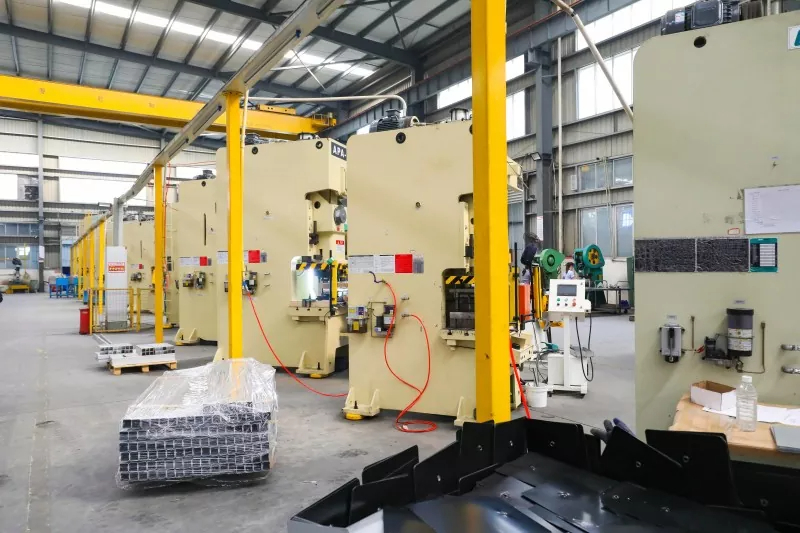
A spec sheet tells you what a supplier claims they can do, but it rarely reveals how they behave when things go sideways. Real vetting means paying attention to response times, the tone of their follow-up questions, and whether they proactively flag potential issues before you do. A factory that looks flawless on paper might take three days to answer a simple clarification, leaving your production schedule hanging by a thread.
Go further than the documents: ask for a live walkthrough of their quality control process, or better yet, talk to a current client who has run a similar order. Watch how their team handles a change request or a last-minute tweak. The suppliers worth keeping are the ones who treat your deadlines and tolerances as seriously as you do, even when no one is watching the paperwork.
The Hidden Costs of Cheap Carport Structures
Many buyers are drawn to budget carport frames by the low sticker price, but that initial saving often masks a cascade of future expenses. Thin-gauge steel, minimal anchoring, and flimsy fabric roofs degrade quickly under real weather loads. Within a season or two, rust creeps into joints, panels warp, and the whole structure begins to lean. Repair costs, replacement parts, and even full tear-downs can easily double or triple the original purchase amount. Add in the risk of collapse damaging vehicles or property, and the true bill becomes far steeper than a mid-range unit would have been.
There is also the hidden labor of constant maintenance. Cheap carports often lack proper drainage, so water pools and accelerates corrosion. Snow loads exceed rated limits, forcing owners to clear roofs manually. Zoning and wind certification issues can lead to fines or insurance denials. Over a five-year span, the time, materials, and frustration spent propping up a bargain shelter often outweigh the cost difference between economy and quality construction. The smart calculation is not what you pay at checkout, but what you will keep paying every month after.
How Top Suppliers Handle Wind and Snow Loads
Top suppliers don't treat wind and snow loads as an afterthought—they engineer for the worst-case scenario from day one. Their design teams use regional climate data, not generic charts, to calculate the precise pressure a structure will face. They then push prototypes through accelerated aging chambers that replicate years of freeze-thaw cycles and sustained gale-force winds. It's not about meeting the minimum code; it's about knowing where the code falls short.
Material choice is where the real difference shows. Instead of standard gauge steel, leading suppliers offer thicker wall profiles in high-stress zones and use reinforced connection plates. You'll see them add internal bracing that doesn't just tack on weight, but redirects load paths. For snow, they focus on roof slope and surface finish—things like ribbed panels that shed accumulation or coatings that reduce ice adhesion. These aren't flashy upgrades; they're quietly doing the work every winter.
Then there's the documentation. A top supplier hands you a structural calculation package that names the exact wind speed and snow load figures the building is rated for, not a vague "heavy duty" label. They'll also flag any modifications that void that rating. That honesty, paired with their field testing, is why contractors keep coming back—because when the next storm hits, the only thing they hear is wind outside, not a client calling about a collapse.
Site Visits That Reveal More Than Brochures Ever Will
Brochures are polished by design—they show you the best angle, the brightest light, and the widest lens. But stand in the actual space and you'll notice the things no photo can capture: the way sound carries from the hallway, the texture of the flooring underfoot, the subtle slope of the ceiling that makes a room feel either cozy or cramped. These unscripted details are what truly shape daily life in a building.
A site visit also lets you observe how people actually use the space—where they pause to chat, which doors stay open, which corners collect clutter. Those patterns are more honest than any floor plan. You might discover that the "abundant natural light" promised in the marketing materials is blocked by a neighboring structure after 2 p.m., or that the "modern open layout" funnels every conversation straight into the quiet room.
Ultimately, walking through a site gives you something brochures never will: a felt sense of the place. It's the difference between reading about a neighborhood and hearing the hum of its evening traffic, between imagining a layout and feeling how your own routines would flow through it. That kind of knowledge can't be printed—it has to be experienced.
Locking In Warranty and Spare Parts Before You Commit
Before signing any purchase order, push beyond the headline warranty period. Ask which components are actually covered, whether labour is included, and how quickly a technician will arrive on site. Plenty of suppliers promise five-year coverage in conversation, but the written contract only lists the motor and frame. Get the full list of covered parts, along with response-time commitments for breakdowns, added as an appendix. This turns a vague reassurance into something you can enforce later.
Spare parts are where overlooked costs tend to hide. Confirm whether the manufacturer guarantees availability of critical spares for a set number of years, even after the model is discontinued. Many companies quietly stop producing older boards or seals once a newer version launches, leaving you with a machine that is down for weeks over a fifteen-dollar component. Negotiate a small consignment stock of wear-prone parts as part of the deal, or a written priority supply agreement. That way emergency repairs do not depend on someone else's production schedule.
Pay close attention to what voids the warranty before you commit to an operating routine. Some agreements require the use of original consumables, restrict the ambient temperature range, or mandate installation by factory-certified engineers. Breaking one of these clauses can invalidate coverage exactly when you need it most. If a sales representative makes promises about spare parts or service levels, ask for those promises to be included in the contract itself. Verbal assurances rarely survive a dispute, but a clearly worded annex will.
FAQ
The ones worth your time usually move beyond low pricing and focus on structural engineering, customization depth, and on-site support. Look for firms that can provide wind and snow load calculations specific to your region, offer multiple foundation options (ballasted, ground screw, or poured concrete), and have a history of handling grid-connection paperwork. A supplier that asks about local permitting requirements before quoting is often a better bet than one that sends a generic catalog.
Don't rely on brochure photos. Ask for detailed structural drawings, material thickness specifications, and independent load test reports. Check whether the steel is hot-dip galvanized to at least 80 microns and whether the design accounts for uplift as well as downward pressure. If possible, request a third-party inspection report from TÜV, SGS, or a local engineering firm. Also verify that the manufacturer has built carports in climates similar to yours, not just mild coastal zones.
Several names appear frequently in large-scale carport bids: Sungrow, Arctech Solar, Antai Technology, Clenergy, Mibet Energy, and Akcome Metal. Sungrow brings strong inverter and system integration expertise, Arctech is known for its tracking and BIPV carport solutions, while Antai and Mibet focus heavily on aluminum and steel carport structures with quick assembly. Clenergy has a solid international distribution network, which helps with local code compliance.
The quoted price per watt rarely covers everything. You will likely face freight charges, import duties, local structural review fees, foundation construction, electrical installation, and grid-connection costs. Some suppliers exclude anchor bolts or cable management from the initial quote. Ask for a line-item breakdown and confirm which parts are included. Also budget for potential import delays and have a local engineer review the drawings before the shipment leaves the factory.
Most reputable suppliers offer modular designs that can be adjusted for span width, column height, tilt angle, and even color to match a corporate identity. For irregular lots, they can create multiple smaller arrays connected by walkways or integrate curved beams. If you need integrated EV charging stations, LED lighting, or rainwater drainage channels, these can usually be added. Always ask for 3D renderings and a sample panel assembly before committing.
Standard warranties typically include 10-15 years on the steel structure, 5-10 years on waterproofing, and 25 years on solar panel power output. However, after-sales support varies greatly. Some companies have regional service centers in Europe, Southeast Asia, or the Middle East; others rely on local partners. Before signing, ask for the exact process for filing a warranty claim, typical response time, and whether replacement parts are stocked outside China. A supplier with a local warehouse for critical components is a strong plus.
Request a list of at least three completed projects of similar scale and ask to speak with the owners or operators. If possible, visit a site in person or schedule a video walkthrough. Check the actual energy yield data, not just the design estimate. Also consider a factory audit or third-party pre-shipment inspection. A supplier that hesitates to share references or hides project locations should raise a red flag.
Yes, several leading suppliers now offer carports with built-in EV charging ports, battery storage, and smart energy management. Sungrow, for example, can pair its carport structures with its own inverters and EV chargers, reducing compatibility issues. Some suppliers partner with Chinese charging network operators like TELD or Star Charge to bundle hardware. If you want a single point of responsibility, look for a supplier that can deliver the carport, PV system, and charging infrastructure under one contract.
Conclusion
中国光伏车棚制造商之所以值得合作,很大程度在于他们把结构安全和实地验证看得比花哨的参数更重。只看规格表很难判断一座车棚能否扛住北方大雪或沿海台风,而顶级供应商会主动提供风荷载和雪荷载的计算依据,甚至邀请客户到工厂查看钢材预处理和焊接工艺。这些细节在宣传册上永远看不到,却能决定车棚是用十五年还是五年就出问题。
低价结构的隐性成本往往在安装后才暴露,比如镀锌层太薄导致立柱锈蚀,或者支架预留孔位不准迫使现场切割。真正可靠的供应商会针对项目地气候调整设计,而不是套用通用图纸。实地考察时留意他们是否展示过往项目的结构测试数据,以及是否愿意在合同中明确质保范围和备件供应周期。这些承诺比任何销售话术都更能说明问题。
Contact Us
Contact Person: Nancy
Email: [email protected]
Tel/WhatsApp: +86-13365923720
Website: https://www.topfencesolar.com/