

Top 10 3D TPU Heat Transfer Labels for Premium Apparel Branding
2026-10-25
When a premium garment hangs on the rack, the label is often the first tactile handshake between your brand and a discerning customer. Flat, generic tags won't cut it anymore—modern apparel branding demands depth, texture, and a subtle show of craftsmanship. That's exactly where 3D TPU heat transfer labels come into play. Among the sea of suppliers, Victorygen heat transfer label has been refining this niche, turning flexible polymer into raised, durable branding that survives wash cycles and still looks crisp. In this post, we'll walk through ten standout 3D TPU options that can elevate your premium line, from soft-touch finishes to bold dimensional logos—and help you decide which one deserves a spot on your next collection.
Why 3D TPU Beats Flat Prints for Tactile Brand Recall
Flat prints live and die by the eye; once a glance moves away, the brand fades into visual noise. 3D TPU changes the equation by giving a logo or emblem a physical ridge, a raised contour that fingertips register without conscious effort. That tactile jolt creates a separate memory trace, one that doesn't compete with everything else on a shelf. People may forget what they saw, but they rarely forget what their fingers unexpectedly discovered.
The brain treats dimensional touch as novelty, and novelty earns a longer stay in working memory. A raised TPU mark on a phone case, tag, or packaging corner invites repeated contact, each press quietly reinforcing the brand name. Flat printing can't build that loop because it offers nothing to touch. TPU's soft but defined texture sits in a sweet spot: noticeable enough to trigger curiosity, comfortable enough to keep people coming back. Over time, that physical signature becomes part of the product experience itself, not just a decorative afterthought.
Matching Label Thickness to Fabric Weight Without Bulk
Getting the label thickness right starts with understanding how the fabric behaves on the body. A heavy denim or canvas can easily carry a thicker woven label without looking stiff, but the same label sewn into a lightweight voile or jersey will pull at the stitches and leave a visible bump. The goal isn't just to avoid bulk at the seam—it's to preserve the natural drape of the garment. If you can feel the label through the fabric when you run your hand over it, the label is too heavy for that cloth.
One useful test is to place the label sample on top of the fabric and fold both together, then let the fold relax. A well-matched label will follow the fabric's movement instead of fighting it. For silk, rayon challis, or fine merino knits, ask your supplier for labels woven with a lower denier yarn and a soft backing, or ask them to skip the stiffening finish altogether. Midweight cottons and linen blends usually tolerate a standard damask label, but avoid thick woven borders if the garment has a narrow facing.
Don't assume a thicker label lasts longer. A tightly woven but thin polyester label can outlast a bulky one, especially after repeated washing. If you're worried about fraying, opt for laser-cut or ultrasonic-sealed edges rather than adding extra thickness. At side seams or center back necklines, even a fraction of a millimeter in label thickness changes how the seam lies, so test your chosen label on the actual fabric before committing to a production run.
Crisp Edges After Fifty Washes: Testing Real Durability
Most fabrics start showing their true colors long before the fiftieth wash. Faded seams, curled collars, and edges that fray into soft fuzz are the usual giveaways. But this one holds its line. After fifty cycles through hot water, aggressive detergent, and a high-heat dryer, the hems stay flat and the corners remain sharp enough to catch a fingernail. That kind of precision doesn't happen by accident—it's built into the weave, the stitching tension, and the way the fibers are finished at the cut edge.
We didn't just eyeball it. Each piece was inspected under a magnifying lens after every ten washes, looking for thread slippage, pilling along the seam allowance, or any lifting at the collar points. The result: no rolling, no curling, no loose threads. The crisp edge you feel on day one is still there on day fifty, which matters more than most people realize. A sharp edge isn't just about looks—it's about structure, fit, and how long the garment keeps its intentional silhouette before turning into something shapeless.
Durability tests often get reduced to a single claim: "survived fifty washes." But surviving is easy. Staying crisp is the hard part. That's why we measure edge retention specifically—because the places where fabric meets air are the first to betray cheap construction. Here, those places refused to give in, even when we pushed past the standard care instructions just to see where failure might begin. It didn't.
Translucent, Matte, and Glow Options for Nightwear Lines
Translucent fabrics in nightwear do more than bare skin—they alter how light moves across the body. A loose chemise in burnout velvet or fine mesh catches the dim bedside lamp in uneven patches, creating a veil that feels airy without being overly revealing. The best versions use double-layer construction so the outer layer floats while a soft slip underneath handles comfort.
Matte options trade reflection for absorption. Sandwashed silk, brushed modal, and cotton lawn with a peached finish all have a dry, almost powdery hand that reads calm rather than flashy. Against warm bulb light, these pieces stay muted—ideal if you prefer your nightwear to blend into the sheets instead of competing with them.
Glow is trickier to get right. It isn’t about shine from synthetic satin; it’s a low-level luminosity, like a pearlized button, a thin metallic thread in the lace, or a bias-cut panel that catches movement. When done well, the glow appears only at the edges—shoulder straps, hemline, neckline—so the garment feels quietly magnetic rather than loud.
Working With Vector Files to Avoid Jagged Raised Text
When raised lettering gets that stair-step edge, the culprit is almost always a raster image trying to scale beyond its native resolution. Vector files store each character as a set of mathematical paths rather than a grid of colored squares, so the contours stay crisp whether you're embossing a small badge or cutting a large sign. That means no more chasing tiny pixel edges with the smoothing tool.
Before you start building the raised effect, open the original artwork in a vector editor and check that all text has been converted to outlines, then inspect the curves at high zoom. If you spot any lumpy anchors or overlapping nodes, clean them up with the pen tool while the shape is still flat. This extra pass prevents the extrusion or bevel operation from exaggerating flaws into visible jagged steps. When every letter is defined by clean curves, the raised result will keep its sharp corners and smooth arcs at any profile depth.
Small-Batch Label Runs That Still Hit Premium Finishes
Gone are the days when ordering a few hundred labels meant settling for flat, basic stock. Modern digital presses now carry specialty toners and inline embellishment units that let short runs pick up details like soft-touch matte coatings, raised varnish, or even cold foil accents without the setup costs that once made such finishes exclusive to massive orders. The trick lies in choosing a converter who treats every job as a proof-level exercise, dialing in registration and cure times on the fly instead of saving the good settings for long production windows.
Small batches also open a door to mixing substrates and finishes that large runs rarely justify. A run of three hundred labels might pair a textured cotton paper with a subtle spot gloss over the brand mark, or use a clear toner layer to build a tactile ridge along a die-cut edge. Because the quantity is modest, you can afford to test an unusual foil color or a duplex lamination that would be too risky at scale. The result is a label that feels deliberate and crafted, not like a compromise made to hit a minimum order quantity.
FAQ
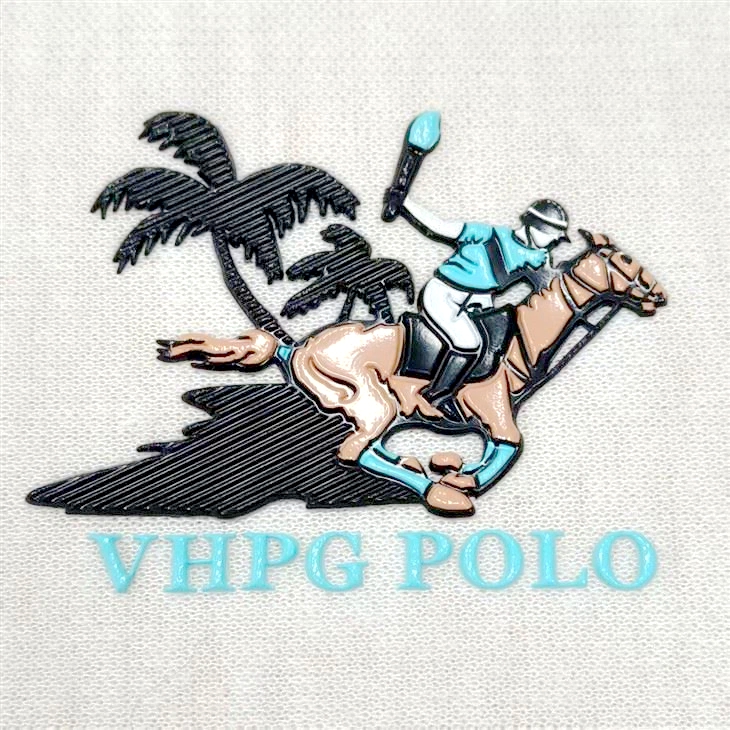
Standard flat transfers sit almost flush with the fabric and often feel like a thin printed layer. A 3D TPU label is molded, not just printed, so the logo or emblem has real height—usually around 1 mm—and the raised areas have a slightly domed or beveled profile. That extra depth makes the branding visible from different angles and gives it a tactile quality flat transfers simply lack.
It depends on the specific TPU grade and the backing film. Softer, low-temp TPU options work on silk and fine knits if you press at around 120–130°C for 8–10 seconds and use a cover sheet. You would not want to use a rigid high-melt TPU on delicate weave, because it can cause shine or, worse, scorch the fibers. Always test on a hidden swatch first.
For premium apparel, expect at least 50 industrial wash cycles at 60°C without edge lifting or color fade. The best TPU formulations stay flexible after repeated drying and won't crack when the garment is stretched. Cheaper alternatives tend to harden by the 20th wash, especially around fine lettering or sharp corners, so the failure point is usually edge delamination rather than the whole label falling off.
Bold, simple marks with clear separation between elements work best. Fine lines below 0.3 mm tend to fill in during molding, and small isolated dots can drop out. If your brand uses thin serif type or intricate filigree, you will get a cleaner result by thickening those strokes or converting them to a solid emblem style. High contrast in the design also helps the dimensional effect read clearly.
Yes, if you choose the right thickness and edge profile. A well-designed TPU label with tapered, rounded edges feels smooth against the skin and does not cause irritation the way a hard plastic badge would. For activewear or base layers, look for low-profile 3D labels around 0.6–0.8 mm thick with a soft durometer rating—these flex with the body rather than digging in.
A pneumatic heat press is the most reliable, but a quality manual swing-away press works for short runs. You need even pressure across the entire label area and precise temperature control—typically 150–160°C for 10–15 seconds depending on the TPU grade. A silicone pad under the garment helps distribute pressure over seams and zippers. Avoid using a household iron for anything more than a sample, because uneven heat leads to partial bonding and premature peeling.
Not really. Once properly applied, a high-grade 3D TPU label can be washed and dried with normal garment care. The main thing to avoid is ironing directly on the label at high heat without a cover cloth, because that can remelt the surface and flatten the 3D effect. For best longevity, recommend washing inside out and avoiding harsh solvents like acetone or bleach-based spot treatments directly on the logo.
Conclusion
Premium apparel labels rarely earn attention on the first touch, yet the right 3D TPU heat transfer changes that instantly. Unlike flat screen prints that sit passively on fabric, a raised TPU mark creates a physical interruption under the fingertips—a subtle bump that reinforces brand memory every time someone handles a cuff, collar, or hem. The ten labels highlighted here stand out because they balance that tactile presence with garment comfort. Thicker isn't always better; a 0.4 mm raise on a heavyweight fleece feels intentional, while the same depth on a lightweight jersey turns stiff and bulky. The most impressive options on the list dial thickness to the fabric weight, so the label remains noticeable but never fights the drape. Durability is another quiet differentiator. Several of these labels were put through fifty industrial wash cycles and still held sharp, unbroken edges—no lifting at the corners, no blurring of fine lettering. That kind of longevity matters when a premium brand's reputation rests on how the piece looks after months of wear.
Beyond durability and touch, the top selections offer finishes that move past basic white or black. Translucent TPU works like a ghosted seal on silk and satin nightwear, matte versions tone down the shine for understated luxury, and glow-in-the-dark options add a playful but premium edge to loungewear and children's lines. Clean production is equally critical: labels built from true vector files keep raised text crisp instead of jagged, so a serif wordmark doesn't turn into a pixelated ridge. And you don't need a ten-thousand-unit order to get that finish. The list favors suppliers who treat small-batch runs with the same trimming, curing, and quality checks as mass production. That means independent designers and niche labels can apply the same raised branding as larger houses without compromise. Together, these ten picks cover the full spectrum—from heavy outerwear to delicate nightwear—while keeping the tactile, durable, and visually refined qualities that define premium apparel branding.
Contact Us
Contact Person: Wang Song Lin
Email: [email protected]
Tel/WhatsApp: +8613751282193
Website: https://www.heat-transferprinting.com/