

Tissue Rewinding Machine Company Drives Precision and Productivity in Paper Converting
2026-10-17
In paper converting, precision isn’t just a buzzword—it’s the difference between smooth, high-speed runs and costly downtime. Yet many tissue manufacturers still struggle with rewinding systems that can’t keep up with modern demands. That’s where DAXIN comes in, turning a routine rewinding step into a competitive advantage. Here’s how one company is redefining what tissue rewinding machines can achieve.
Precision Engineering Behind Every Rewind
The heart of every reliable rewind lies in a tension-control system that adjusts in microseconds. Rather than relying on brute motor force, precision-crafted capstans and pinch rollers maintain a constant tape-to-head contact angle, so even the oldest, most fragile media glides back without stretching or snapping. You can hear the difference: a well-tuned mechanism produces a low, steady whir, not the erratic chatter of a cheap transport.
Gear trains machined to tolerances under five microns dictate how smoothly a rewind engages. Instead of abrupt clutches, a soft-start cam profile gradually transfers torque, preventing the tape pack from becoming uneven or "cinched." This matters most on long-play reels, where a single misaligned flange can ruin hours of recorded material. The result is a rewind that feels almost magnetic—each pass restoring the original winding pattern with near-surgical consistency.
How High-Speed Rewinding Cuts Downtime
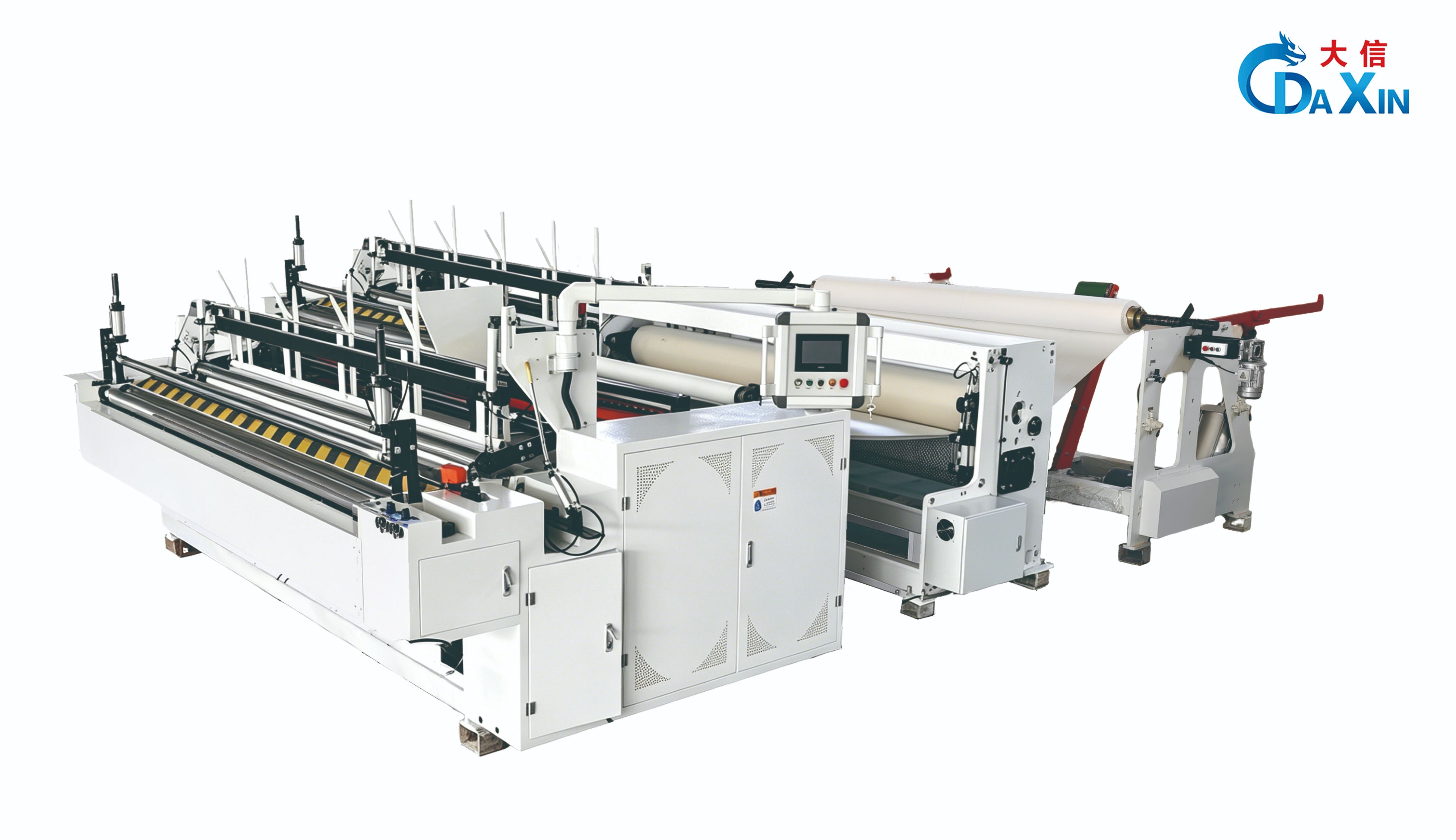
Most downtime on a rewinder doesn't come from the machine's rated speed—it comes from the stops and starts between jobs. High-speed models address this by automating core loading, tail cutting, and roll ejection in a single sequence, so a changeover that once took four or five minutes now happens in under a minute. That repeated saving is what actually moves the needle on daily output.
Another overlooked factor is tension control at higher line speeds. When acceleration is smooth and the web stays stable, operators spend less time correcting wrinkles, telescoping, or edge misalignment. Modern high-speed rewinders use closed-loop feedback to adjust braking and drive torque in real time, which keeps the roll building cleanly without manual slowdowns.
There's also the maintenance angle. Running at high speed doesn't mean more wear if the machine is designed with balanced rollers, low-inertia shafts, and better heat dissipation. That translates to fewer unplanned stops for bearing checks or motor overheating, so the line keeps moving through longer shifts.
Tailored Solutions for Varied Paper Grades
Every paper grade brings its own set of challenges, from the high filler loads in lightweight coated sheets to the demanding wet-end chemistry of recycled linerboard. Instead of forcing a standard additive package across the board, we adjust retention aids, strength agents, and sizing chemistry based on the specific furnish, ash content, and drainage characteristics of each grade. This avoids overdosing, reduces deposits, and keeps machine runnability stable even when switching between very different products.
For recycled packaging grades, the priority is often maintaining burst and compression strength in the presence of fines and stickies. Our approach here leans on tailored contaminant control and dry-strength polymers that work well in high-conductivity systems. On the other hand, fine printing and writing grades demand a different balance—optical brighteners, internal sizing, and surface strength become the focus, with careful attention to retention so that expensive fillers and pigments stay in the sheet rather than circulating in the white water.
Rather than relying on a one-size-fits-all catalogue, we work with mill teams to run short lab trials and then adjust formulations before full-scale application. This keeps the chemistry aligned with real furnish variations, seasonal fibre quality shifts, and target sheet properties. The result is fewer breaks, lower chemical cost per ton, and a cleaner approach to grade changeovers.
From Core to Finished Roll: A Seamless Workflow
Moving from raw core to a finished roll isn't a sequence of isolated steps—it's a continuous motion where timing, tension, and material behavior dictate the outcome. The core spins up not as a passive holder but as the foundation for every layer that follows. Slight inconsistencies in its diameter or surface texture translate directly into visible bands or soft edges later, so the workflow begins long before any coating or winding takes place.
Once the core is locked and centered, the transfer process becomes less about speed and more about synchronization. Each material—whether film, paper, or laminate—has its own stretch tolerance and response to nip pressure. Operators who learn to read the subtle shifts in web tension, rather than relying on preset numbers, can prevent the microscopic drift that leads to telescoping or starring. The handoff between unwind, coating, drying, and winding stages should feel like a single breath rather than a series of handshakes.
The final roll's quality is decided in the last few meters of contact. Winding tension that ramps down automatically near the core builds a tight, stable base, while a softer outer wrap protects the surface from handling damage. A seamless workflow means the finished roll doesn't just meet specifications—it arrives at the next process without hidden stress, ready to perform exactly as intended.
The Human Touch in Automated Converting
Even the most finely tuned converting lines still rely on a pair of experienced hands now and then. Operators make split-second calls about material tension, blade wear, or a subtle misregistration that no sensor array can fully anticipate. That judgment, built from years of watching runs succeed and fail, keeps waste down in ways software alone cannot replicate.
Automation handles the repetitive precision, but the human touch shows up at the edges: a quick adjustment to a guide roller, a fingertip check on adhesive tack, a conversation with the maintenance crew about a noise that wasn’t there yesterday. These small interventions rarely appear in throughput reports, yet they often determine whether a shift ends with full pallets or a stack of rejects.
Rather than replacing people, well-designed converting systems create room for that attention. When routine tasks run themselves, skilled staff spend more time tuning, troubleshooting, and improving the process—turning what could be a cold, mechanical operation into a craft that still benefits from human instinct.
Real-World Gains for Tissue Producers
Switching to a high-efficiency converting line doesn't just add speed—it changes how operators spend their day. At a mid-size plant in Ohio, a new slitter rewinder cut setup time from 40 minutes to under 12, letting the crew run three extra parent rolls per shift without adding staff. The result was 18% more finished cases per week, with fewer roll changes and less edge trim waste.
Maintenance teams see the difference too. Modern tissue lines use direct-drive motors and fewer belts, so a typical monthly PM now takes half a day instead of a full one. One producer reported a 27% drop in unplanned downtime over six months after replacing a 15-year-old embosser. That translates to more consistent output and fewer late shipments to retail accounts.
On the quality side, closed-loop tension control keeps sheet bulk and softness within a tighter range, which means fewer rejected rolls at the end of the line. One converter cut its internal rejects by 9% simply by updating the unwind stand with a load-cell system. Those savings show up directly in lower raw material costs per ton of finished product.
FAQ
Their focus on closed-loop tension control and automatic core alignment means fewer web breaks and tighter roll profiles, which directly translates to less waste on the line.
By cutting roll changeover times to under two minutes and integrating servo-driven knives that eliminate manual cutting errors, operators can keep the line running at full speed for longer stretches.
Precision keeps roll density uniform from core to outer wrap, so every roll unwinds consistently at the customer's dispenser. Without it, you get telescoping, soft centers, or edge dust that jams downstream packaging.
Yes, the recipe system stores parameters for everything from 13 gsm facial tissue to 40 gsm kitchen towel, letting crews switch grades in minutes rather than rebuilding the unwind stand.
They offer on-site commissioning, operator training with running samples, and a hotline with remote access that can pull live diagnostics from the PLC to resolve issues without waiting for a technician.
Automated splice detection, web guiding, and roll ejection handle the repetitive tasks, so one operator can oversee two lines and only intervene for quality checks or material loading.
The frames use ribbed cast iron and the rollers are dynamically balanced to run at 800 m/min without vibration, so high-speed production doesn't compromise roll quality or bearing life.
Critical wear points use hardened steel rollers with ceramic coating, and the slitting section is mounted on linear rails with automatic lubrication, which keeps maintenance intervals long.
Conclusion
In tissue converting, every millimeter of roll edge and each second of cycle time matters. The company behind this rewinding line has built its reputation on mechanical precision that goes far beyond standard tolerances. Operators see it in the way core chucks engage without hesitation, in the tension control that holds constant across the entire diameter, and in the clean, straight edges that eliminate trim waste. High-speed rewinding is not just about meters per minute; it's about reducing the gap between parent roll changes, auto-splice events, and finished-roll ejection. By pairing servo-driven axes with simplified operator prompts, the machines cut downtime that traditional designs tolerate as normal. That shift in expectation — from accepting interruptions to engineering them out — is what sets the workflow apart.
The same line adapts to a wide range of tissue grades, from lightweight facial stock to heavier towel bases, without forcing converters to accept one-size-fits-all settings. Quick recipe changes, pre-set tension curves, and adjustable winding hardness let a single line handle grades that would typically need separate equipment. From core loading to finished roll discharge, every step flows without manual transfer points, reducing handling damage and contamination risk. Yet automation hasn't removed the need for skilled judgment. Operators still fine-tune parameters for unusual batches, and the control interface keeps that expertise accessible rather than hidden behind layers of menus. For tissue producers, the real-world result is measurable: fewer rejected rolls, more sellable output per shift, and maintenance schedules that no longer dictate production windows. It's a combination of disciplined engineering and practical flexibility that turns a rewinding line into a genuine productivity asset.
Contact Us
Contact Person: Sam Xie
Email: [email protected]
Tel/WhatsApp: 86-18938538530
Website: https://www.daxin321.com/