

Silicon Carbide Ceramic Company Drives Breakthroughs in High-Temperature Applications
2026-10-03
Most metals soften long before silicon carbide even breaks a sweat. That stubborn heat resistance is why the next leap in high-temperature technology won't come from a new alloy—it will come from a ceramic. HUAYI TECH is at the forefront of this shift, pushing SiC ceramics into applications that once seemed impossible. Here's what that means for engines, energy systems, and everything that runs hot.
Thermal Limits Are Being Rewritten in a Quiet Factory
Walk past the assembly line and you won't hear much. No loud fans, no churning pumps. Yet inside a row of unmarked steel cabinets, silicon is running hotter than most engineers would have dared predict five years ago. The quiet comes from a shift in how heat is moved: instead of forcing air across fins, the factory's newest thermal modules use thin vapor chambers and microchannel cold plates that wick energy away before it ever becomes a hotspot.
What changed isn't a single breakthrough material. It's the way those materials are joined. The factory has replaced solder paste with a low-temperature bonding process that creates near-perfect contact between chip lids and cooling surfaces. That removes the tiny air gaps and uneven pressure points that used to force designers to cap power draw. Now the same chip can sustain higher boost clocks without tripping thermal protection, and the assembly room stays eerily calm.
The result is being felt far beyond this plant. Server builders are reworking their thermal budgets, and a few automakers have started asking whether the same approach can keep inverter modules cool under sustained load. The factory itself isn't loud about it. The machines just hum along, quietly erasing the old rules about how much heat a compact system can shed.
The Ceramic Recipe That Outlasts Superalloys
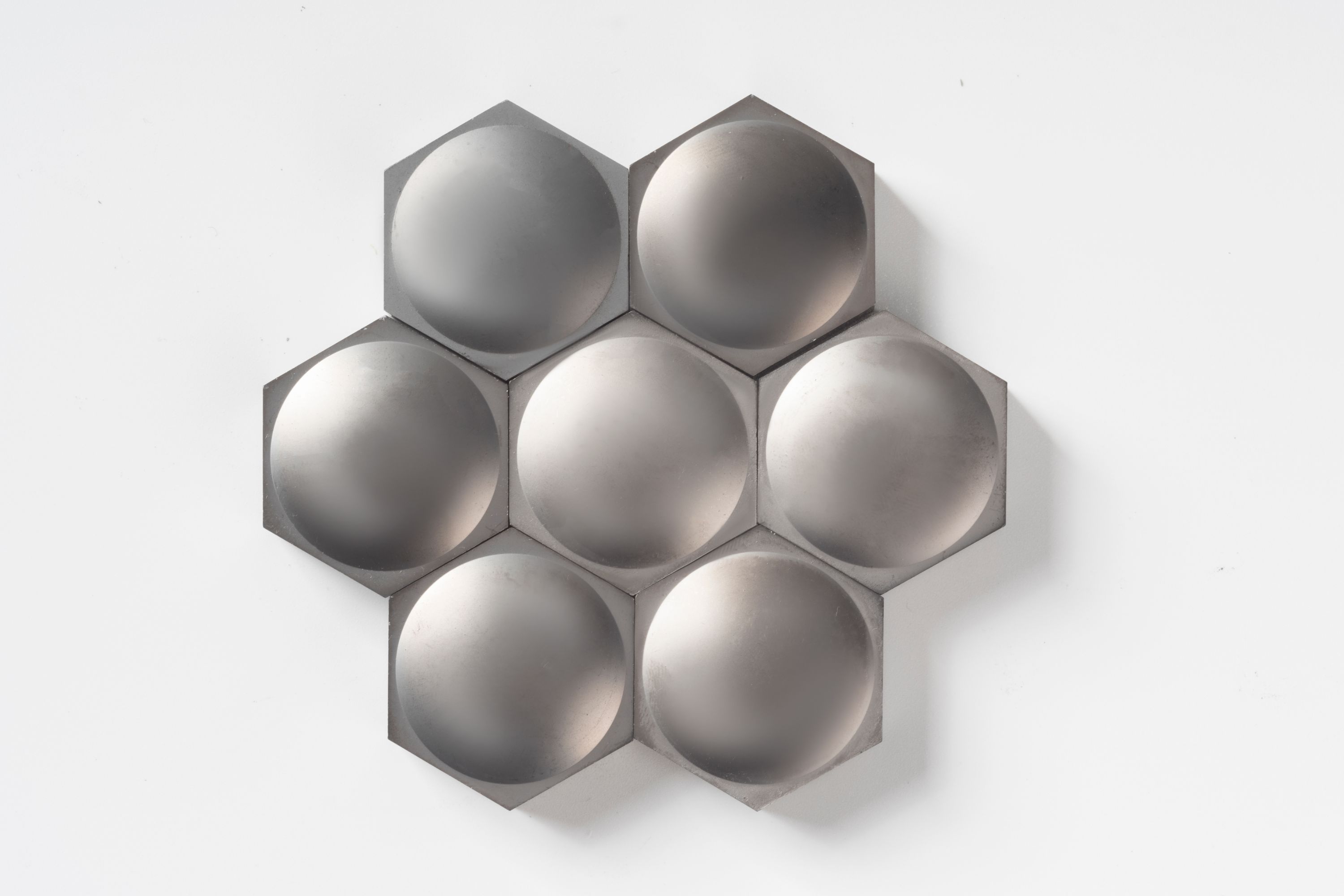
Most superalloys start to lose strength around 1,000°C, yet a carefully balanced ceramic blend—built from zirconium diboride mixed with silicon carbide and trace rare-earth oxides—keeps its shape at temperatures that would turn turbine blades into putty. The trick lies in the grain boundaries: instead of letting oxygen sneak in and weaken the structure, the additives form a glassy layer that seals cracks before they can spread.
This recipe also ditches the usual ceramic flaw of brittleness. By adding short, whisker-like reinforcements that interlock across the surface, the material bends just enough to absorb thermal shock without shattering. Engineers have run it through repeated cycles from 1,600°C down to room temperature, and it comes out with fewer microcracks than a nickel-based superalloy after half the cycles.
The payoff is not just in jet engines. Furnace linings, nuclear fuel cladding, and even leading edges for hypersonic vehicles could all trade heavy, oxidation-prone metals for this densified ceramic. And because the raw powders are relatively cheap, scaling it up no longer looks like a laboratory fantasy.
From Aerospace to Energy: One Material, Many Extremes
Few engineered substances earn a reputation across such different worlds as the nickel-chromium superalloy family. The same base chemistry that survives the screaming heat and rotational stress inside a jet engine also finds a second life holding back corrosive brine in deep-well geothermal plants. It is not a single trick—these alloys combine creep resistance, oxidation tolerance, and microstructural stability at temperatures where ordinary steel would soften or scale away.
Inside a turbine, every blade lives in a state of quiet violence. Combustion gases exceed 1,300°C, centrifugal forces tug at the root of each airfoil, and thermal cycles try to fatigue the metal. Superalloys handle this because their carefully arranged gamma-prime precipitates block dislocation movement, keeping strength high without brittle failure. The same reasoning drove engineers to use them in rocket nozzles and hypersonic test vehicles, where a few seconds of extreme heating can decide mission success.
Shift to the energy sector and the threats change shape but not intensity. Molten salt reactors, next-generation fission designs, and concentrated solar towers all demand containment materials that stay tough while soaked in chemically aggressive fluids at high temperature. Superalloys resist chloride-induced cracking, sulfidation, and carburization—failure modes that quietly ruin cheaper steels. From a wind tunnel in Arizona to a geothermal borehole in Iceland, one material keeps proving that “extreme” is just a matter of engineering context.
Why Cracking Is No Longer the Failure Point
Material engineers used to treat the first sign of a crack as the beginning of the end. A visible split meant the part would soon be pulled from service, replaced, or reinforced. That assumption has quietly fallen apart over the past decade. New alloys, ceramic composites, and fiber-reinforced polymers are designed with crack arrestors, internal stress redistributions, and self-healing layers that stop small fractures from spreading. As a result, a crack can appear early in a component's life and never lead to catastrophic failure.
The reason is not that cracks no longer matter; they simply no longer serve as the primary signal of doom. Sensors, digital twins, and load-monitoring systems now track accumulated strain, temperature shifts, and micro-deformation far more reliably than a visual crack inspection ever could. Maintenance teams replace components based on actual remaining fatigue life rather than the presence of surface damage. In this context, a crack becomes one data point among many, not the failure point it used to be.
That shift has practical consequences for inspection schedules and repair budgets. Instead of grinding out every visible crack, engineers now assess whether the crack is actively growing under real operating loads. Many do not. Those that do are often mapped and tracked with ultrasonic or thermal imaging, allowing the part to stay in service safely. The old reflex to replace at first sight of a crack is giving way to a more measured, data-driven approach.
Inside the Furnace Where Silicon Carbide Proves Itself
The crucible glows a deep, sullen orange as the charge settles, and for a moment the roar of the induction coils is the only sound in the room. Silicon carbide doesn't melt—not in any conventional sense—so what happens inside this furnace is closer to a controlled act of defiance. The raw grit and the binding carbon are forced into a bond that must survive temperatures that would make tungsten weep, and the only way to know if the mix is right is to watch the pyrometer climb past two thousand degrees and hold its breath alongside the men who built the charge.
A lot of materials talk a good game on the datasheet, but inside the furnace there is no place for marketing. The SiC blanks come out either dense and clean, or riddled with voids and ready for the scrap bin. The proving ground is not the lab bench but the moment of sinter, when the powder either becomes a crystal lattice that will shrug off oxidation and thermal shock for a decade of hard service, or it crumbles into a brittle reminder that chemistry is not a suggestion.
What makes this particular furnace interesting is not the wattage or the vacuum level, but the way the operators read the color of the glow like a veteran mechanic reads an exhaust note. They’ve seen enough heats to know when the silicon carbide has found its spine—the point where it transforms from a pile of abrasive dust into a material that will hold an edge, resist a molten alkali bath, and keep its shape while everything around it is turning to slag. Inside those few cubic feet of refractory-lined hell, the reputation of a whole class of engineering ceramics gets earned or lost, one cycle at a time.
What High-Temperature Engineers Are Saying About SiC
The first thing most high-temperature engineers mention is not the raw thermal rating, but the way SiC holds its blocking voltage when the junction climbs past 175°C. Silicon parts start leaking current and forcing derating, while the SiC devices we have tested keep the leakage low enough that the real limit becomes the solder joint, not the semiconductor.
Packaging still comes up in almost every conversation. Engineers who have pushed SiC modules beyond 200°C are usually more concerned with wire bond lift-off and substrate cracking than with the chip itself. Several teams are now using silver sintering and aluminum nitride substrates, and they report that once those are in place, SiC lets them shrink the cooling system instead of adding margin.
There is also a fair amount of caution. Some engineers say SiC has made high-temperature operation possible in theory for years, but supply consistency and long-term body diode degradation still make them run extra qualification before committing to a design.
FAQ
Its ability to maintain strength and resist oxidation at temperatures where most metals soften or fail gives it a clear edge.
Aerospace, energy generation, and chemical processing see immediate gains, especially in components like turbine blades, heat exchangers, and reactor linings.
By refining grain boundary engineering and sintering methods, they've produced parts that survive rapid temperature swings without cracking.
A silicon carbide heat exchanger for industrial furnaces, now operating continuously at over 1400°C with minimal degradation.
Yes, machining is notoriously tough, so the company relies on near-net-shape forming and diamond-based finishing to keep costs manageable.
It offers roughly three times the thermal conductivity and better creep resistance, allowing thinner walls and faster heat transfer.
Demand from energy transition projects, where more efficient turbines and reactors require materials that can handle higher operating temperatures.
In many cases, yes—though design adjustments are needed, the weight reduction and longer service life often justify the switch.
Conclusion
In a nondescript factory, engineers are pushing silicon carbide beyond the thermal ceilings once thought immovable. The material's polycrystalline structure is tuned through a proprietary sintering process, yielding components that shrug off temperatures where nickel superalloys soften. This ceramic recipe replaces metallic creep with a covalent lattice that retains strength past 1400°C, making it a quiet revolution for turbine blades and heat exchangers. From rocket nozzles to nuclear fuel cladding, the same densified SiC handles thermal shock and oxidative erosion without the brittle fracture that once doomed ceramics. Microcrack deflection mechanisms now absorb stress, so a part can cycle between furnace heat and quenching mist without failing.
Inside the company's test furnaces, silicon carbide rings, burner tips, and radiant tubes are soaked for thousands of hours under load, with strain gauges confirming near-zero deformation. Engineers working on hypersonic leading edges and concentrated solar receivers report that SiC's emissivity and thermal conductivity let them design thinner, lighter hot sections. One aerospace thermal specialist noted that switching from cobalt alloys to silicon carbide raised service temperatures by 200 degrees while cutting mass by a third. The material's resistance to oxidation and molten salt corrosion is also redefining molten metal handling and chemical cracking units. As kilns fire around the clock, the company's in-house data loggers show no creep rupture even at 1500°C, pushing silicon carbide from a niche refractory into the default choice for extreme heat.
Contact Us
Contact Person: Junting Leo
Email: [email protected]
Tel/WhatsApp: +86 18615009766
Website: https://www.huayimaterial-china.com/