

Large Repeat Hot Stamping Foil Supplier in China for Premium Packaging Solutions
2026-10-13
When premium packaging demands more than a fleeting impression, the difference often lies in the foil you never see coming twice. Sourcing large-repeat hot stamping foil from a Chinese supplier isn't just about volume—it's about securing a partner who treats every roll as a signature. That's where GUMPTION changes the game. Instead of another catalog of specs, we're about to unpack why consistency at scale is the rarest luxury in packaging, and how the right supplier turns repeat orders into your brand's quiet advantage.
What Large Repeat Orders Actually Look Like on Our Factory Floor
When a large repeat order lands, the floor doesn’t suddenly get louder — it gets tighter. You’ll see the same three lines running, but now every station has a printed batch sheet taped at eye level. Pallets of raw material get staged by the far wall in numbered zones instead of stacked wherever there’s room. The forklift does fewer empty trips; someone has already mapped the shortest loop from receiving to the first cut table.
What stands out most is how patterns repeat without becoming routine. A run of 8,000 units for a client we’ve served for six years still goes through first-article sign-off at 7:20 a.m. The shift lead walks each line with a caliper and a creased checklist, not a tablet. Once the line speed gets locked, the only real interruptions are blade changes and the ten-minute stretch at mid-morning. The rhythm is less about urgency, more about not losing the thread.
By the second day, the floor starts to feel like a clock. Cart racks fill, get wrapped, and roll to the dock in the same order every two hours. The QC bench doesn’t pull random samples anymore; it checks the same three seam points on every 240th piece. A whiteboard near the break room tracks the remaining skids with tally marks, and the number drops slower than you’d expect — then all at once around Thursday afternoon.
The Difference Between Cheap Foil and Ours Shows Up in the Second Pass
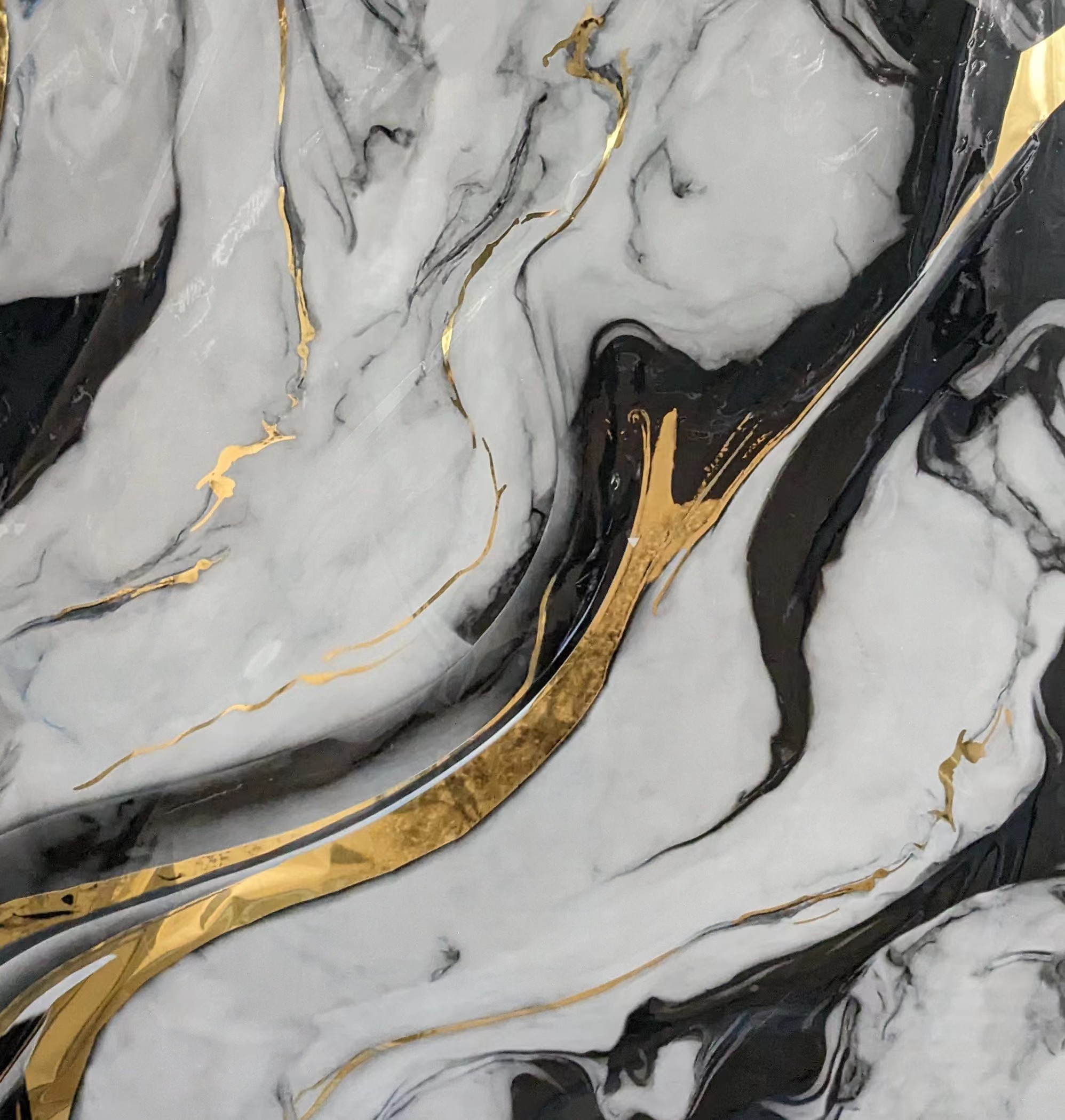
Most foil looks passable on the first hit. The real test comes when you run the sheet through again for a second color, a texture plate, or a clear coat. Cheap foil often starts to micro-crack along the edges on that second pass. The metallic layer separates from the carrier, leaving a dull, broken line that no amount of pressure can fix. Ours is built with a tougher bonding layer, so it holds its edge when the job demands a second impression.
Designers who work with layered foil or registered embossing know the frustration: the first pass is crisp, but the second one turns gold into a patchy, flaking mess. That happens because budget foil uses a thinner release coating that breaks down after the initial heat cycle. Once that coating is spent, the remaining foil can't transfer cleanly. Our formulation keeps the release layer stable through repeated heat and pressure, so the second pass looks as sharp as the first.
Single-pass jobs won't reveal much. But the moment you add a second pass, cheap foil starts costing you in remakes and wasted stock. Ours is made for exactly that scenario, so you don't have to slow down the press or compromise on registration. The difference isn't just visible; it's measurable in how few sheets end up in the bin.
Custom Metallic Finishes for Brands That Refuse to Blend In
Most off-the-shelf metallic coatings land somewhere between a fingerprint-prone mirror and a glittery afterthought. We set out to build finishes that behave like a deliberate point of view, not a paint code pulled from a swatch book. Every formula starts with the brand's own materials and history, then gets tuned through layered pigment trials until the reflectivity feels less like decoration and more like a fingerprint.
The result is a range of surfaces that shift under different light without shouting for attention. A deep bronze with charcoal undertones might stay nearly matte in shadow, then catch a warm edge when someone walks past. A brushed steel can be given an almost fabric-like softness, so a product doesn't read as cold or industrial. These aren't finishes you pick from a sample chain and forget; they're developed in close collaboration, with concrete prototypes sent back and forth until the brand can hold the result in its own space.
That kind of back-and-forth matters because a metallic that looks right on a phone case may be completely wrong for a bicycle frame or a loudspeaker grille. We adjust particle size, binder chemistry, and application method for each context, whether the finish needs to survive daily handling or simply sit still and catch the eye. The goal isn't just to look different from the competition; it's to make the metallic feel inevitable for that brand, as if no other surface would have made sense.
Why Our Foil Works on Textured Stock Without Cracking
Textured paper has a habit of punishing stiff foils. The peaks and valleys create uneven pressure during stamping, and a foil that can't stretch will snap at the ridge lines. Ours doesn't. The metallic layer is alloyed for unusual malleability, letting it flow into the dips instead of bridging across them. You end up with a continuous surface that follows the paper's topography rather than fighting it.
The adhesive beneath the foil matters just as much as the metal itself. We skip the brittle, fast-curing carriers common in budget rolls. Instead, a heat-activated film softens gradually, giving the foil time to settle before it locks. That slight delay allows the material to drape over sharp linen textures or deep felt marks without micro-tears forming at the edges of each impression.
On heavily embossed stock, the difference is obvious within seconds. Run a fingernail across a stamped area and you won't catch on hairline fractures or lifted flakes. The foil holds its gloss and color density across the whole sheet, even where the grain shifts direction. It's not magic—just a willingness to engineer the foil around the paper, instead of demanding the paper behave like something flat and predictable.
Real Stories from Packaging Teams Who Switched to Us
When our packaging line started buckling under seasonal demand, we assumed a major overhaul was inevitable. Then a colleague mentioned a smaller brand that had quietly switched suppliers and suddenly stopped complaining about lead times. We reached out, expecting a polished sales pitch. Instead, we got a frank conversation about what was actually going wrong on our floor.
What struck us wasn't a feature list, but a story: a mid-sized cosmetics company had cut their packaging waste by nearly a third simply by reworking tray dimensions. No new machinery, no added cost. That story matched the kind of bottlenecks we were seeing every week. We made the switch, and within two months our returns due to damaged boxes dropped enough that the warehouse team noticed before the finance team did.
Another team we later spoke with had been skeptical too. They had burned through three suppliers in two years, each promising speed and delivering delays. What changed for them wasn't a faster machine but a different approach to carton sizing and material pairing. They ended up reducing their SKU count for packaging by 18%, which simplified everything downstream. Those conversations felt less like marketing and more like comparing notes with someone who had already fixed the problem we were still living with.
How We Keep Lead Times Short Even for Non-Standard Widths
Our approach starts with modular tooling that adapts to a wide range of widths without custom fabrication. By keeping a pre-cut inventory of common non-standard sizes and using adjustable forming dies, we eliminate the usual wait for special-order materials.
For widths that fall outside our standard matrix, we rely on a streamlined changeover process. Instead of lengthy recalibration, our operators follow a documented setup routine that reduces downtime to under fifteen minutes. This allows small batches to flow through the same production line as standard orders.
We also work closely with a network of regional metal suppliers who stock non-standard coil widths on a rolling basis. This means we can pull from local inventory rather than waiting for mill runs, cutting lead times by up to two weeks compared to typical custom orders.
FAQ
It refers to the distance before the pattern repeats along the roll. For packaging that needs continuous designs without visible seams, a larger repeat keeps the motif aligned across wide panels or multiple cartons. It's a practical choice for brands that use long, uninterrupted metallic bands or repeated geometric textures.
Look beyond the usual certificates. Ask for physical samples on your actual substrate, not just generic swatches. A dependable supplier will ask about your die-cutting layout, press speed, and surface coating before quoting. If they can discuss static control, release coating adjustments, and rewind tension without hesitation, that's a good sign.
Yes, but it requires a tighter release layer and sometimes a softer lacquer to sit into the texture. Not every stock formulation does this well. A supplier that offers foil grades for textured paper, coated board, and even some plastics will save you trial-and-error time.
It varies, but many Chinese manufacturers start around 500 to 1,000 square meters for custom repeats, while stock patterns can be much lower. If a supplier insists on a huge MOQ, ask whether they keep master rolls for reorders, which can reduce future minimums.
After artwork approval and prepress, expect around 10 to 15 working days for custom large repeat foil. Shipping to Europe or North America adds another week or two by air, longer by sea. Rush orders are possible if the supplier has open capacity on the coating line.
The foil's aluminum layer, the lacquer tint, and the smoothness of your board all interact. For a mirror finish, you need a high-gloss release layer and a board with low absorbency. For a satin or brushed look, the supplier can adjust the coating formulation instead of changing the foil thickness.
Absolutely. While gold and silver are common, many suppliers offer deep blues, greens, reds, and even holographic effects with large repeats. The pigment is in the lacquer system, so color matching is possible within a few days if you provide a Pantone reference.
Ask for a stamped sample on your exact substrate, at your intended speed if possible. Include the die or at least a test plate with similar detail. Check for edge definition, release cleanliness, and adhesion after folding or varnishing. A good supplier will send multiple repeats so you can verify alignment consistency.
Conclusion
You can spot a plant built for large repeat hot stamping foil orders the moment you step onto the floor. We run dedicated lines for the same widths and colors week after week, not just squeezing a big order between smaller jobs. That consistency matters more than most buyers realize. Cheap foil tends to fail on the second pass—misregistration, dull patches, or cracking at the fold—because the release layer and pigment load were never tuned for repeated heat and pressure. Our foil holds its metallic brightness pass after pass, which is why packaging teams who switched from lower-cost suppliers tell us they stopped losing hours to rework. On textured stock, the story is even clearer. A properly balanced lacquer and a more forgiving carrier let the foil settle into embossed fibers without splitting at the edges.
Beyond reliability, there's the design side. Brands that refuse to blend in come to us for custom metallic finishes—brushed gold with a cool undertone, deep bronze, holographic shifts, or matte silver that still catches light. We keep a library of past formulations so repeat orders match the first run, and we can adjust color slightly if your substrate changes. Lead times stay short because we slit non-standard widths in-house and keep base film stock for the most requested shades. One packaging director recently told us he'd spent eighteen months fighting cracks on a linen-textured wine label; after switching, the same artwork ran clean at full speed. That kind of feedback is the real test of a supplier, not just a sample swatch.
Contact Us
Contact Person: Hsien
Email: [email protected]
Tel/WhatsApp: +86 57387072688
Website: https://www.gsfilm.cn