

HDP PPGI Maker Selection Tips for Durable Coated Steel Projects
2026-10-12
Choosing the right HDP PPGI maker is where durable coated steel projects either gain their long-term edge or quietly start to fail. Too many buyers stop at the spec sheet and ignore the supplier's actual coating consistency. In the tips that follow, we'll break down the practical checks that matter—and why LANYUN keeps appearing on the shortlist for projects that have to last.
Check the substrate thickness before talking color
Before you even open the color deck, run your fingers along the edge of the substrate. A sheet that feels flimsy or uneven under pressure will never hold a rich, saturated topcoat the same way a dense, uniform board does. Thickness is not just a number on a spec sheet—it affects how light bounces through the coating, how the finish levels out, and how long that color actually stays true after curing. Skip this check and you might end up chasing a perfect tone on a surface that simply cannot carry it.
Different thicknesses absorb and reflect pigment differently, even when the same batch of paint is used. A thin substrate often warps or telegraphs imperfections under glossy finishes, while an overly thick one can cause edge buildup and curing problems. The sweet spot is usually specified by the coating manufacturer, but many shops ignore it until something fails. If you want the color to look the same on the first panel as it does on the last, measure first, then mix.
There is no shortcut here. Pull a few random samples, use a calibrated gauge, and record the numbers before any color conversation starts. Once you know the substrate is within tolerance, then you can talk about tint strength, hiding power, and undertones. Talking color before confirming thickness is like tuning a guitar before checking if the neck is straight—it might sound okay for a moment, but it will never stay in tune.
Look for HDP coating systems with proven UV resistance
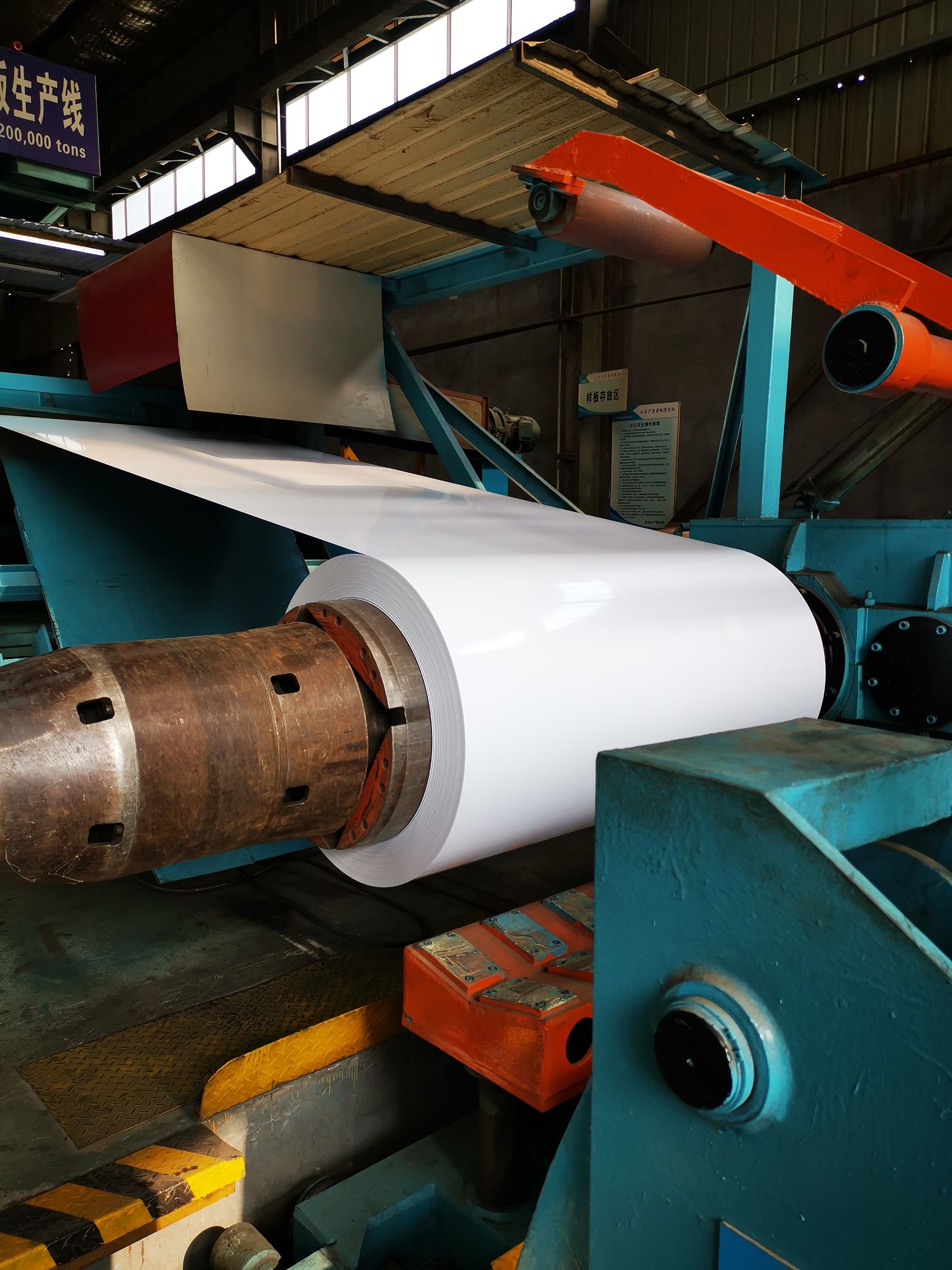
When checking HDP coating systems for UV resistance, push past the typical datasheet language and ask for long-term outdoor exposure records from high-UV locations. A system that has only been through a few hundred hours of accelerated weathering hasn't proven anything yet. Look for documented gloss retention, color stability, and surface integrity after several years in direct sunlight, including the effects of moisture, temperature swings, and pollutants that often accelerate UV damage.
Field evidence matters more than lab-only results. Ask the supplier for reference installations where the same HDP system has been applied to similar substrates and exposed to comparable climate stress. If the coating still holds its film integrity, shows minimal chalking, and resists cracking or peeling after five or more years, that is a stronger signal than any warranty language. Proven UV resistance usually comes from a combination of stabilizers that protect the resin from both UV-A and UV-B wavelengths, and those formulations tend to be confirmed through independent test reports plus real-world performance.
Ask how the maker handles cut edge protection
Don't assume the cut edges are safe or finished just because the product looks clean in photos. Ask the maker directly how they handle edge protection after cutting—do they deburr, bevel, seal, or apply edge banding? Some shops leave raw cuts exposed, which can lead to chipping, moisture wicking, or sharp hazards that only show up after weeks of use. Others invest in post-cut treatments like hand-filing, anodizing, or a polymer edge coat. That upfront question often separates a maker who cares about longevity from one who rushes to ship.
A responsible maker will give you a specific answer, not a vague "we handle it." For metal parts, ask whether they use a deburring machine or manual scraping. For laminated panels, ask about the edge banding thickness and whether the adhesive is heat-resistant. For glass or stone, ask about seaming, polishing, or arrised edges. These details sound minor, but raw cut edges are the most vulnerable part of any fabricated piece—they're where delamination starts, where corrosion creeps in, and where someone gets a cut during installation. A maker who protects them properly is likely sweating the other hidden details too.
You can also request photos of actual finished edges from past projects, or ask for a small offcut sample. Compare how different makers finish their cuts: some leave a crisp but safe chamfer, others apply a peel-away protective film that stays on until after install. The goal isn't just to avoid nicks during handling—it's to prevent long-term failure at the edge. So when you ask, listen for concreteness: "We run every edge through a 45-degree router bit and then seal with a two-part polyurethane" is far more reassuring than "Don't worry, it's fine."
Compare weathering test results from coastal or high-humidity zones
When evaluating weathering data from coastal and high-humidity zones, the differences often come down to salt deposition versus sustained moisture exposure. Coastal sites introduce chloride-laden aerosols that accelerate corrosion on metal substrates, while high-humidity interiors promote fungal growth and blistering on organic coatings. A direct comparison of mass loss, gloss retention, and electrochemical impedance spectra reveals that coastal specimens frequently fail earlier under cyclic wet-dry conditions, whereas continuous high humidity causes more uniform but slower degradation. For instance, zinc-coated panels in a marine atmosphere may show edge creep exceeding 3 mm after 1,000 hours, while identical panels in a 95% RH chamber exhibit only slight white rust but measurable adhesion loss.
To make results comparable, one must normalize for chloride deposition rate, time-of-wetness, and temperature fluctuations. Coastal tests run with periodic rainfall washing can artificially reduce surface chloride levels, while high-humidity cabinets without condensation cycles miss the mechanical stress of dew formation. A practical approach is to plot cumulative damage metrics—such as scribe creep, color change, or tensile strength retention—against cumulative chloride mass for coastal sites and against total wet hours for humid zones. This separates the effects of ionic contamination from simple water absorption and helps material engineers decide whether to prioritize barrier properties or hydrolytic stability.
Real-world comparisons often show that coastal weathering has a sharper performance cliff after an incubation period, driven by pitting under salt crusts, while high-humidity degradation is more linear and tied to polymer plasticization. For example, a polyurethane topcoat might retain 80% gloss after 2,000 hours in a tropical humidity chamber but only 50% after the same duration on a seaside rack with equivalent UV. Understanding these diverging pathways allows for more accurate lifetime prediction and targeted formulation adjustments, such as adding corrosion inhibitors for marine exposure versus increasing crosslink density for humidity resistance.
Verify the primer bond, not just the topcoat shine
A glossy topcoat can hide a failing foundation. The primer layer is what keeps the whole system anchored to the substrate, and if that bond is weak, the shine above is just a temporary illusion. Scuff-resistant finishes often delaminate months later because the primer never properly keyed into the surface below.
Instead of relying on visual gloss or smoothness, run a crosshatch adhesion test or a pull-off test on a sample panel. Score through the topcoat into the primer and substrate, apply the tape, and watch where the failure actually occurs. If the coating lifts cleanly from the base material, the primer has not done its job, no matter how flawless the top layers look.
Also check the curing conditions and surface preparation records. A primer can pass a dry film thickness check but still fail because the surface was not properly cleaned or the ambient humidity drifted outside the specified range. Document those variables for every batch, and compare them against the adhesion results before signing off on the finish.
Review batch-to-batch color consistency records
Checking batch-to-batch color consistency means going beyond a quick glance at the spec sheet. The records themselves tell a story if you know how to read them—look for gradual drift in Delta E values even when each batch passes individually. A series of 0.8, 1.1, 0.9, 1.3 might look fine on paper, but the trend toward the upper limit often signals process wear or raw material variation before it becomes a full failure.
Color measurement data is only as useful as the context around it. When reviewing records, I always check whether the same instrument, geometry, and illuminant were used across all batches. Switching from D65 to F2 lighting or changing the sample preparation method can create false shifts that look like real inconsistency. Compare like with like, and if the method changed, go back to validate the earlier readings before drawing conclusions.
A practical review should also link color records to line conditions at the time of production. For example, if two batches show a noticeable difference in hue angle but similar lightness, look at the mixer speed, drying temperature, or even the shift operator. Raw material lot numbers and supplier certificates often hold the answer. The goal is not just to flag a bad batch, but to catch the pattern early enough to adjust before the next production run.
FAQ
Start with the coil's base metal and zinc coating weight. A durable project needs at least Z120 or Z180 galvanized substrate, not the thinner commercial grades. Ask for the actual grams per square meter rather than just 'galvanized' on a datasheet. If the maker hesitates to share substrate specs, move on.
Request accelerated weathering test results, but don't accept vague claims. Look for QUV or xenon arc data showing at least 1,000 to 2,000 hours with minimal gloss loss. Better yet, ask for real project references in similar climates. A maker who can point to a five-year-old installation near you is worth more than a lab certificate.
Check if they run their own color coating line with multi-stage pretreatment, not just a toll-coating operation. Things like a three-coat, three-bake process, in-line film thickness gauges, and tension leveling matter. If they outsource pretreat or priming, consistency will suffer, especially across large batches.
Absolutely. HDP topcoats alone are not enough. A good maker will use a chromate or chrome-free anti-corrosion primer, often epoxy or polyurethane based, with dry film thickness around 5 to 8 microns. Without that barrier layer, moisture reaches the zinc and causes edge creep and blistering much sooner.
Look for continuous monitoring rather than just final inspection. The line should record coating thickness, color difference (Delta E), gloss, and adhesion every few hundred meters. Ask if they cut samples from each coil and perform bend tests, impact tests, and salt spray tests. If they only test the first and last few meters, you are gambling.
HDP uses a modified polyester resin with better UV resistance than standard PE but at a lower cost than PVDF. It typically offers 10 to 15 years of color and gloss retention, whereas ordinary PE might fade in 5 to 8. For most industrial and agricultural buildings, HDP is the sweet spot between price and lifespan.
Size is not the deciding factor, but equipment and raw material sourcing are. Some smaller lines use high-quality resins from reputable chemical companies and maintain strict process control, producing excellent coils. Ask for the resin supplier and coating system details. If they use generic or unnamed resins, be cautious regardless of plant size.
You should receive a detailed mill test certificate for each coil, including substrate grade, zinc weight, primer type, topcoat thickness, and color coordinates. Batch numbers should link back to production date and line speed. If they cannot provide coil-specific data and only give a generic brochure, treat it as a red flag.
Conclusion
Choosing a reliable maker for high-durability polyester pre-painted steel, often called HDP PPGI, requires more than comparing color cards. Begin by checking the actual substrate thickness, because even the most advanced coating cannot rescue a thin base that will flex, dent, or corrode too early. Then examine the HDP coating system for proven UV resistance—ask for real outdoor exposure data from multiple years, not just quick laboratory simulations. Cut edge protection is another area where many suppliers fall short, so find out how the maker seals or treats sheared edges to prevent rust from creeping under the painted surface.
For buildings near the coast or in high-humidity regions, request weathering test results from those exact climates rather than generic dry-area benchmarks. Pay close attention to the primer bond as well; a glossy topcoat can hide weak adhesion that leads to peeling within a few seasons. Finally, review batch-to-batch color consistency records before committing to a large order. A single sample may look flawless, but without tight production controls you risk visible color shifts across a roof or facade. These practical checks together help you separate suppliers who only talk about durability from those who actually deliver it consistently for demanding building projects.
Contact Us
Contact Person: Nia
Email: [email protected]
Tel/WhatsApp: +86 18954360337
Website: https://www.sdppgi.com