

Dual Channel Tissue Cutter Factory Precision Built for Modern Labs
2026-10-28
Ask any lab manager what slows down tissue processing, and you'll hear the same complaint: single-channel cutters can't keep up with modern throughput demands. DAXIN tackled this head-on with a dual channel tissue cutter designed and built in a factory where precision isn't a buzzword—it's a tolerance. In this post, we break down how that engineering choice changes daily workflows, from sample prep to final sectioning.
Two Channels, Zero Compromise
You shouldn't have to pick between the things that matter. Too often, “dual” means one side gets the spotlight while the other quietly struggles to keep up. Not here. The idea behind “Two Channels, Zero Compromise” is simple: both paths are treated as first-class, with their own dedicated power, clarity, and attention to detail. No shared resources that cause one to dip when the other peaks. No hidden priority list. Just two fully realized channels working in parallel, each one as strong alone as it is together.
This matters most when you’re in the middle of something that can’t afford a weak link. Imagine a live feed where one channel carries the signal and the other carries the backup, or a conversation where both voices come through with equal richness. “Zero Compromise” means you stop noticing the switch between channels because there’s nothing to notice — no lag, no drop in quality, no moment where you wonder why one side suddenly sounds thin or looks soft. Both channels stay honest, full, and independent.
What you get is a kind of quiet confidence. You don’t have to babysit the setup or make excuses for the weaker side. You don’t have to lower your expectations to match the hardware. Instead, you simply use both channels the way you always wanted to — and forget the compromise was ever part of the conversation.
Inside the Factory Floor: How Precision Happens
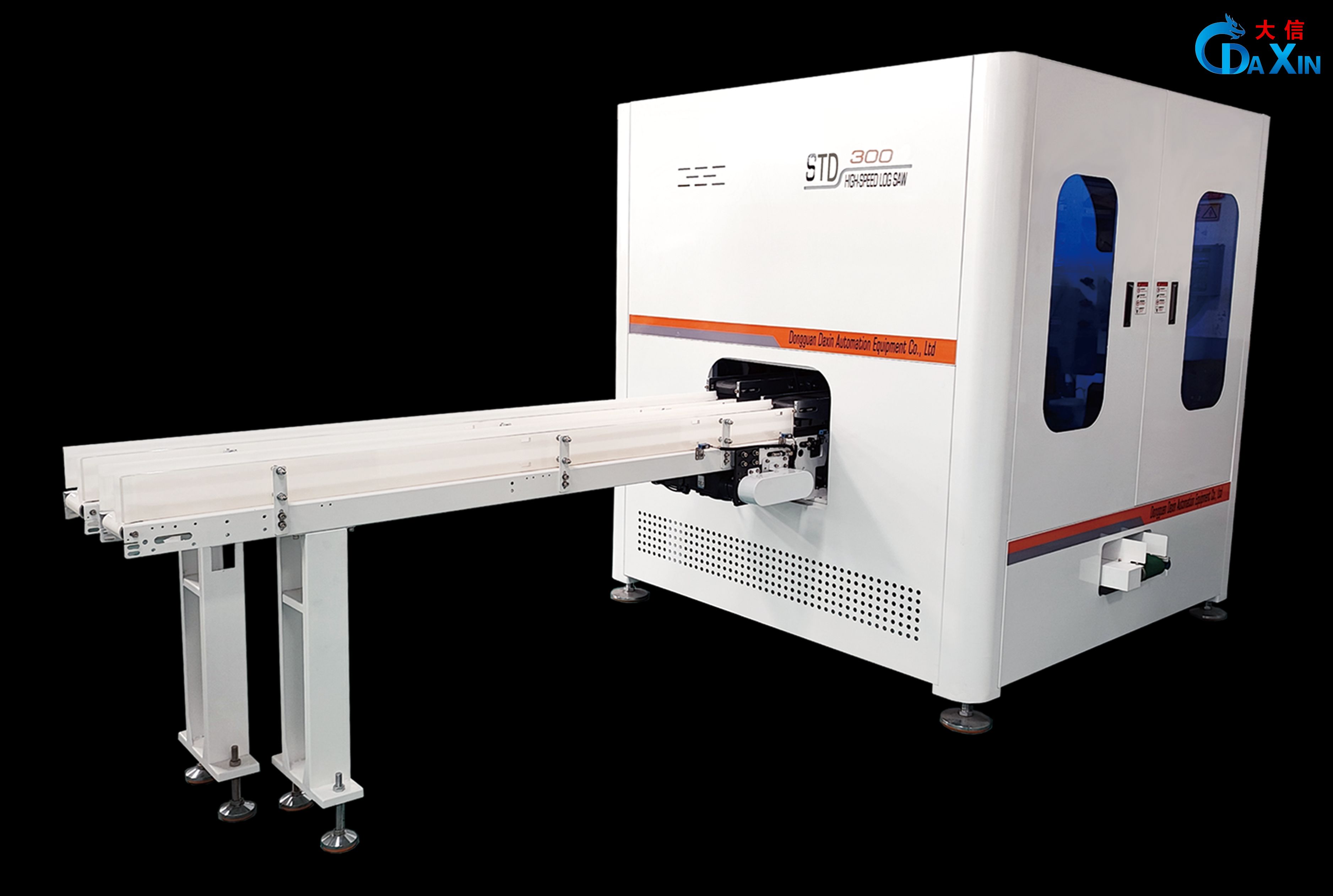
On the factory floor, precision rarely comes from a single hero machine. It lives in the small adjustments a machinist makes after lunch when the spindle has warmed up and the coolant temperature has shifted by half a degree. The best shops don't just document these drifts; they turn them into offset tables that get updated every shift, not every month.
Walk past any CNC mill and you'll see a cycle of measure-cut-measure that looks almost obsessive. Parts aren't checked only at the end of a run. A coordinate measuring machine sits ten steps from the operator, and every fifth part gets pulled for a quick probe routine. The results feed back into the controller as tiny compensation values, nudging the tool path back toward nominal before the deviation ever reaches the tolerance limit.
Some of the most important precision work happens before cutting starts. Tool holders get wiped down with lint-free cloths, collets are torqued in a star pattern, and the granite surface plate gets swept for stray chips. It's repetitive, unglamorous work, but it's why a batch of five hundred parts can come off the line with the same diameter on the first and last piece.
Built for the Modern Lab, Not the Museum
In real research environments, instruments get bumped, reagents spill, and protocols change without warning. A tool that belongs in a museum is one that demands perfect conditions and gentle handling. The modern lab is the opposite: a place where durability, easy cleaning, and quick recalibration matter more than polished chrome.
This design philosophy shows up in every corner of the system. Surfaces resist stains and scratches instead of just looking nice in a brochure photo. Connectors are built to survive repeated plugging and unplugging, not to be admired behind glass. Software updates arrive without forcing you to relearn the interface from scratch.
Ultimately, modern does not mean futuristic or flashy. It means the instrument fits the way you actually work, whether that is a shared bench, a cramped hood, or a noisy core facility. If it cannot handle the daily grind, it belongs in a display case, not on your bench.
When Every Micron Counts
One micron is roughly a seventieth of the width of a human hair, and in our line of work it’s the gap between a leak-proof seal and a slow failure. When every micron counts, you stop thinking in terms of ‘close enough’ and start treating each surface, edge, and clearance as a decision with consequences.
That’s why we keep our inspection equipment in a temperature-stable room and recalibrate before every batch—not because a certificate demands it, but because a two-degree shift can move a bore by more than the tolerance you’re trying to hold. We’ve watched it happen, so we designed the workflow around it.
On the shop floor, it means our machinists adjust in real time, not after a bad part shows up downstream. They read spindle load, surface finish, and tool wear together, catching drift while it’s still measurable in microns. It’s slower, yes, but it’s the only way to ship parts that fit the first time, every time.
The Dual Channel Advantage in Practice
When two channels stop being managed as separate projects, the everyday benefits show up quickly. A customer might test a product in a physical space, then reorder from an app weeks later. Or they might browse inventory online, reserve an item, and pick it up in person. These cross-channel behaviors create a richer picture of what people actually want, without needing extra surveys or guesswork.
The real edge appears under pressure. If one channel faces shipping delays or a sudden drop in foot traffic, the other can absorb demand and keep orders moving. Teams that run both channels together tend to shift staff, stock, and promotions faster because they can see the full flow instead of just one slice. That responsiveness is hard to copy with a single-channel setup.
In practice, the dual channel advantage is not about adding more touchpoints. It comes from sharing one set of customer signals and one order pipeline across both sides. When that foundation is in place, the channels amplify each other. Customers get a smoother, more coherent experience, and the business avoids the internal friction of teams competing for the same sale.
From Raw Metal to Reliable Cuts
Every blade starts as a rough strip of high-carbon steel. The first step is straightening and cutting it into workable lengths, then running it through a controlled hardening cycle—heated until non-magnetic and quenched in oil. That sudden cooling locks in the edge-holding ability, but it also makes the metal brittle, so tempering follows right away.
Tempering reheats the blank to a lower temperature to relax internal stress without giving up hardness. Only after that does grinding begin. Material is removed in small passes, with the bevel angle checked every few minutes. A blade that is sharp but poorly ground will fail after a handful of cuts, so this stage gets the most attention on the shop floor.
Final honing and stropping take the edge from simply sharp to consistently reliable. Each piece is tested against leather or fine paper to confirm it bites cleanly without tearing. The result is a cutting tool that holds up through repeated use, not just for the first few minutes out of the box.
FAQ
Instead of swapping blades or repositioning a single sample holder, you can run two specimens in parallel. Each channel keeps its own feed rate and depth setting, so you get matched section thickness without constant recalibration. That matters when you're processing paired biopsies or comparing control and treated tissue from the same block.
Yes, if you choose the appropriate blade profile. The factory offers tungsten-carbide and ceramic-coated edges as options. The cutting head is built with a rigid linear rail and a low-backlash drive, so it maintains a steady stroke even when resistance spikes. You'll still need to inspect blades, but the machine doesn't flex or chatter the way lighter benchtop units often do.
Each unit is run through a test protocol using standardized paraffin and frozen media. Technicians measure section thickness at five points across the block face with a micrometer, not just a software readout. The tolerance is held within ±2 microns for the first 500 cycles. After that, they do a repeatability check with a dial indicator mounted on the stage.
The base model has 24 mm between channels, but the factory machines custom guide plates and blade holders on request. We've done 12 mm spacing for small biopsy arrays and 40 mm for larger tissue cassettes. You just need to provide the cassette dimensions and the target section thickness, and the engineering team adjusts the feed screw pitch and blade angle accordingly.
The deck is 316L stainless steel with an electropolished finish, which resists corrosion from alcohol and xylene. The housing is anodized aluminum, not painted, so it won't chip or flake into the work area. All seals and wipers are EPDM or PTFE, chosen because they don't degrade with common clearing agents.
If you're only switching between paraffin blocks, you can brush off the deck and wipe the blade guard in about two minutes. For a full decontamination cycle, including removing the blade holder and soaking the waste tray, most labs budget ten to fifteen minutes. The design avoids hidden recesses where tissue debris usually packs in, so there's less scraping involved.
It can integrate with most robotic handlers through a dry-contact trigger or USB serial commands. The stage has a home position sensor and can output a busy signal when a cycle is running, so an external arm won't try to grab a sample mid-cut. Manual mode is just a foot pedal or front-panel button, with no software required.
You get a direct line to the assembly technician for the first month, not a call center. Spare blade holders, guide rails, and drive belts are stocked in regional hubs, and the service manual includes step-by-step calibration photos. If a part fails under normal use in the first two years, it's replaced with a new one, not a refurbished component.
Conclusion
Walking into the production area where the dual channel tissue cutter takes shape, the first thing you notice is how little separates the design intent from the machined result. Two independent channels run through the same compact frame, each calibrated to hold its own alignment without forcing the operator to choose between throughput and accuracy. On the factory floor, that precision is not a slogan; it comes from iterative checks at every station—blade carriage runout measured in microns, rail parallelism verified before the first cable is connected. Raw aluminum and stainless stock are milled, stress-relieved, and then measured again, because a reliable cut starts long before the tissue block meets the blade.
For a modern lab, the value of that dual channel design shows up in daily use. One channel can run serial sections while the other handles a different block size or blade angle, reducing changeover without sacrificing edge quality. The machine is built for benches where space and time are tight, not for display cases, so every guard, lever, and clamp is meant to be touched, cleaned, and adjusted quickly. When every micron counts, the cumulative effect of stable rails, matched drive components, and consistent blade feed becomes obvious—sections come off with clean edges and repeatable thickness. From raw metal to reliable cuts, the dual channel tissue cutter earns its place through quiet, measurable performance rather than marketing language.
Contact Us
Contact Person: Sam Xie
Email: [email protected]
Tel/WhatsApp: 86-18938538530
Website: https://www.daxin321.com/