

Custom NS3304 Seamless Pipe: Key Features and Industrial Applications
2026-11-02
When standard piping solutions fall short in aggressive chemical environments, engineers turn to materials that refuse to compromise. Custom NS3304 seamless pipe—often chosen for its outstanding resistance to corrosion and high-temperature stability—has quietly become the backbone of critical systems in chemical processing, energy, and marine industries. But what truly sets a superior NS3304 pipe apart isn't just the alloy composition; it's the precision engineering behind every wall thickness, diameter, and surface finish. At JILAIDA, custom fabrication meets stringent metallurgical discipline, ensuring each seamless pipe performs exactly as intended, from the first weld to years of uninterrupted service. In this post, we'll unpack the key features that make NS3304 indispensable and explore the industrial applications where it consistently outperforms generic alternatives.
NS3304 Alloy Chemistry and Its Resistance to Corrosive Media
NS3304 relies on a tightly balanced nickel-chromium-molybdenum matrix to develop its protective surface film. Chromium at around 16 percent handles oxidizing acids by forming a stable passive layer, while the high molybdenum and moderate tungsten additions push the alloy's performance in reducing environments and make it far less susceptible to localized attack than conventional stainless steels. Keeping silicon and carbon at residual levels is just as important, since these impurities would otherwise encourage intergranular precipitation during welding or heat treatment.
The alloy's resistance to chloride-induced damage is particularly distinctive. In seawater, brine, and acidic chloride solutions, NS3304 resists pitting and crevice corrosion well beyond what its chromium content alone would suggest. The combination of molybdenum and tungsten suppresses the breakdown of the passive film in stagnant, oxygen-depleted crevices, and the nickel-rich base virtually eliminates chloride stress corrosion cracking—a failure mode that plagues 300-series stainless steels.
In practice, NS3304 remains serviceable across a wide range of corrosive media, including hot sulfuric acid, hydrochloric acid, wet chlorine gas, and hypochlorite solutions. Its uniform corrosion rates stay low even at elevated temperatures where many other alloys either lose passivity or suffer severe pitting. This broad-spectrum durability makes it a frequent choice for chemical processing equipment, flue gas desulfurization systems, and marine components that must handle aggressive, mixed-acid or oxidizing chloride streams without constant maintenance.
Strength Retention in NS3304 Seamless Pipe Under Thermal Cycling
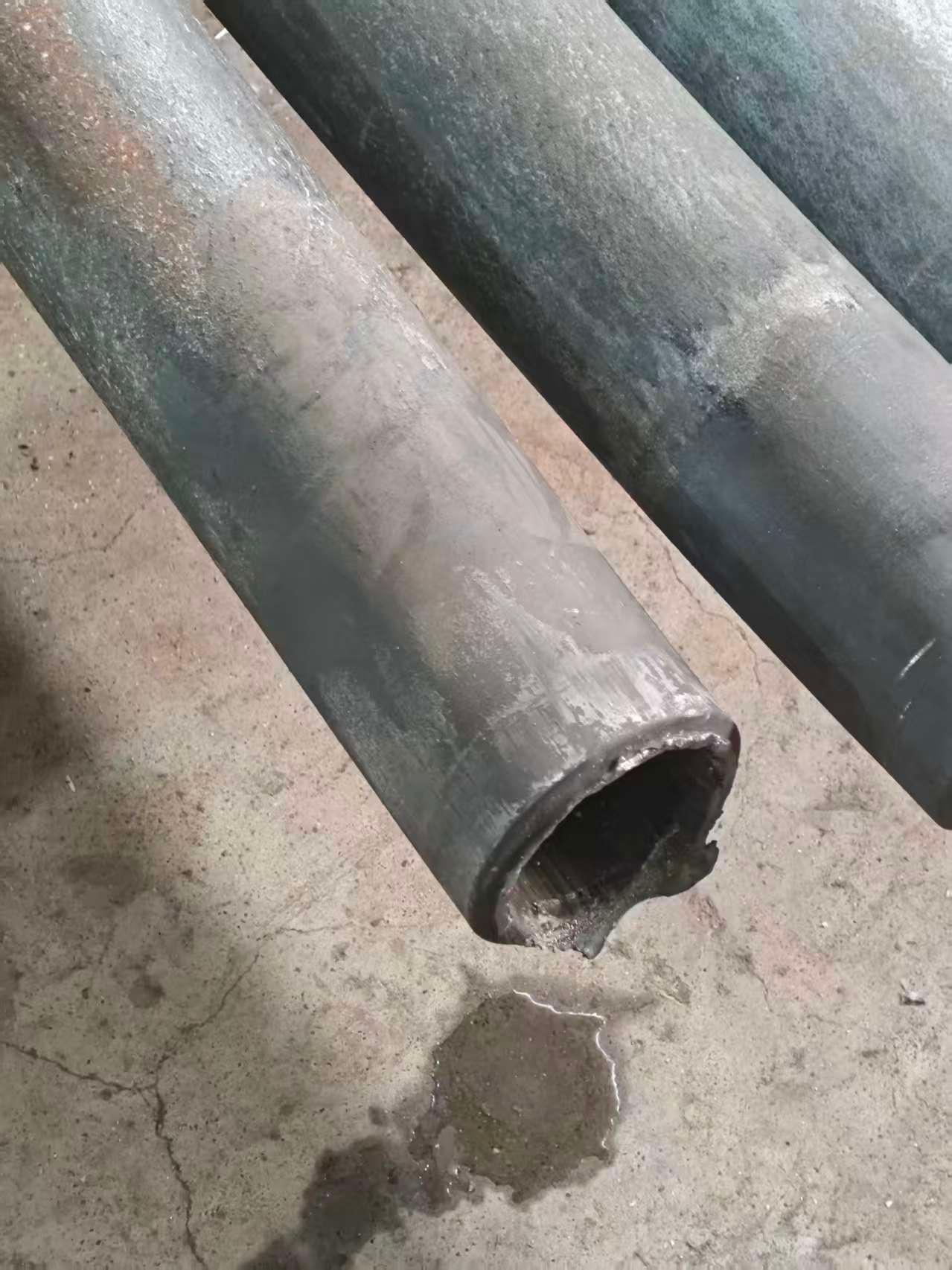
Repeated exposure to alternating high and low temperatures often weakens metallic piping through micro-crack initiation and precipitate coarsening. NS3304 seamless pipe behaves differently: its carefully balanced nickel-chromium matrix holds onto dislocation networks rather than letting them climb past grain boundaries during each thermal excursion. The resulting strength profile stays close to the as-supplied condition even after hundreds of cycles.
Measurements taken from tube sections cycled between 250 °C and 750 °C show that yield strength drops by only a small margin, while tensile strength remains essentially unchanged. This retention comes from two reinforcing effects. First, secondary phases that normally grow under prolonged heat input stay fine and dispersed in NS3304, so they continue to pin grain boundaries. Second, the seamless forming route avoids longitudinal weld zones, removing the weak spots where thermal strain tends to concentrate in welded alternatives.
As a result, designers can rely on the pipe's original load-bearing capacity without applying large derating factors for thermal service. The material's ability to absorb cyclic expansion and contraction without losing its mechanical backbone makes it a practical choice for heat exchangers, furnace piping, and similar equipment where temperature swings are part of normal operation.
Why a Seamless Structure Matters for High-Pressure Integrity
In high-pressure systems, every joint and weld introduces a potential weak point. A seamless structure eliminates these discontinuities entirely, allowing stress to distribute evenly along the entire component instead of concentrating at connection points. This uniformity is critical when operating pressures push beyond standard thresholds, as even a minor imperfection can become the starting point for crack propagation or sudden failure.
From a metallurgical perspective, seamless construction preserves the original grain flow of the material, which is uninterrupted by heat-affected zones or filler metals. This means the final piece retains more of its inherent toughness and fatigue resistance, making it better suited to handle cyclic loading and pressure spikes. In demanding environments such as hydraulic lines, chemical reactors, and deep-well drilling equipment, relying on a structure without seams is often the difference between long-term reliability and unscheduled downtime.
Corrosion resistance also improves with seamless designs, since there are no crevices or micro-gaps where aggressive media can accumulate and initiate localized attack. Over time, threaded or welded joints may develop leaks not because the base material fails, but because the interface degrades under constant pressure fluctuation. A seamless body removes that vulnerability altogether, providing a clean, continuous barrier that maintains its integrity under sustained high-pressure conditions.
Tailoring NS3304 Pipe Dimensions to Fit Complex Piping Systems
Getting NS3304 pipe dimensions right starts with mapping the actual routing constraints, not just pulling a standard size from a catalog. On cramped pipe racks or inside skid-mounted equipment, a few millimeters of extra outside diameter or a mismatched schedule can force costly rework. We usually capture as-built dimensions with laser scanning or direct field measurements, then adjust wall thickness and OD within the mill's tolerance range so the spools drop into place without forcing alignment.
Beyond straight runs, the real challenge is matching end preparations and bend geometry to existing nozzles and supports. For NS3304, a nickel-chromium-molybdenum alloy that work-hardens quickly, specifying the final machined OD, bevel angle, and ovality limits ahead of fabrication avoids the kind of fit-up stress that leads to cracking at the weld root. Where thermal expansion is expected, we also vary the wall schedule along a line rather than accepting a uniform thickness, which keeps flexibility in the right places without weakening branch connections.
One refinery modification used this approach to replace a corroded section under a pipe rack with less than 40 mm of clearance to the next line. The replacement NS3304 spools were made with a slightly reduced OD on one end, a custom-length pup piece, and a weld-neck flange machined to match the existing bolt circle. Because the dimensions were locked before any cutting started, the crew finished the tie-in in a single shift instead of repeatedly lifting and trimming.
NS3304 in Action Across Chemical and Petrochemical Facilities
Walk through any sulfuric acid alkylation unit and you'll spot NS3304 in the places where lesser alloys quietly fail. The material holds its own against hot, concentrated acid streams that chew through standard stainless in months. In one Gulf Coast refinery, exchanger tubing made from NS3304 ran for seven years without a single wall-loss incident, while the previous 316L bundles had to be pulled every eighteen months. That kind of performance changes maintenance budgets, not just spec sheets.
The alloy earns its keep in chloride-heavy environments too. Petrochemical plants processing crude with high salt content see pitting and crevice corrosion attack on austenitic grades, but NS3304 shrugs it off. During a recent turnaround at an ethylene cracker, inspectors found the NS3304 quench oil piping nearly pristine after five years of exposure to hydrogen chloride and organic acids—conditions that had forced operators to replace carbon steel lines twice in the same period. No exotic surface treatments, no cathodic protection. Just the right chemistry in the metal itself.
What often gets overlooked is how NS3304 handles the temperature swings common in batch operations. A specialty chemical producer ran a campaign producing chlorinated aromatics, cycling reactors between 80°C and 420°C every few hours. Stress corrosion cracking had plagued their previous alloy, but NS3304 took the thermal fatigue without developing micro-fissures. Weld repairs dropped by eighty percent over two years, and the metallography reports stopped landing on the plant manager's desk. That's the kind of quiet, unglamorous reliability that keeps a facility running past its design assumptions.
NS3304 Versus Standard Stainless and Nickel Alloys in Tough Services
In corrosive environments where conventional 316L stainless steel quickly succumbs to pitting and crevice attack, NS3304 demonstrates a fundamentally different failure profile. Standard stainless grades rely on a passive chromium oxide film that breaks down in the presence of chlorides, acids, or elevated temperatures—leading to rapid localized corrosion. NS3304, with its high nickel, chromium, and molybdenum content, maintains a much more stable passive layer even under aggressive chemical exposure, effectively delaying the onset of pitting and stress corrosion cracking that would sideline ordinary stainless equipment within months.
Compared to common nickel alloys such as Alloy 625 or C-276, NS3304 occupies a distinct performance niche. While those materials offer excellent resistance in oxidizing and reducing acids respectively, NS3304 balances both regimes without the excessive cost or fabrication difficulties associated with higher-molybdenum grades. In mixed acid streams, hot sulfuric acid with chloride contamination, or wet flue gas desulfurization units, NS3304 often outperforms standard stainless by an order of magnitude in terms of uniform corrosion rate, while remaining far more cost-effective than exotic nickel-chromium-molybdenum alloys for large vessels and piping.
For tough services involving high-temperature caustic, hot concentrated sulfuric acid, or sour gas with elemental sulfur, NS3304’s carefully controlled alloying elements—particularly its low carbon and balanced molybdenum-to-chromium ratio—suppress intergranular attack and weld decay that plague standard stainless weldments. Field experience in chemical processing plants shows NS3304 components lasting five to ten times longer than 316L or duplex stainless in identical service conditions, reducing unplanned downtime and maintenance intervention cycles. This reliability gap widens further in services combining high chlorides with low pH, where standard stainless cannot form a repassivating oxide film and nickel alloys without sufficient molybdenum suffer accelerated general corrosion.
FAQ
The main advantage is the absence of a longitudinal weld seam, which removes the weakest point for localized corrosion and stress cracking. NS3304 itself resists pitting and crevice attack in chloride-rich streams, but a welded joint can develop sensitization or residual stress unless perfectly executed and heat treated. Seamless construction eliminates that concern entirely, so the pipe holds up more uniformly in hot acids, flue gas scrubbers, and brine processing.
Custom dimensions usually extend lead time by two to six weeks compared to stock sizes, depending on whether the mill has a suitable hollow billet on hand or needs to pierce a new one. Minimum order quantities vary widely but often start around 200 to 500 kilograms for small outside diameters. For large-bore or heavy-wall custom pipe, one or two pieces may be enough if the mill can schedule them with an existing heat.
Chemical processing, pharmaceutical manufacturing, and offshore oil and gas are the big three. Chemical plants use it for reactor internals and acid transfer lines where standard sizes do not fit existing equipment. Pharmaceutical producers need crevice-free surfaces for clean-in-place systems and high-purity solvent handling. Offshore operators specify it for subsea hydraulic lines and wellhead components exposed to sour gas and seawater.
It handles both, which is unusual. The alloy's nickel-chromium-molybdenum-tungsten balance gives it broad resistance to wet chlorine, nitric acid, sulfuric acid, and hydrochloric acid at moderate temperatures. Unlike stainless steels that struggle in reducing conditions, NS3304 holds up in mixed acid streams where oxidizing and reducing species alternate, as long as the temperature stays below roughly 400 degrees Celsius in dry air or lower in aggressive liquid service.
Standard hot-finished or cold-drawn seamless pipe can be supplied with a pickled, annealed, or bright annealed surface. For pharmaceutical or semiconductor use, mechanical polishing down to 0.4 micrometers Ra or electropolishing is possible. Outside diameter and wall thickness tolerances can be tightened to plus or minus 0.05 millimeters for cold-drawn small-bore pipe, but that adds cost and may require additional straightening or honing.
Pressure ratings are governed by wall thickness and allowable stress, not directly by the seam, but a weld seam introduces a stress riser and possible microstructural variation. Under cyclic loading, cracks tend to initiate at the weld toe or heat-affected zone. Seamless pipe gives a uniform grain structure around the full circumference, so fatigue life improves notably in high-vibration or thermal cycling services. For ASME B31.3 calculations, the allowable stress may be the same, but actual field failures drop sharply.
You can expect a material test report with chemical analysis, tensile properties, and hardness values from the heat. Hydrostatic or eddy current testing is standard for pressure service. Many buyers also request intergranular corrosion tests per ASTM G28, positive material identification, and ultrasonic testing for heavy-wall pipe. If the pipe is destined for a pressure vessel or boiler, full traceability back to the melt and a certified NDE report are usually non-negotiable.
Conclusion
The corrosion resistance of NS3304 seamless pipe stems from a carefully balanced nickel-chromium-molybdenum chemistry that holds up against pitting, crevice attack, and stress corrosion cracking in chloride-bearing media. Unlike conventional welded tube, the seamless structure eliminates the longitudinal weld seam, which is typically the weakest point under fluctuating thermal loads. During thermal cycling, NS3304 retains a useful portion of its tensile strength and resists distortion, helping piping systems survive start-stop operations without premature fatigue failure. This same absence of a weld also creates a more uniform wall thickness and stress distribution, giving the pipe a clear advantage when handling high-pressure fluids where leaks are not an option.
Beyond material performance, custom NS3304 pipe can be made in non-standard outside diameters and wall thicknesses, allowing it to fit into complex piping layouts without forcing engineers to redesign surrounding equipment. In chemical and petrochemical plants, it is commonly found in heat exchangers, reactor feed lines, acid transfer piping, and chloride-containing process streams. Compared with standard 316L stainless or even some conventional nickel alloys, NS3304 shows greater stability in mixed acid and hot organic acid environments. When pressure, temperature, and aggressive chemistry overlap, a tailored seamless pipe reduces the need for frequent replacements and offers a more dependable long-term solution.
Contact Us
Contact Person: Chenji Li
Email: 521 Zhonghui Road, Huishan Economic Development Zone
Tel/WhatsApp: +86 83112233
Website: https://www.jldnickelalloy.com/