
China Sewer Cleaning Jetting Machine Factory Supplies High Pressure Drain Cleaning Equipment for Global Municipal Needs
2026-09-22
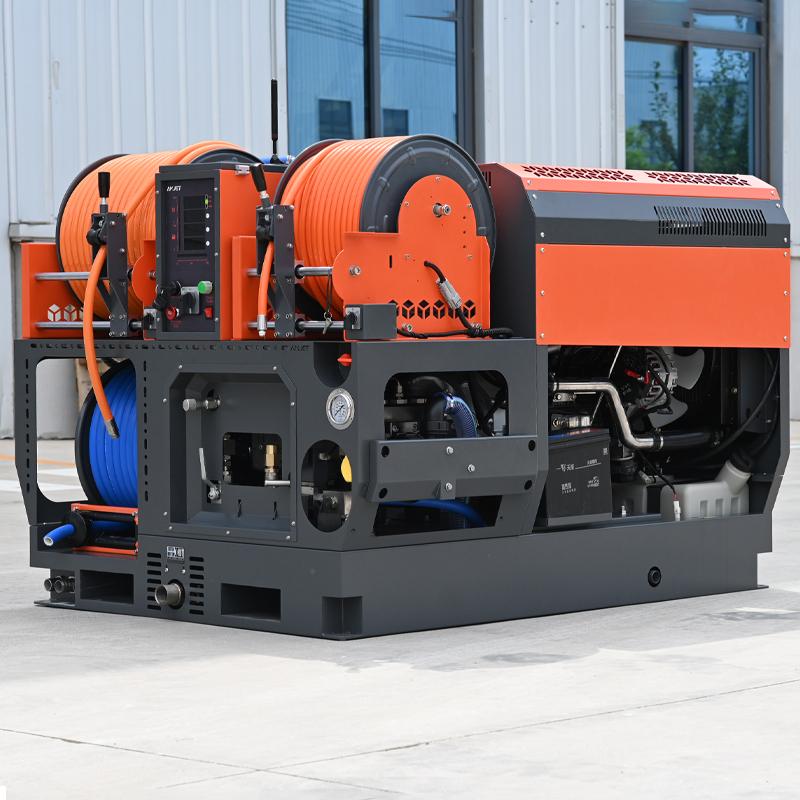
Blocked sewers don't wait for budgets or business hours—and neither should your cleaning equipment. That’s why a growing number of municipal contractors are looking to AMJET, a China sewer cleaning jetting machine factory that has been quietly building a name in high-pressure drain cleaning systems. From compact urban units to heavy-duty rigs for global municipal needs, AMJET’s approach focuses on durability and field-ready performance. In this post, we’ll look at what actually matters when choosing a jetting machine—and why AMJET might be the practical partner your crew has been missing.
Why Peak Pressure Numbers Rarely Tell the Whole Story on a Sewer Line
A single spike in pressure can look alarming on a gauge, but it often reflects a momentary blockage or a sudden release of trapped air rather than a chronic defect. Most sewer lines operate under constantly shifting loads, so a high reading captured at one instant may vanish minutes later when flow returns to normal. Without tracking pressure over a full cycle of use, that number is just a snapshot of turbulence, not a diagnosis.
Long-term wear shows up in the gradual buildup of residue, root intrusion, or pipe deformation, and these conditions rarely produce dramatic peak readings. Instead, they create a pattern of modest but persistent elevation or frequent small fluctuations that a single maximum value will smooth over. Relying on the highest recorded pressure can therefore point attention away from the very sections that are slowly losing capacity.
Experienced contractors look at the shape of the pressure curve, the recovery time after a surge, and how the line behaves under different flow rates. Those clues reveal whether the system is flexing, leaking, or holding debris. A lone peak number says nothing about whether the line drains well at 3 a.m. or backs up every time a washing machine discharges.
Inside a Chinese Factory Turning Out High-Pressure Drain Cleaning Equipment for Export
Metal shavings curl off a lathe as a technician in navy overalls checks the thread depth on a stainless steel nozzle body. Along the far wall, rows of half-assembled drain jetters sit on steel carts, their braided hoses coiled like sleeping snakes. The air smells of cutting oil and rubber, and every few minutes a short burst of compressed air hisses from a test bench where a worker flushes debris from a newly machined valve.
Quality checks are woven into the line rather than tacked on at the end. One station runs each pump at 4,000 psi against a closed circuit while a digital gauge records pressure drop over sixty seconds. If the needle wobbles more than a fraction, the unit gets pulled and the seals replaced. Nearby, a gray-haired inspector taps a small hammer against welded joints, listening for the dull thud that signals a hidden crack. He marks a pass with a chalk X on the frame.
Finished units travel to the packing area, where shrink wrap is applied in two layers and foam blocks are cut to fit the carton corners. On any given afternoon, a container might hold machines bound for Rotterdam, Houston, or Melbourne, each with slightly different hose fittings and warning labels. The line doesn't stop for photo ops; it moves at the pace of the slowest careful hand.
Direct Sourcing From China Removes a Layer of Cost for Municipal Buyers
When municipal buyers source directly from Chinese manufacturers, they bypass the traditional importer or distributor markup that often adds 15 to 30 percent to the final cost. A city purchasing traffic cones, street signs, or water treatment components, for example, typically deals with a domestic wholesaler who has already handled freight, customs, and warehousing. Cutting out that middle layer means the municipality pays closer to the factory gate price, with only actual logistics and compliance costs added on top.
The savings are not just theoretical. Procurement teams that establish direct relationships with factories in Guangdong or Zhejiang can negotiate volume pricing based on the city's annual needs, locking in lower unit costs for everything from reflective vests to pipe fittings. One mid-sized city reported saving over $200,000 in a single fiscal year on park benches and bollards after switching to direct sourcing, without any reduction in quality or delivery speed.
There are, of course, added responsibilities: language barriers, quality inspections, and import documentation require dedicated staff or a trusted third-party agent. But the cost of hiring one or two procurement specialists is often far less than the markup eliminated. For budget-constrained municipal buyers, the math is straightforward—fewer hands in the supply chain means more public funds stay where they belong.
Matching Hose Reels, Nozzles, and Water Tanks to Daily Route Demands
Route plans shift from day to day, and so do the real-world demands on your equipment. A hose reel that works fine for tight residential loops may leave you dragging excess line on open stretches, while a nozzle set for a narrow jet can't cover wide sidewalks fast enough. Matching the reel length, nozzle spray pattern, and tank size to the specific routes you run prevents wasted time at hydrants and keeps the crew moving without constant stops.
Start by mapping the longest distance you need to reach from the truck on each route. A reel with 150 feet of hose might be overkill for narrow driveways but barely enough for long park paths. Choose a nozzle that adjusts between a focused stream for caked mud and a wide fan for rinsing large flat surfaces—this avoids swapping heads mid-shift. Tank capacity should reflect total water usage per loop, factoring in refill points so you don't carry a full tank on short runs or run dry before the last stop.
Small adjustments based on daily feedback make a bigger difference than a uniform setup. If drivers report finishing with half a tank left, reduce the fill level and save fuel; if they're refilling twice on one route, move to a larger tank or swap in a lower-flow nozzle. Revisit the match each season too, since leaf litter, road salt, and construction debris all change how much water and what spray force each route actually requires.
The Support Items That Keep a Jetting Unit Working Year After Year
Nozzles, seals, and filter elements rarely get the spotlight, but they quietly decide whether a jetting unit fires up cleanly on a Monday morning or sputters halfway through the first job. Keeping a small stock of wear-prone parts on hand—think ceramic inserts, high-pressure hoses with intact outer jackets, and O-rings that haven't hardened—turns unexpected downtime into a ten-minute swap instead of a lost day. The units that run year after year are almost always backed by a shelf of these unglamorous spares.
Water quality plays a bigger role than many operators expect. Hard water leaves mineral crust inside nozzles and valve seats, while sediment chews through pump packings faster than normal wear ever could. Simple add-ons like inlet strainers, softeners, or a post-job flush routine extend the life of the entire high-pressure circuit. When those support items become habit rather than afterthought, the pump, reel, and controls stay in sync far longer than the manual ever promises.
It's also worth matching replacement parts to the specific unit rather than grabbing whatever fits from the nearest supplier. A slightly off-spec nozzle can raise pressure in the wrong places, and a bargain hose with a lower burst rating puts everyone on the crew at risk. The most reliable machines aren't necessarily the most expensive—they're the ones whose owners treat support items as part of the tool, not as an aftermarket nuisance.
Adapting One Machine Platform for Different Pipe Sizes and Local Regulations
One machine platform handles 6-inch to 48-inch pipe by swapping four machined jaw sets and changing the travel stop pins. Each jaw set is stamped with diameter range and wall-thickness schedule, so a crew can switch from Schedule 40 carbon steel to thin-wall stainless in under twenty minutes without recalibrating the laser guide.
Local code differences are not treated as an afterthought. The control cabinet stores separate parameter tables for ASME B31.1, EN 13480, and JIS B 2220 applications, including preheat curves and post-weld cooling rates where required. A physical key switch locks out non-compliant settings, making it difficult to accidentally run a North American WPS on a European job site.
Instead of shipping new hardware for every regional variation, the machine uses interchangeable cartridge valves and a field-replaceable pressure map module. This allows the same base frame and motor to meet PED 2014/68/EU documentation in one plant while running under CRN-registered fittings in another, reducing duplicate inventory for multi-site contractors.
FAQ
The factory focuses on high-pressure water jetting machines built to clear blockages in sewer and drainage lines, with pressure and flow combinations suited for municipal-scale workloads.
Pressurized water is forced through specialized nozzles that direct jets forward to cut through debris and rearward to flush loosened material back toward the access point, allowing the hose to advance through the pipe.
Yes, they are designed for daily maintenance flushing as well as heavier clog removal tasks. Adjustable pressure settings let operators switch between gentle pipe conditioning and aggressive clearing.
Depending on the model, pressure ratings typically span from about 1500 psi to 5000 psi, with flow rates matched to pipe diameter and job severity, so smaller laterals and large trunk sewers can both be served.
We regularly export to municipal contractors and utility agencies worldwide. Each unit is packed for ocean freight, and we provide installation guidance, operation manuals, and remote technical support in English.
Yes, many configurations are available. We can adapt frame dimensions, engine options, hose reel capacity, and control systems to fit the client's chassis and meet regional safety or emissions requirements.
We maintain a stock of critical components like pumps, hoses, nozzles, and seals. Customers can order replacements directly, and our engineers can assist with troubleshooting via video call or on-site visits for larger projects.
Because we combine direct factory pricing with engineering flexibility. Rather than offering only fixed standard models, we work with buyers to match the machine to their actual pipe conditions, crew experience, and maintenance budget.
Conclusion
Municipal buyers often fixate on peak pressure figures when evaluating a sewer jetting machine, but that number rarely tells the whole story. Effective drain cleaning depends on how flow rate, nozzle design, hose length, and water tank capacity work together on a daily route. A Chinese factory building high-pressure drain cleaning equipment for export has learned to focus on this practical balance rather than chasing flashy specs. By using one adaptable machine platform, the same core unit can be configured for different pipe sizes and local regulations without forcing customers into expensive overhauls. Direct sourcing from these manufacturers removes an intermediary layer, which means municipal budgets stretch further and buyers can invest in the full setup instead of settling for a stripped-down base unit.
What keeps a jetting unit productive year after year is not just the pump but the support items around it: hose reels, nozzle kits, and buffer tanks matched to actual route demands. Chinese suppliers that understand export markets tend to treat these components as part of the complete package rather than an afterthought. They help municipal teams choose the right hose length for typical access points, select nozzles that handle both grease and root intrusion, and size water tanks so crews are not constantly returning to refill. This component-level attention, combined with a single platform that adapts to varying regulations, lets cities avoid overpaying for unnecessary pressure ratings while still getting reliable daily performance. It is a practical, route-driven approach that feels less like a generic product pitch and more like a working partnership for long-term maintenance.
Contact Us
Contact Person: Mike
Email: [email protected]
Tel/WhatsApp: +86 19545555505
Website: https://www.amjeting.com/