

China Rubber Machinery: Advancements and Industry Insights
2026-10-15
The global rubber machinery landscape is evolving fast, and China sits at the center of that shift. From precision mixers to intelligent curing presses, the country's equipment makers are no longer just scaling up -- they're redefining what reliability and efficiency mean on the factory floor. In this post, we'll unpack the key advancements reshaping the industry, the market forces driving them, and what they signal for manufacturers worldwide. Along the way, we'll also look at how specialists like AUGU AUTOMATION are turning these changes into practical, production-ready solutions.
Servo Drives Quietly Replace Hydraulic Muscle
Walk through any modern assembly line and you'll notice something missing: the hiss and thump of hydraulic actuators. In their place, servo drives hum with a near-silent precision that's reshaping how machines move. The shift isn't just about decibels—it's about ditching the messy, energy-hungry muscle of oil and pumps for direct electrical control. Maintenance crews once spent weekends mopping leaks and swapping hoses; now they check firmware versions.
Servo drives bring a level of finesse hydraulics can't match. A hydraulic press might stop within a few millimeters, but a servo-driven axis holds position to fractions of a millimeter while adjusting torque on the fly. That tight loop between command and response lets packaging machines switch product sizes in seconds, not hours. Energy use drops too, because a servo only draws current when it moves—no constant idling of a pump just to keep pressure ready.
The quiet takeover is happening in metal forming, injection molding, even theatrical rigging. Each retrofit or new build swaps bulky cylinders and valve banks for compact motors and cables. Operators notice the workplace feels less like a factory floor and more like a lab. And when a fault does occur, the drive's diagnostics point to a specific error code instead of a vague smell of hot oil. That's a different kind of muscle—one that thinks while it works.
Where Chinese Mixing Lines Outpace Legacy Systems
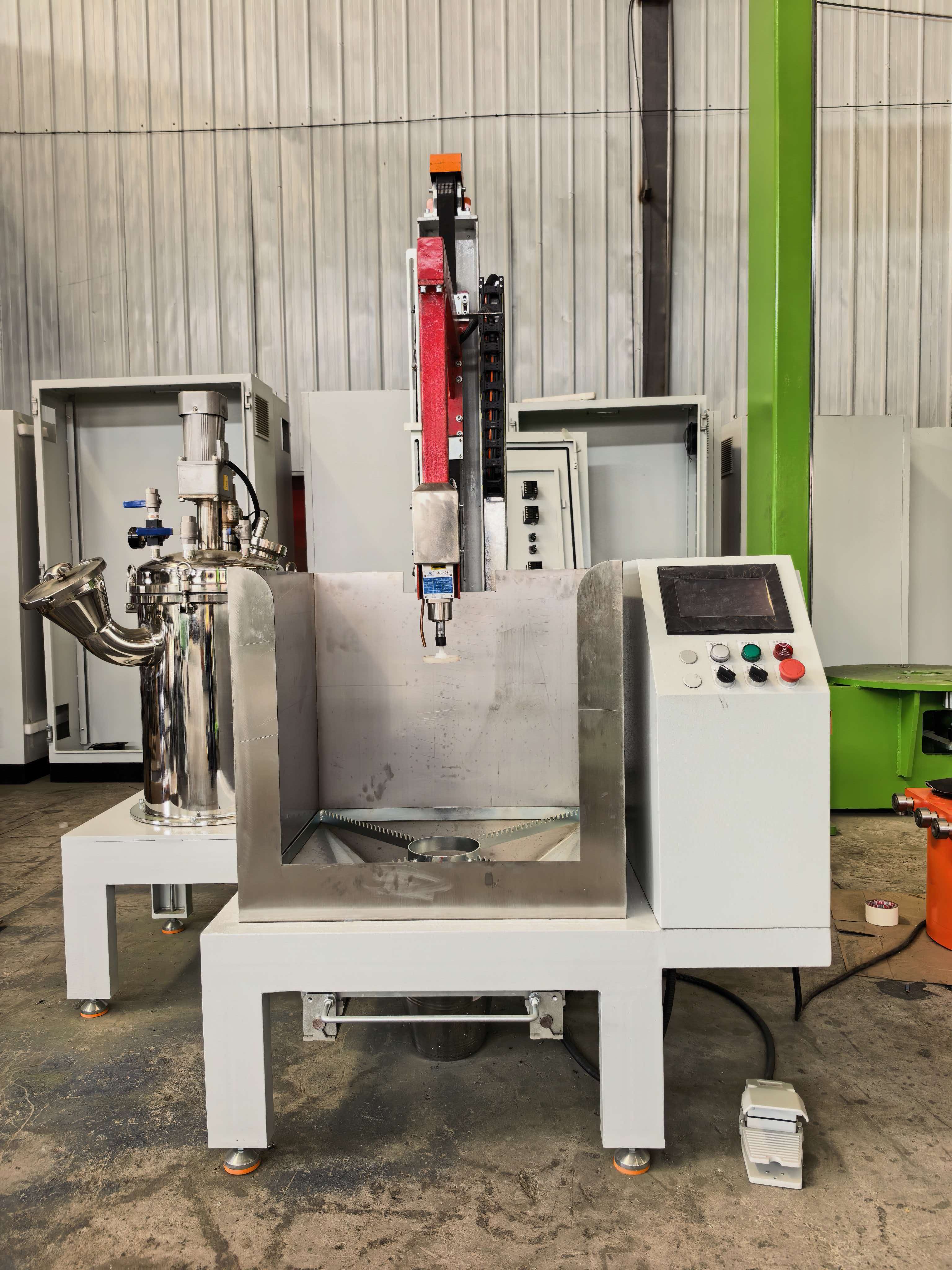
The gap shows up first in throughput. Modern Chinese mixing lines routinely handle batch cycles under four minutes, while many legacy setups still need twelve or more just to reach a workable viscosity. That difference compounds across a shift, turning what used to be a bottleneck into a continuous flow.
Control architecture plays an equal role. Instead of relying on fixed timers and manual sampling, newer lines pair in-line rheometers with adaptive blade logic. Operators adjust one parameter and the system recalibrates shear, temperature, and discharge speed without stopping the mixer. Legacy systems typically require a full halt for any meaningful change.
Maintenance patterns have shifted as well. Sealed direct-drive motors and modular wear plates mean most service happens during scheduled windows, not emergency callouts. Older gearboxes, belts, and open bearing housings demand constant attention, which quietly erodes uptime even when the machine is technically running.
Tire Building Automation Hits a Turning Point
For years, tire makers chased automation with cautious half-measures—robotic arms bolted onto legacy lines, vision systems that flagged defects but never fixed them. The payoff rarely matched the promise. That era is quietly closing. A new breed of machines doesn't just repeat motions; it adjusts on the fly, reshaping how green tires are assembled, spliced, and inspected. The shift isn't about adding more sensors. It's about letting the line reason.
What changed? The cost of adaptive control finally dipped below the cost of scrapped batches and overtime. Older systems assumed every material roll behaved identically. Newer ones read calender thickness, ply tension, and splice overlap in real time, nudging drums and servos without human intervention. One plant manager in Ohio cut startup scrap by 38 percent in a quarter—not by buying faster robots, but by giving the line a short-term memory. That's the turning point: automation stopped being a set of rigid instructions and started being a conversation with the process.
Of course, the transition isn't painless. Skilled operators who once tweaked guides by hand now watch dashboards and trust algorithms they can't fully see. Suppliers race to retrofit older curing presses with edge computing modules, while unions press for retraining over layoffs. Yet the direction is unmistakable. Tire building, long seen as too tricky and too variable for deep automation, has crossed a threshold. The next five years won't be about whether machines can build tires—they already can. They'll be about whether the humans beside them learn to let go.
Export Orders Push Customized Extruder Designs
International buyers operating in very different production environments have stopped settling for off-the-shelf extruders. A food processor in humid Southeast Asia may request corrosion-resistant coatings on contact parts, while a European compounder focuses on energy recovery and modular barrel sections for rapid formula changes. These export-driven requirements force design teams to reconsider core parameters rather than simply adding accessories.
Customization often starts with screw geometry. High-fiber pet food or heavily recycled polymers require deeper feed pockets and gentler compression profiles to prevent shear overheating. Export projects from South America and the Middle East have pushed for segmented screws that can be reassembled on site without specialized tools, reducing downtime in regions where spare parts take weeks to arrive.
The shift also influences control architecture. Instead of a single recipe-based PLC, newer export models incorporate open communication protocols so local technicians can integrate third-party sensors or adjust temperature zones according to regional raw material variability. These design choices, born from specific export orders, gradually become standard options that benefit all customers.
Energy Audits Now Shape Machinery Purchases
The days of buying a machine based on horsepower and price alone are fading fast. Energy audits have become the first step in the procurement process, with plant managers demanding hard numbers on kilowatt draw, idle consumption, and peak load impacts before a purchase order ever gets signed. A machine that looks cheap on the invoice can quietly drain a facility's budget through inefficient motors, poor insulation, or control systems that never truly sleep.
This shift has pushed manufacturers to redesign not just the machinery itself, but the entire sales conversation. Reps now walk in with audit-ready spec sheets, real-world load profiles, and payback calculators that show exactly how long it takes for efficiency gains to offset a higher sticker price. In many cases, a slightly more expensive unit with a better energy profile wins the bid because the audit reveals it will save thousands over its service life.
The ripple effect is also changing how used equipment is valued and traded. Older machines with poor audit results are becoming harder to sell, while retrofitted units with documented efficiency upgrades command a premium. Energy audits are no longer a nice-to-have — they are the new baseline for any serious capital equipment decision.
Domestic Brands Rethink After-Sales Support
For years, domestic brands treated after-sales support as a necessary cost center, often limited to a phone line and a stack of warranty forms. That mindset is unraveling. A growing number of homegrown companies now see the post-purchase phase as a chance to build loyalty that advertising alone cannot buy. From appliance makers dispatching technicians within a 24-hour window to smartphone brands offering walk-in repair bars in tier-two cities, the focus has shifted from simply fixing products to managing the entire ownership experience.
Part of this rethink stems from data. Warranty claims, return patterns, and service call logs are no longer buried in spreadsheets; they feed directly into product design and supply chain decisions. When a recurring fault appears in a specific batch, teams can adjust assembly lines or issue over-the-air fixes before customers even notice. This blend of after-sales intelligence and proactive outreach turns a potential complaint into a quiet brand win, especially in markets where word of mouth carries more weight than glossy campaigns.
The result is a more human form of support. Instead of scripted apologies, customers encounter regional service partners who speak their language, flexible pickup options, and transparent repair tracking. Domestic brands are learning that the moment after a sale—when something goes wrong or needs maintenance—is when trust is either cemented or lost. Rethinking that moment, rather than outsourcing it to the lowest bidder, is what separates a forgettable purchase from a relationship that survives the warranty period.
FAQ
Precision control systems and energy-efficient hydraulic drives have become standard. Many manufacturers now embed real-time monitoring and predictive maintenance features into tire-building machines and mixers.
EV tires require lower rolling resistance and higher durability, which has pushed machinery makers to refine extrusion and calendering lines. This has opened new orders from both domestic and overseas tire plants.
Tire curing presses and internal mixers are expanding quickly, driven by replacement cycles and the need for larger, more uniform batches. Laboratory and testing equipment is also growing as quality standards tighten.
They have moved from being low-cost alternatives to providers of mid-range and high-end systems, especially for tire producers in Southeast Asia, the Middle East, and Africa. Many now offer complete turnkey lines with local service support.
Yes, there's a clear move away from isolated robotic arms toward fully integrated smart workshops. Data from each machine feeds into a central system that adjusts parameters without operator intervention.
Certification requirements and long validation cycles in Europe and North America remain the biggest hurdles. Some companies address this by partnering with established distributors or acquiring local service teams.
Lower energy consumption per tire and reduced scrap rates are now key selling points. Several new machines use servo drives and heat recovery systems to cut both carbon footprint and operating costs.
Beyond the initial price, check the supplier's installed base, spare parts availability, and response time for software updates. A strong local reference from a similar production setup is often more telling than a brochure.
Conclusion
Across China's rubber machinery sector, the shift away from hydraulic muscle is no longer a niche experiment. Servo drives now handle precision tasks once reserved for heavy cylinders, cutting cycle times and energy waste in presses and calenders without sacrificing force. The same practical momentum appears in mixing lines, where domestic suppliers have outpaced legacy systems by integrating tighter temperature control, faster ram cycles, and self-adjusting rotor speeds. These lines routinely deliver batch-to-batch consistency that older imported setups struggle to match under high filler loadings. Tire building automation has reached a genuine turning point as well—carcass and belt servicers now coordinate through vision-guided positioning, reducing splice errors and enabling rapid size changeovers that were unrealistic five years ago.
Export demand has pushed extruder designs far beyond off-the-shelf configurations. Buyers in Southeast Asia and Latin America increasingly request custom screw geometries, modular downstream cooling, and quick-change die heads for mixed product runs, and Chinese manufacturers are responding with shorter lead times than European rivals. Energy audits, once an afterthought, now steer purchasing decisions: a machine's specific energy per kilogram of compound often outweighs headline price. Meanwhile, domestic brands are rethinking after-sales support by stationing engineers near overseas clusters and offering remote diagnostics tied to production data, not just emergency repairs. The result is a supply base that competes on uptime and process know-how rather than price alone—a notable shift in how China's rubber machinery industry positions itself globally.
Contact Us
Contact Person: Lareina
Email: [email protected]
Tel/WhatsApp: +86 17561696737
Website: https://www.auguauto.com/