

China Industrial Heating and Cooling Solutions: Trends and Innovations
2026-10-29
Most factories still treat industrial heating and cooling as a fixed cost. In China, the smartest operators have turned it into a competitive weapon. From AI-driven heat pumps to waste-heat recovery that slashes energy spend, the latest innovations aren’t about comfort—they’re about survival in a low-carbon economy. Tongbaote has tracked these shifts on the ground, and the trends below show exactly where the next wave of industrial thermal management is heading.
High-Temperature Heat Pumps Leave Pilot Mode Behind
Until recently, high-temperature heat pumps were mostly confined to demonstration sites and subsidized pilot projects. That picture has changed quickly as industrial operators replace aging gas boilers with units that reliably deliver 120°C to 160°C heat for drying, distillation, and steam generation. Food processors, paper mills, and chemical plants are no longer just testing the technology—they are signing multi-year service contracts and integrating it into core production lines.
The shift out of pilot mode rests on a few concrete engineering advances. New compressor designs and refrigerant blends allow a single machine to handle larger temperature lifts without sacrificing coefficient of performance. At the same time, controls have become smarter, letting plants match heat pump output to fluctuating batch processes instead of running them at fixed loads. The result is not only lower emissions but also predictable payback periods that compete with fossil-fuel equipment on total cost of ownership.
Policy and energy economics are accelerating the transition. Industrial carbon pricing, volatile natural gas prices, and stricter limits on process emissions push engineers to treat high-temperature heat pumps as standard components rather than experimental add-ons. Suppliers have responded by modularizing systems and expanding service networks, which further reduces installation risk. What was once a pilot-scale curiosity is now a procurement category that plant managers evaluate alongside boilers, electric heaters, and combined heat and power units.
Waste Heat Starts Paying Its Own Way
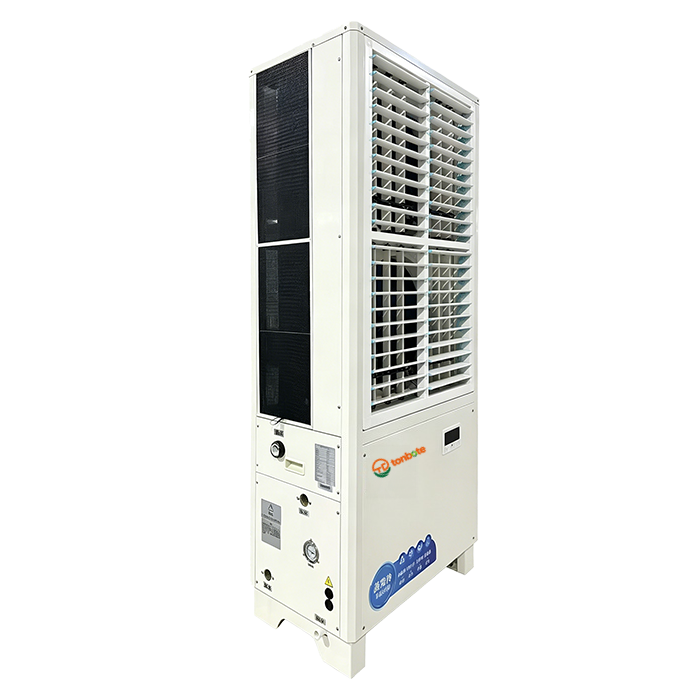
For decades, the heat bleeding out of exhaust stacks and cooling towers was just a cost of doing business. Now a growing number of manufacturers are installing equipment that turns that low-grade thermal energy into electricity or useful warmth, and the savings show up faster than expected.
A metal foundry in Ohio, for instance, captures exhaust from its melting furnaces and runs it through an organic Rankine cycle unit. That single retrofit covers about 12% of the plant's annual power demand and paid for itself in under three years. Food processors, cement plants, and data centers are pursuing similar setups, with some using waste heat to preheat boiler feedwater or drive absorption chillers instead of producing electricity.
What changed is not the physics but the economics. Modular systems have become cheaper and easier to install without halting production, and utility rates keep climbing. When the payback window shrinks to two or three years, waste heat stops being an afterthought and starts looking like an underused asset already on the books.
Factory Cooling Gets a Real-Time Reflex
For decades, industrial cooling loops operated on a schedule—pumps churning at fixed speeds, valves opening on preset timers, and operators reacting to alarms minutes after a temperature spike had already stressed the line. That lag was manageable when tolerances were loose. Today’s processes run far tighter. A drift of even two degrees in a chemical reactor or a data center cold aisle can ruin product batches or trigger thermal throttling. This is why the newest generation of cooling control has moved from periodic checking to something closer to a biological reflex: sense, decide, act—within a single control cycle.
The shift hinges on edge-deployed sensors and controllers that read coolant temperature, flow rate, and load demand dozens of times per second. Instead of sending raw data to a central SCADA system and waiting for a command to come back, these controllers run local models that infer upstream heat load from pressure differentials and return-line gradients. When a plastic injection machine suddenly cycles up, the cooling loop sees the change within two hundred milliseconds and trims a three-way valve or ramps a variable-speed pump. No human approval needed, no cloud latency, no batch override. It is the same architecture as a reflex arc: stimulus at the sensor, processing at the spinal cord, response at the muscle—all before the brain even notices.
The operational payoff is small but compounding. Pumps no longer fight against overpressure caused by a closed valve; they ease back and save 8–12 percent on cooling energy during partial-load nights. Chillers run at their most efficient point because evaporator flow never starves. More importantly, operators stop chasing oscillation—those slow sine waves of temperature that came from overcorrection. They now watch flat-line trends and intervene only for maintenance, not for every shift change. A real-time reflex doesn’t just cool faster; it removes the guesswork and the gasping corrections that used to define factory cooling.
Refrigerant Chemistry Takes a Low-Carbon Turn
For decades, hydrofluorocarbons were the default choice in cooling systems, prized for their stability and efficiency. But that stability came at a steep climate cost, with some compounds trapping thousands of times more heat than carbon dioxide. The industry's response has been a quiet but determined shift toward molecules engineered to break down faster in the atmosphere or to sidestep fluorine chemistry altogether.
The new wave of low-carbon refrigerants isn't a single drop-in replacement; it's a rethinking of what a refrigerant can be. Hydrofluoroolefins shorten atmospheric lifetimes to days instead of decades, while propane and isobutane bring high efficiency with near-zero global warming potential but demand new safety protocols. Even carbon dioxide itself is returning as a working fluid, operating at pressures that force compressor redesigns.
These shifts ripple through equipment design, service training, and building codes. Flammable refrigerants require leak detection and charge limits, while high-pressure systems call for sturdier heat exchangers. Yet the payoff is measurable: a cooling sector that no longer undermines the very climate it's meant to make bearable. The chemistry isn't settled, but the direction is unmistakable.
Thermal Storage Moves Beyond the Demo Phase
Thermal energy storage has long been stuck in pilot purgatory, with impressive lab results rarely translating into full-scale commercial operations. That picture is changing quickly. A handful of projects in Europe and North America are now operating at utility scale, storing heat in molten salts, crushed rock, or custom ceramics for hours or even days. Utilities that once viewed thermal storage as a science experiment are signing long-term offtake agreements, and industrial players are integrating storage directly into their process heat loops to cut natural gas use.
The shift owes much to falling component costs and smarter system design. Rather than competing head-to-head with lithium-ion batteries on short-duration discharge, thermal storage developers are targeting eight to one hundred hours of energy shifting, where batteries become prohibitively expensive. Pairing electric resistance heaters with insulated storage media, these systems convert cheap midday solar power into heat, then release it as steam or hot air when demand peaks. Several recent installations boast round-trip efficiencies above 70%, a figure once thought unattainable outside the lab.
Perhaps the clearest sign of maturity is the financing structure. Early thermal storage projects relied on government grants and venture capital. Now, infrastructure funds and pension managers are underwriting multi-hundred-megawatt portfolios, drawn by predictable cash flows and minimal degradation over decades of cycling. As the first wave of commercial plants reports full-year performance data, the technology is finally moving from proof-of-concept to a standard option in the grid planner’s toolkit.
Custom Cooling for China’s Hardest-to-Cool Spaces
Most off-the-shelf air conditioners stall in the exact places they are needed most. A repurposed factory floor in Guangdong, a windowless telecom closet in Shanghai, a basement archive in Chengdu—each one traps heat differently, yet standard units treat them all the same. The real work starts by measuring air paths, moisture swings, and equipment loads before choosing a single component.
Custom builds replace guesswork with matched compressors, condensers, and airflow layouts. In humid coastal cities, oversized cooling coils often do more harm than good, pulling too much moisture too fast. In northern industrial towns, dust and subzero winters demand sealed cabinets and low-ambient controls that never appear in generic catalogs.
The payoff rarely shows up in brochures. It is the server rack that keeps humming through a heatwave, the archival paper that stays crisp through monsoon season, the machine tool that holds its tolerance year-round. Solving these rooms means accepting that no single blueprint fits—only a system tuned to the space it actually serves.
FAQ
Rising gas prices and local air-quality rules are pushing plant managers toward high-temperature heat pumps and electric thermal storage, which can hit 120–160°C while cutting onsite emissions.
Real-time load forecasting and variable-speed chillers let facilities match cooling output to production schedules, often trimming electricity use by 15–25% without altering setpoints.
They are being embedded in heat recovery buffers and mobile thermal carts, allowing foundries and textile mills to capture waste heat and release it later for cleaning, drying, or space heating.
Instead of flaring low-grade heat, plants now feed it into organic Rankine cycle units or absorption chillers, converting surplus warmth into electricity or chilled water that offsets utility bills.
Some parks are adopting ice slurry distribution and shared thermal storage, so electronics fabs and food processors can draw cooling on demand without each running a separate compressor farm.
Enhanced vapor injection and cascaded refrigerant circuits allow air-source heat pumps to maintain heating capacity at -20°C, making them viable for northern workshops and warehouses.
Automotive paint shops and battery dry rooms are leading, using neural network models to adjust airflow and humidity while minimizing reheating energy between shifts.
Provincial carbon intensity targets and energy consumption caps are prompting steel, cement, and chemical firms to replace outdated furnaces with induction heating or mechanical vapor recompression systems.
Conclusion
High-temperature heat pumps have stopped being proof-of-concept projects in China. Distilleries, textile dyeing plants and chemical producers now run them at 120–150°C for actual production, often pulling the plug on older coal-fired boilers in the process. Waste heat recovery has undergone a similar shift. Rather than venting exhaust from kilns, compressors or furnaces, factories are using it directly for preheating boiler feedwater, drying raw materials or warming nearby buildings. The payback is no longer theoretical: many sites report energy bill cuts of 10–20% and payback periods under three years, which is why waste heat now gets a line item in capital budgets.
The cooling side is equally active. Chillers no longer run blind—flow meters, temperature probes and power monitors feed real-time data into control algorithms that adjust compressor speeds and valve positions on the fly, trimming consumption during partial-load hours. Refrigerant choices are changing too, with R-32, R-454B and natural options like ammonia/CO2 becoming common in Chinese industrial systems as older high-GWP gases are phased out. Thermal storage has matured past showcase installations: chilled water tanks and phase-change materials now handle daily peak shaving, letting plants avoid daytime grid tariffs. At the extreme end, custom cooling packages are appearing for battery formation rooms, data centers and cleanrooms where off-the-shelf equipment simply fails. Each space gets its own airflow pattern, humidity envelope and redundancy scheme, reflecting how China's industrial heating and cooling has become more precise, electrified and economically self-justifying.
Contact Us
Contact Person: Wanshu Chen
Email: [email protected]
Tel/WhatsApp: +86-13662871206
Website: https://www.mbcee.com