

Best Silicon Carbide Ceramic for High-Performance Industrial Applications
2026-10-08
When extreme heat, abrasive wear, and chemical attack shut down ordinary ceramics, engineers start looking for one material that refuses to quit. That search often ends with silicon carbide ceramic—but not all SiC is created equal. In high-performance industrial applications, the difference between a six-month replacement cycle and years of trouble-free service comes down to purity, microstructure, and manufacturing discipline. That’s where HUAYI TECH enters the conversation, turning advanced SiC into components that hold their shape, strength, and surface finish under conditions that break lesser materials.
What Makes Silicon Carbide Ceramic a Workhorse in Harsh Industrial Environments
Silicon carbide doesn't just survive where other materials fail; it often ends up outperforming metals and oxide ceramics by a wide margin. The combination of a Mohs hardness near 9.5 and a flexural strength that stays useful beyond 1,400°C means parts can run hotter, faster, and with less lubrication. In mechanical seals and pump shafts handling abrasive slurries, the edge isn't subtle—it's the difference between scheduled maintenance every few months and running for a year without a teardown.
Thermal shock is where SiC really separates itself. A low coefficient of thermal expansion along with high thermal conductivity lets it absorb rapid temperature swings that would crack alumina or zirconia. That's why you find it in kiln furniture, radiant tubes, and burner nozzles where cold air and hot combustion gases meet in the same breath. It also shrugs off most acids, alkalis, and molten salts, which makes it a default choice for chemical processing and semiconductor etch chambers.
There is no single silicon carbide; the material's behavior changes with sintering aids and grain structure. Reaction-bonded, pressureless-sintered, and direct-sintered variants each trade a little toughness for hardness or creep resistance. That range is what makes it a workhorse: an engineer can pick a grade for a slurry pump impeller, a rocket nozzle throat, or a heat exchanger tube bundle without leaving the same material family.
Core Material Traits Behind Dependable SiC Components
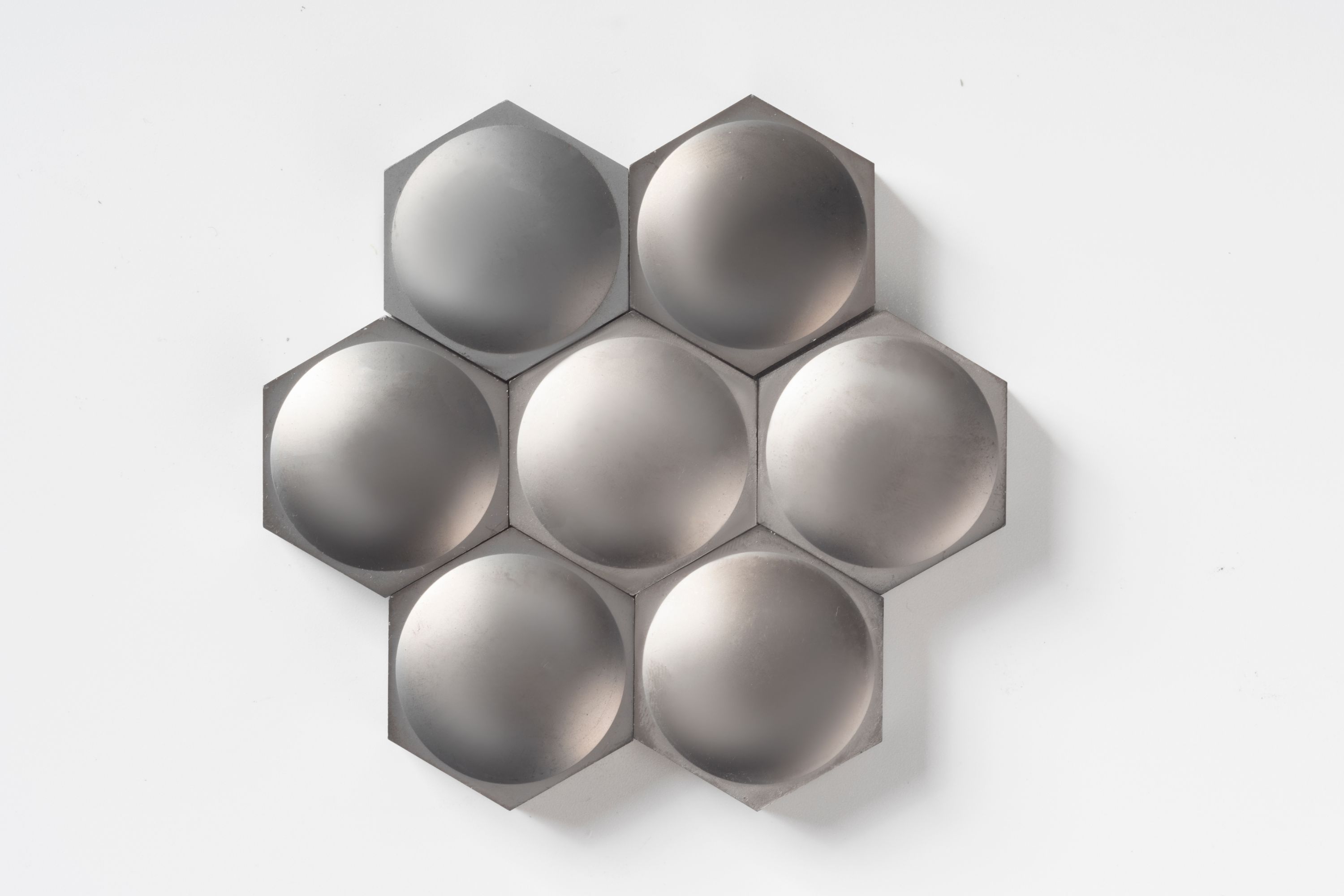
Silicon carbide earns its reputation for reliability through a combination of material characteristics that emerge before any component is machined. Its high thermal conductivity pulls heat away from hot spots quickly, while a low coefficient of thermal expansion means the material barely shifts as temperatures swing. This pairing prevents the micro-cracking and warping that often shorten the life of metal or polymer parts in cyclic heating applications.
Mechanically, SiC sits just below diamond in hardness, which gives seals, bearings, and pump vanes a long service life even when abrasive slurries or dry running conditions are present. The material also stays chemically passive in strong acids, alkalis, and oxidizing atmospheres, so surface degradation is rarely the first failure mode. Even at temperatures above 1000°C, it holds strength without softening, keeping dimensional stability in gas turbine and furnace hardware.
On the electrical side, a wide bandgap and high critical breakdown field allow SiC devices to block large voltages without leakage and switch at high frequencies without thermal runaway. This translates into power modules and sensors that keep working under conditions that would push silicon past its safe operating area. Together, these intrinsic traits mean dependable SiC components rely on the material itself, not on fragile protective layers or frequent replacement schedules.
Where Sintered Silicon Carbide Fits in Heavy Machinery and Processing
Heavy machinery rarely gives materials a gentle introduction. Slurry pumps, agitator shafts, and mechanical seals in mining or chemical plants run against quartz sand, acid mine drainage, and constant vibration. Sintered silicon carbide steps in because its hardness sits just below diamond and cubic boron nitride, but unlike those, it can be formed into complex seal rings and sleeve bearings at industrial scale. The lack of metallic binder means there is no soft phase to wash out, so a SiC wear face keeps its geometry long after tool steel has grooved and leaked.
In processing lines, the same logic applies to nozzles, cyclone liners, and valve trims. A sintered SiC nozzle handling abrasive slurries at 20 to 30 meters per second will outlast tungsten carbide in many applications, not because it is harder in every measure, but because its elastic modulus and low thermal expansion keep edges from chipping under thermal shock. When a spray dryer cycles between 40°C and 300°C several times a day, the SiC insert holds a tighter clearance than hardened stainless, reducing bypass flow and preserving yield.
There is also a quieter role in high-temperature structural parts. Furnace rollers, kiln furniture, and radiant tubes made from sintered SiC survive oxidizing atmospheres that turn alloy steels into scale within months. Its thermal conductivity moves heat away from hot spots faster than alumina, which prevents thermal cracking in dry-running gas seals and high-speed compressor faces. For maintenance planners, the payoff shows up as fewer scheduled rebuilds, less spare parts inventory, and a drop in those 2 a.m. calls from the control room.
Matching Silicon Carbide Grades to Abrasive and Corrosive Conditions
Choosing the right silicon carbide grade begins with a careful look at the wear mechanism and the chemical environment. Sintered silicon carbide (SSiC) offers a dense, low-porosity structure that resists both fine-particle abrasion and strong acids, making it a common first choice for slurry handling. However, its hardness can be a drawback in high-impact conditions where larger particles cause brittle fracture; in those cases, reaction-bonded silicon carbide (RBSC) with a coarser grain and some residual silicon may absorb impact energy more effectively, even though the free silicon phase is vulnerable to alkaline or hydrofluoric acid attack.
Corrosion resistance is not uniform across all grades. The binder phase or secondary materials in a component often dictate how well it withstands aggressive media. For example, silicon-infiltrated materials may fail quickly in caustic solutions or hot oxidizing acids, while pressureless sintered or hot-pressed grades with minimal metallic impurities maintain integrity. Graphite-containing grades, though helpful for dry running or thermal shock, can oxidize in strong oxidizers and should be avoided in those environments. Matching the grade therefore means checking not just the SiC grain itself but also the matrix and any porosity that could trap corrosive fluids.
Field experience often reveals that a single grade cannot cover a wide range of process upsets. Running short-term trials with actual slurry, monitoring wear rings and seal faces, and tracking pH, temperature, and solids loading help identify when a premium grade is justified. In some pipelines, a duplex approach works better: a hard, dense SiC liner for straight sections and a tougher reaction-bonded grade for elbows or areas with turbulent flow. This kind of selective matching extends service life far more reliably than using one generic silicon carbide everywhere.
Coping with Thermal Shock and Mechanical Stress Using SiC Ceramic
Silicon carbide ceramic handles rapid temperature swings without the cracking typical of most materials. Its high thermal conductivity pulls heat away from hot spots fast, while a low coefficient of expansion keeps the crystal lattice from moving much. That means steep temperature gradients produce very little internal strain, so a SiC component can be pulled from a furnace and quenched directly without the usual thermal shock failures.
Mechanical stress is a different problem. SiC is not ductile and will not bend before breaking. But its strong covalent bonds hold up under load at temperatures that soften metals, and its flexural strength remains high even in oxidizing atmospheres. The practical challenge is managing brittle fracture at sharp corners or surface flaws. Careful radii, polished surfaces, and compressive preloads in mounting hardware turn a brittle ceramic into a predictable load-bearing part.
Burner nozzles, pump seals, and heat exchanger tubes see this dual demand all the time. They cycle from cold start to combustion heat while carrying erosive particles and clamping forces. SiC survives those combined insults not because it is unbreakable, but because its thermal and mechanical behavior stay consistent through cycles that would fatigue or crack ordinary ceramics and many alloys.
Manufacturing Routes That Improve Density and Lifespan of SiC Parts
Silicon carbide components often fail early because pores, microcracks, and uneven grain boundaries introduced during shaping and sintering act as stress concentrators. One practical route to higher density without relying on exotic additives is to start with bimodal or trimodal powder blends. Coarse particles form a load-bearing skeleton while fine particles fill the interstitial voids, reducing green porosity before any heat is applied. Combined with cold isostatic pressing at pressures above 200 MPa, this approach routinely brings green density above 65% of theoretical, which in turn shortens the diffusion distances needed during subsequent densification and lowers the sintering temperature by 50–80 °C.
For lifespan gains, the post-sintering cooling profile matters as much as peak temperature. Slow, controlled cooling through the 1200–900 °C window prevents the nucleation of stacking faults that later grow into intergranular cracks under thermal cycling. Some production lines now use a two-stage pressureless sintering cycle: hold at 1450 °C to trigger early-stage neck growth, then ramp to 2050 °C under a mild argon overpressure. This avoids the exaggerated grain growth seen when parts are simply soaked at maximum temperature for long periods, yielding a fine-grained microstructure with hardness above 28 GPa and a Weibull modulus above 12 in four-point bending tests.
A less obvious but highly effective route is to introduce a small amount of boron carbide or carbon black during slurry preparation. These additives react with residual silica on powder surfaces, forming a transient liquid phase that accelerates pore removal at grain boundaries without leaving glassy films behind. In diesel injector nozzles and mechanical seal faces, parts produced this way have shown 30–40% fewer surface-initiated pitting failures after 5,000 thermal shock cycles between 20 °C and 600 °C, attributed to the elimination of isolated closed porosity that otherwise acts as crack initiation sites.
FAQ
Its hardness approaches that of diamond, so parts endure abrasive slurries and high-velocity particle impact far longer than alumina or hardened steel, especially in pump liners and blast nozzles.
Semiconductor wafer handling, chemical processing, mining, and gas turbine manufacturing all depend on its blend of thermal stability, corrosion resistance, and mechanical strength.
Sintered material offers higher density and flexural strength for severe mechanical loads, while reaction-bonded types can be formed into more complex shapes and often cost less for large, lightly stressed parts.
Yes, its low thermal expansion and high thermal conductivity give it better thermal shock resistance than most oxide ceramics, though designs should still avoid sharp internal corners and abrupt section changes.
Focus on documented flexural strength and Weibull modulus, tight dimensional tolerance capability, consistent microstructure from batch to batch, and proven experience in your specific operating environment.
It depends on the operating conditions. Initial cost may exceed alumina, but longer service life, fewer replacements, and less unplanned downtime often make it the lower total cost option in aggressive wear or chemical service.
It resists attack from nearly all acids, alkalis, and organic solvents, outperforming most metals and many ceramics, which is why it appears in mechanical seals, acid pump components, and heat exchanger tubing.
Precision grinding, lapping, and polishing can deliver tolerances within a few microns and surface finishes below 0.05 micrometers Ra for sealing faces, bearing surfaces, and optical or semiconductor fixtures.
Conclusion
Silicon carbide ceramic has earned its reputation as a go-to material for demanding industrial settings, and for good reason. Unlike many ceramics that crack or degrade when pushed hard, sintered SiC holds up under aggressive chemical exposure, sliding wear, and extreme heat. The material's near-diamond hardness, low thermal expansion, and high thermal conductivity let it shrug off conditions that would destroy lesser components. In pumps, valves, and mixers handling abrasive slurries or corrosive acids, SiC parts routinely outlast metals and conventional ceramics by a wide margin. The key is not just hardness but a stable, impervious microstructure that resists grain pull-out and surface pitting. When you add its ability to maintain strength at temperatures exceeding 1000°C, it becomes clear why engineers turn to this ceramic for the most punishing jobs.
Choosing the best SiC grade matters more than many realize. Direct sintered, reaction bonded, and pressureless sintered variants each bring distinct trade-offs in porosity, fracture toughness, and cost, so matching the grade to the actual abuse—whether it's high-velocity slurry erosion or thermal cycling in a kiln—decides long-term reliability. Manufacturing routes also play a huge role: optimized sintering, careful grain size control, and post-densification treatments boost density and fatigue life far beyond off-the-shelf options. Under rapid temperature swings, SiC's low thermal expansion and high conductivity prevent cracking, while its flexural strength handles mechanical stress without brittle failure. In heavy machinery, bearings, seal rings, and burner nozzles made from properly selected and processed SiC keep running where metals weld, oxidize, or wear out. The best silicon carbide ceramic isn't a single product; it's the right combination of grade, processing, and design for the specific high-performance challenge.
Contact Us
Contact Person: Junting Leo
Email: [email protected]
Tel/WhatsApp: +86 18615009766
Website: https://www.huayimaterial-china.com/