

Anti-UV Polyester Dope Dyed Filament Yarn: Key Factors When Choosing an Exporter
2026-10-07
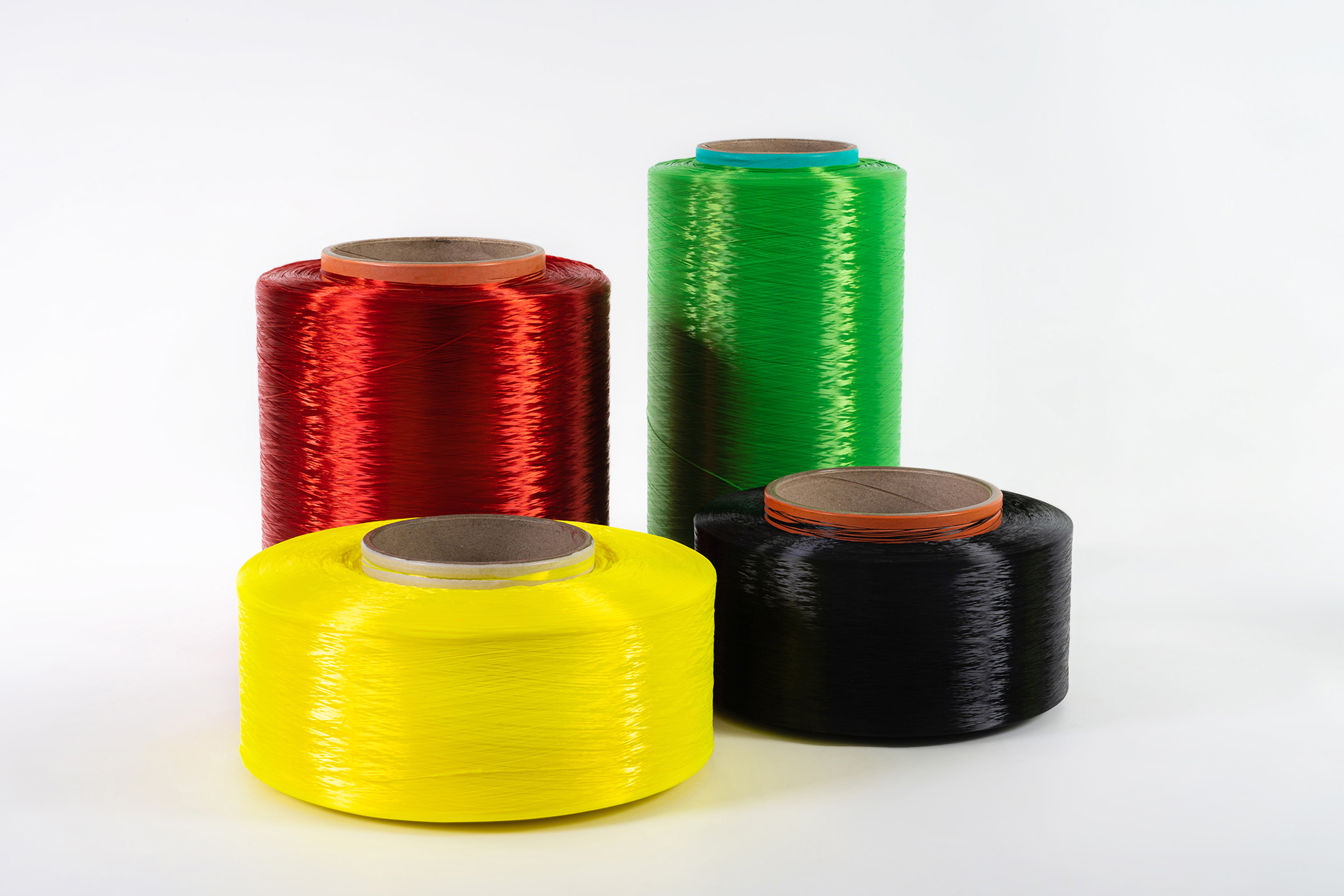
When sourcing anti-UV polyester dope dyed filament yarn, most buyers focus on specs like denier, colorfastness, and UV resistance—but the exporter you choose can make or break the entire supply chain. Changshu Polyester has spent years refining a production process that reduces batch-to-batch variation, yet many importers still overlook the hidden factors that separate reliable suppliers from costly ones. In this post, we'll unpack the key considerations—from UV stabilizer loading to dope dyeing consistency—so you can avoid the usual pitfalls and secure a partner that actually delivers on every order.
Verify the UV inhibitor is mixed into the melt, not coated on the yarn
Confirming that the UV inhibitor is embedded within the polymer melt rather than sitting on the yarn surface matters more than a quick visual check would suggest. A coated layer can wear off after a few washes or rub against guides during weaving, leaving fibers unprotected right when they need it most. To tell the difference, start by cutting a cross-section of the filament and looking at it under a light microscope. If the additive was blended into the melt, the entire core will show a uniform color or slight cloudiness, with no distinct boundary at the edge. A surface coating, by contrast, appears as a thin, often uneven ring around an otherwise clear center.
Chemical analysis adds another layer of certainty. Solvent extraction is straightforward: soak a sample in a solvent that dissolves only the UV stabilizer, not the polymer. Run the extract through UV-Vis spectroscopy or HPLC. If the inhibitor was truly mixed in, you will see it released gradually as the solvent penetrates the fiber, not all at once from the outer layer. For a faster field check, use a simple burn test on a few filaments. Melt-blended stabilizers often change the smoke or ash slightly, while a coated yarn may show a brief flare of additive burning off before the polymer catches. Neither test is perfect alone, but together they give a clear picture.
There is a practical reason to push for melt mixing over coating beyond just durability. UV inhibitors that are integrated into the polymer chain or matrix migrate slowly, so protection stays consistent from the fiber's skin to its core. A coated yarn might pass an initial UV exposure test, but six months of sunlight and repeated flexing will expose the untreated polymer underneath. When you verify the inhibitor is in the melt, you are not just checking a box for quality control—you are guaranteeing that the yarn's resistance to sunlight is a built-in property, not a temporary surface treatment. This distinction becomes critical for outdoor textiles like awnings, marine ropes, or geotextiles where replacing degraded material is costly and dangerous.
Get test data from actual production runs, not hand-picked samples
Testing against data pulled from actual production traffic gives you what no curated sample ever will: the ugly edge cases and strange combinations that emerge only when real users, with their messy inputs and unexpected workflows, hit your system. Hand-picked examples are usually clean, well-formed, and conveniently close to the happy path. That’s fine for early development, but it won’t reveal how the model handles malformed payloads, oversized fields, or the kind of mixed traffic that arrives during a routine Tuesday afternoon.
There’s another advantage that rarely gets mentioned. When a test fails because the input came from an actual user session, the conversation shifts immediately from “is this scenario even realistic?” to “what do we need to change?” The data already happened, so nobody can dismiss it as contrived. That saves a surprising amount of time and keeps the focus on fixing the underlying issue instead of debating the fixture.
Look for documented color consistency after 1,000 hours of UV testing
Most manufacturers will claim their finishes hold up, but few can point to actual test data that goes the distance. When you're comparing products, ask for documentation showing color stability after a full 1,000 hours of UV exposure. This is the kind of real-world stress that mimics years of direct sunlight in a matter of weeks. A finish that shifts noticeably during this window isn't ready for your project.
Pay attention to how the color is measured and reported. A credible test will use a spectrophotometer and reference the Delta E value—the numerical difference between the original and exposed color. Anything below a Delta E of 2 is generally invisible to most eyes, while values above 5 mean a visible, often unacceptable change. Don't settle for a simple visual check; the numbers tell the true story of pigment stability and resin quality.
Finally, look beyond the marketing phrase 'UV stable.' Request the actual test report and check for any fine print about accelerated weathering, humidity cycling, or panel orientation. The most transparent brands will share the exact test method and results, not just a pass/fail stamp. That level of openness is rare, and it separates products engineered for longevity from those simply dressed up for a brochure.
Check if the exporter can handle small trial orders before bulk commitment
Placing a small trial order is one of the smartest moves a buyer can make before committing to a large purchase. Many exporters push for big volumes right away, but how they handle a modest order often reveals their true capabilities. A supplier who dismisses small orders or tries to charge outrageous fees for low quantities may not value your business long-term. On the other hand, one who treats a trial run with the same care as a full container demonstrates reliability and flexibility — qualities you will want when scaling up.
To check this, simply ask about their minimum order quantity (MOQ) up front. If it is unreasonably high or they refuse to negotiate even a slightly reduced trial size, that is a red flag. Also pay attention to how they handle the logistics of a small shipment: do they provide proper documentation, keep you updated on production, and pack goods securely even for a few cartons? A supplier who cuts corners on a small order will likely cut corners on a big one, but with far more at stake.
Skipping this step can lead to costly mistakes, such as receiving bulk goods that differ from the samples you approved or dealing with a factory that cannot maintain consistency under pressure. A successful trial order, however, builds a foundation of trust and gives you leverage to negotiate better terms for future volumes. It is not about being distrustful — it is about being practical. After all, you would not buy a car without a test drive, so why commit to thousands of units without a small-scale test?
Examine how they protect yarn from humidity and light during ocean freight
Yarn shipped across the ocean faces two relentless enemies: moisture that seeps into containers and UV rays that can bleach or weaken fibers during long port waits. The most effective protection starts long before the vessel leaves, with vacuum-sealed plastic bags lined with moisture-absorbing desiccants. These aren't the small silica packets found in shoe boxes; industrial shipments use clay or calcium chloride desiccants capable of pulling several liters of water from humid sea air. For particularly sensitive yarns like wool or silk, shippers often add a second layer of defense by wrapping each pallet in aluminum-laminated barrier foil, which blocks both water vapor and light. This foil is taped at every seam to create a nearly airtight envelope.
Light protection is often overlooked because containers are dark inside, but the real risk comes during loading and unloading at open-air terminals. To counter this, many mills opt for black polyethylene wraps instead of clear plastic, and they position light-sensitive dyed yarns in the center of the container, surrounded by less delicate bales. Some logistics companies also use container liners made of reinforced woven polypropylene coated with an opaque film, which not only blocks sunlight during door-open periods but also prevents condensation from dripping onto the yarn when temperatures swing between day and night. This condensation—not rain—is the primary source of humidity damage in ocean freight, as warm moist air condenses on cold container walls and then drips onto the cargo.
Beyond physical barriers, smart shippers monitor conditions in real time. Tiny Bluetooth-enabled humidity and light sensors are now placed inside the yarn bales or attached to container walls, transmitting data to a dashboard that alerts logistics managers if humidity rises above 60% or if the container door is opened unexpectedly. In response, they can adjust ventilation settings on modern containers or reroute the shipment to a warehouse with climate-controlled storage before the yarn is compromised. This proactive approach, combined with desiccants and foil wrapping, reduces moisture-related claims to less than one percent for premium yarn exporters—proving that protecting yarn at sea is as much about monitoring as it is about materials.
Ask about their experience clearing specialty polyester yarns through customs
Dig into the specific snags they hit when the yarn had non-standard denier or a blend that confused the tariff codes. Did they ever have to argue for a particular HS heading, and what evidence finally convinced the reviewing officer?
Ask whether they've dealt with anti-dumping duties or quota rules tied to the country of origin, especially if the yarn was spun in one place and twisted or dyed in another. How did they structure the shipping docs to avoid a hold at the port?
Find out if they learned any workarounds for getting samples released faster, like pre-filing a technical data sheet with the fiber composition, tensile strength, and end-use description. Did any single piece of paperwork consistently cut their clearance time from days to hours?
FAQ
Ask for UV transmittance data at specific wavelengths (e.g., UVA 315-400 nm and UVB 280-315 nm) and accelerated weathering results after 100-200 hours of QUV exposure. A serious exporter will also explain which UV stabilizer chemistry they use—such as hindered amine light stabilizers or benzotriazole absorbers—and why it suits your end use.
Masterbatch is where UV blockers and pigments are concentrated, and poor dispersion leads to weak spots in the fiber. Exporters who compound their own masterbatch or work with a certified partner can adjust particle size and carrier resin compatibility, which directly affects spinning continuity and final UV resistance.
In dope dyeing, the color and UV additives are embedded through the whole filament before extrusion. There is no surface dye layer to wear away, so the yarn keeps its UV protection and color even after abrasion, cleaning, or prolonged sun exposure. Bath-dyed yarns usually lose protection faster because the UV treatment does not penetrate the core.
Request their color deviation tolerance in Delta E CMC (often less than 0.5 for critical applications), whether they keep retained samples for at least 24 months, and if they can provide a shade continuity certificate for each shipping lot. Also verify that they use the same chip lot and masterbatch recipe across your repeat orders.
Chip intrinsic viscosity, carboxyl end group content, and additive package all impact spinning stability and yarn tenacity. Exporters tied to reputable chip producers and who avoid frequent supplier switches produce more predictable yarn. Ask for chip certificates and whether they have dedicated storage to prevent moisture pickup before drying and extrusion.
Look for export cartons with aluminum foil liners or moisture barrier bags, pallets that are stretch-wrapped and corner-protected, and labels that clearly state lot number, denier, and UV rating. The exporter should also load containers to prevent shifting and offer desiccant packs if the destination has high humidity.
Experienced exporters can develop tailored formulations by adjusting UV stabilizer type and loading, then run small-scale trials before bulk. Ask for a clear pilot timeline, minimum order quantity for custom masterbatch, and whether they provide accelerated aging data specific to your exposure conditions, not just generic lab tests.
Conclusion
Sourcing anti-UV polyester dope dyed filament yarn means looking past the spec sheet. A reliable exporter will be able to show that the UV inhibitor is incorporated directly into the polymer melt rather than applied as a surface coating. This matters because a coating can wear off or degrade unevenly, while melt integration keeps protection consistent through the fiber cross-section. You also want test data pulled from regular production batches, not a few carefully chosen samples that may not reflect what you actually receive. Documentation of color stability after 1,000 hours of accelerated UV exposure is a solid indicator that the shade won't drift after months in direct sunlight.
Beyond the yarn itself, the exporter's operational habits matter just as much. Ask whether they accept small trial orders so you can run your own weaving or knitting tests before committing to container volumes. Pay attention to how they pack and ship the product—polyester yarn can absorb moisture and fade if exposed to humidity or light during long ocean transits, so proper moisture barriers and light-blocking packaging should be standard. Finally, dig into their track record with specialty polyester yarns in customs. Someone who understands tariff codes and documentation for dope dyed filament can prevent delays that would otherwise stall your production schedule.
Contact Us
Contact Person: CONNIE
Email: [email protected]
Tel/WhatsApp: 86-0512-53671634
Website: https://www.lida-yarn.com/