

Anti-UV Polyester Dope Dyed Filament Yarn Exporter: Key Factors to Evaluate Before Partnering
2026-10-17
Choosing the right anti-UV polyester dope dyed filament yarn exporter can make or break your product's performance in harsh sunlight. Beyond basic certifications, factors like color consistency, UV stabilizer dispersion, and supply chain transparency often separate reliable partners from costly mistakes. As a trusted name in this field, Changshu Polyester has seen how overlooked details—such as lot-to-lot shade variation or inconsistent yarn denier—lead to production delays and fading complaints. Before you sign any agreement, ask the questions most buyers skip: How is UV resistance verified? Can the exporter guarantee same-color continuity across reorders? This guide breaks down the key evaluation points to help you avoid hidden risks and build a supply chain that stands up to the sun.
Reading Between the Lines of UV Resistance Claims
Many products carry a "UV resistant" label, but that phrase hides more than it reveals. It doesn't mean the material will never break down under sunlight; it usually means the degradation has been slowed by additives or coatings. In practice, two products can both claim UV resistance and perform very differently after a single summer on a patio. The key is to treat the label as a clue, not a promise, and dig into what kind of testing backs it up.
Accelerated weathering tests, such as those using xenon-arc or fluorescent UV lamps, compress months of exposure into days. But those results don't translate cleanly to real-world conditions, where heat, moisture, and pollution interact with UV light. A fabric might hold its color beautifully in a lab chamber yet lose tensile strength after a season of actual sun and rain. Even more confusing, the property being measured can vary: some claims focus on colorfastness, others on mechanical integrity, and still others on surface gloss. Reading between the lines means asking which failure mode the manufacturer actually tested.
Better-formulated products often cite specifics, such as "85% tensile strength retention after 2,000 hours of QUV exposure" or a measurable color shift value. When those numbers are missing, the claim is little more than marketing shorthand. Additives like hindered amine light stabilizers (HALS) or carbon black can dramatically extend outdoor life, but the exact resin and additive package matters far more than a generic "UV stabilized" badge. So next time you compare options, treat broad UV resistance claims as a starting point for asking sharper questions—not as proof that one product will outlast another.
Why Dope-Dyed Color Consistency Deserves a Closer Look
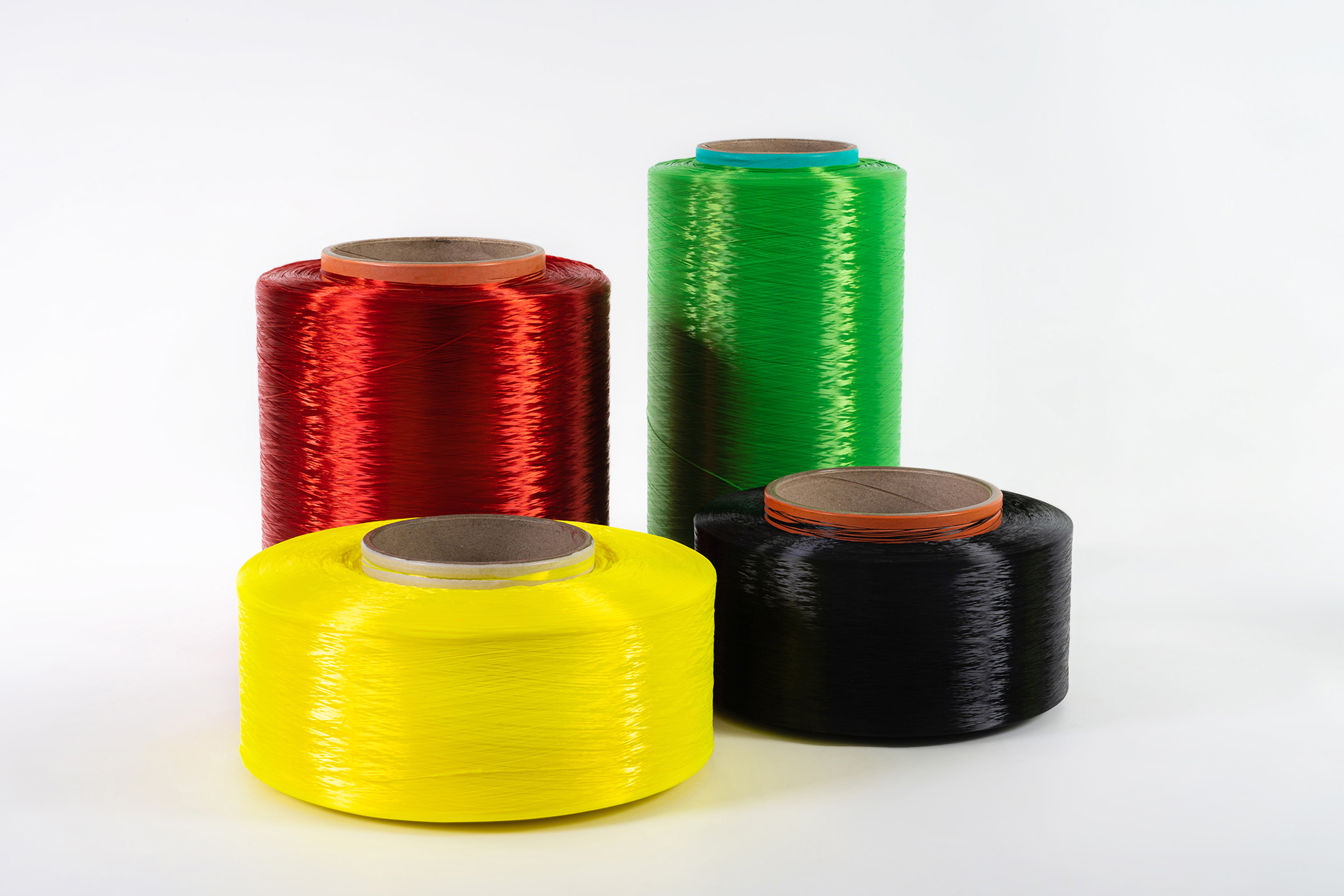
Most claims about dope-dyed fibers stop at the surface: color stays uniform from batch to batch. But look closer and that consistency starts to reveal how it quietly shifts responsibility from the dyehouse to the polymer plant. Once pigment is locked into the melt, every downstream step—from knitting tension to heat setting—inherits a color that won't forgive even slight process drift.
That predictability sounds like a win, and often it is. A designer can order the same deep navy in March and October without the usual lab-dip anxiety. Yet the same trait can flatten the organic variability that piece-dyed fabrics sometimes use to hide minor flaws. If the base fiber has stretch or luster inconsistencies, a perfectly even color will magnify them rather than mask them.
The real reason this deserves a closer look right now isn't just about aesthetics. As brands push for lower water and chemical footprints, dope dyeing moves from niche to standard. But the industry still leans on visual comparison methods built for traditional dyeing. That mismatch means two suppliers can claim "color consistent" while delivering shades that look different under store lighting. Getting consistency right demands new metrics, not just tighter tolerances.
Production Capacity That Won't Stall Your Timeline
Production bottlenecks rarely come from a lack of machines. They come from schedules that look good on a spreadsheet but fall apart when one raw material arrives late or a changeover takes longer than planned. We map your entire build sequence before quoting a lead time, so the capacity we promise is capacity you can actually use on the floor.
Our planning locks in buffer time at the two or three operations that historically cause trouble, not spread evenly where it does nothing. Cross-trained crews and a surge line that can absorb a 40% daily volume swing mean a single late shipment or absent operator doesn't cascade into a missed ship date.
That's how we keep your timeline from stalling: we plan for the mess, not the smooth run. When order mix shifts mid-week or a component arrives three days behind schedule, your launch date holds.
The Real Story Behind Regulatory Certifications
Most people assume a regulatory certification means a product has been rigorously tested and proven safe. The less comfortable truth is that certification often pivots on documentation, fees, and local representation more than on independent lab work. A manufacturer can spend months chasing a mark that adds little beyond a ticket to sell in one more country.
There's also a quiet mismatch between what certificates imply and what regulators actually verify. Some schemes lean heavily on factory audits that inspect paperwork trails, while the product itself gets only a spot check. In other cases, the same device shipped under two brand names can carry wildly different certification stories simply because one importer knew the right consultant.
That doesn't make the system worthless. But treating a badge as proof of quality rather than proof of paperwork is where buyers get misled. The real story is less about safety guaranteed and more about access negotiated.
How Transparent Is Their Quality Control Process?
Most brands keep their quality control behind closed doors, but a few go the extra mile by publishing inspection reports or inviting third-party audits. When a company openly shares its defect rates, material traceability, and factory certifications, it signals confidence rather than marketing fluff. Look for specifics: do they name the labs that test their products? Do they disclose how many samples fail before a batch ships? Generic promises like “rigorous testing” mean little without numbers, dates, or independent verification.
True transparency also means admitting when things go wrong. A brand that posts recall notices, explains root causes, and outlines corrective actions in plain language is far more credible than one that quietly pulls a product and hopes nobody notices. Check whether their site archives old quality reports or only shows the latest glowing summary. The best companies treat quality data as an ongoing conversation with customers, not a one-time marketing asset.
One practical way to gauge this is to ask a direct question before buying: “Can I see your latest inspection report for this batch?” If the response is vague or defensive, that’s your answer. Brands with nothing to hide usually respond within a day, often with a PDF, video walkthrough, or live dashboard link. Transparency isn’t just about having a process—it’s about making that process visible enough for you to hold them accountable.
Weighing Customization Options Without Overpaying
Most buyers fall into one of two traps: they either accept a stock setup that fights their daily habits, or they chase every possible option until the final price no longer makes sense. The middle path is rarely a straight line. It helps to separate changes that affect how you work from changes that only look nice in a brochure. A small adjustment to handle placement or a faster access panel might matter every day, while a premium finish in an area nobody touches adds cost without adding much else.
Before adding anything, ask what the base version already covers. Some packages bundle items you would otherwise buy separately, but others force you to pay for three upgrades just to get the one you actually need. If the bundle cannot be split, calculate the price difference versus sourcing the missing piece later. That comparison often reveals whether the convenience is worth the premium.
Finally, set a budget ceiling for custom work before you start. Without one, small add-ons tend to blur into a long list and the final quote arrives as a surprise. Focus on a few changes that solve real friction points, and leave the rest alone. The goal is not to avoid customization entirely; it is to pay for options that earn their place through daily use.
FAQ
The UV stabilizers are incorporated into the polymer before spinning, so the protection is built into the fiber itself rather than applied as a surface finish. This gives the yarn long-lasting UV resistance that does not wash off or degrade with abrasion.
Ask for test reports from independent labs that measure UPF or UV transmittance according to recognized standards like AATCC 183 or EN 13758. Reputable exporters should provide batch-level data, not just a one-time certificate.
Look at the number of spinning lines, daily output in tons, and whether they can handle your order size without subcontracting. Also ask about lead times for repeat orders and their ability to hold safety stock of base polymer chips.
Dope dyeing locks color into the melt, so color variations can occur between batches if the masterbatch dosing is not tightly controlled. A reliable exporter uses automated dosing systems and provides Delta E values from spectrophotometer readings for each shipment.
OEKO-TEX Standard 100 and REACH compliance are usually expected, but also check for ISO 9001 for quality management and any specific UV performance certifications. Some markets require GRS if recycled polyester content is claimed.
Very important. Anti-UV yarn is often used in awnings, outdoor furniture, automotive interiors, and protective fabrics where failure is costly. An exporter with a track record in these sectors understands the need for weather resistance, color fastness to light, and long-term durability.
Vague answers about UV stabilizer content, reluctance to share test reports, inconsistent sample quality, lack of direct factory access, and pricing that seems too low to cover proper UV additives. These often indicate the product may not meet performance claims.
Yes, always. Test the sample for UV transmittance after simulated weathering, color fastness to light according to ISO 105-B02, tensile strength retention, and visual color match under different light sources. Compare these results against your end-use requirements before placing bulk orders.
Conclusion
Before signing with an anti-UV polyester dope dyed filament yarn exporter, dig past the marketing sheets. Many suppliers quote a UV protection factor without clarifying test methods, exposure conditions, or whether the rating holds after prolonged outdoor use. Ask for batch-level data instead of a single lab certificate. Dope-dyed color consistency is another quiet risk: melt-spun pigments can shift subtly between lots, and what looks identical on a Pantone card may drift once woven under different light sources. A trustworthy exporter will share their ΔE tolerance and have a clear rework policy for off-shade deliveries.
Production capacity and lead-time promises need verification against real order history, not just installed machine counts. Check whether their spinning lines are dedicated to dope-dyed polyester or shared with other polymers, because changeovers introduce contamination risks. Regulatory certifications should be current, traceable to the actual manufacturing site, and relevant to your destination market—an expired Oeko-Tex or a mismatched REACH declaration is worse than none. Finally, probe their quality control loop: do they test every lot for UV stability, tenacity, and color before dispatch, or only when a customer complains? Customization options—yarn denier, cross-section, additive packages—should be costed transparently, with no hidden minimums or inflated sampling fees.
Contact Us
Contact Person: CONNIE
Email: [email protected]
Tel/WhatsApp: 86-0512-53671634
Website: https://www.lida-yarn.com/