
5 Chamber Laundry Pods Supplier: How to Pick the Right Multi-Chamber Detergent Partner
2026-10-28
Not all 5 chamber pods are built equal—and neither are the suppliers behind them. If you’re sourcing multi-chamber detergent pods, the difference between a reliable partner and a costly mistake often comes down to details most buyers never inspect. From chamber separation to film compatibility, small oversights can ruin a whole batch. This guide breaks down what to look for before you commit, and why LANJIEYA is gaining attention among brands that demand consistency.
Chamber Geometry Tells You More Than the Ingredient List
Most people obsess over the strain name or the terpene profile printed on the jar, but the shape of the chamber you pack has a bigger say in how that herb actually hits. A narrow, deep bowl tends to roast the center before the edges, which can leave you with uneven extraction and a harsher finish. Wide, shallow chambers expose more surface area to the heat source at once, so the airflow moves through the load more evenly and you taste less of that burnt, stale note that creeps in when one part overcooks.
The angle of the walls matters too. Straight-sided chambers can trap heat near the bottom, while gently tapered or conical designs help guide hot air through the material without creating dead zones. If you line up two devices with identical ingredients but different chamber geometries, the one with better airflow symmetry will usually give you smoother vapor, fuller flavor, and a more complete extraction from the same amount of flower.
That is why a simple spec like chamber diameter or depth often tells you more about daily performance than the fanciest cultivar name on the package. Before you blame the herb for a weak session, look at the bowl itself.
Pinholes and Seam Strength Are the Real Quality Gate
Most suppliers treat pinhole formation as an unavoidable byproduct of sewing, but that assumption quietly kills barrier performance. Every needle puncture creates a micro-stress riser and a potential leak path; under pressure or repeated flexing, those holes elongate and open before the base fabric ever approaches its rated strength. A quality gate that only looks at ASTM tensile values misses the real failure mode. Instead, count and measure pinholes after stitching, preferably with a contrast-medium or pressure-decay test, and reject any batch where puncture density exceeds what the seam geometry can actually tolerate.
Seam strength is the other half of that same story. A roll of fabric can post excellent grab tensile numbers, yet the finished seam fails at 40% of that load because the thread cuts through the weakened perforation line or the stitch holes align into a tear strip. Cyclic loading and wet conditions amplify the problem dramatically. The only meaningful quality gate is to test the sewn seam itself—not the raw material—under conditions that mimic end use, whether that means repeated inflation cycles, flex fatigue, or exposure to fluids. If the seam survives without pinhole propagation and without thread pullout, then the product is ready; otherwise, all the upstream material certifications are just paper.
Cold-Water Dissolution Is Where Cheap Pods Fall Apart
Most budget pods claim to work in any cycle, but drop one into a cold wash and you’ll quickly see the difference. Instead of dissolving cleanly, the outer film often softens only partially, leaving behind a sticky, translucent blob that clings to laundry or the dishwasher’s filter. That residue isn’t just annoying—it can redeposit onto fabrics or block water flow, forcing a second rinse.
The root cause usually comes down to the film and the enzymes inside. Cheaper formulations rely on thicker, less water-sensitive PVA blends and fewer cold-active enzymes. They’re tuned for warm or hot water, so in cold temperatures the membrane takes too long to rupture and the detergent doesn’t fully disperse. Premium pods solve this with thinner, fast-dissolving films and enzyme systems that stay active well below 20°C.
If your household runs mostly cold cycles, test a pod yourself in a clear jar of cold tap water before committing to a big box. Give it a gentle swirl after a minute—if you still see chunks or gel-like strands, put the money toward a brand that actually handles low temperatures.
Ask for a Batch Made With Your Water Hardness Profile
When you fill your kettle straight from the tap, the calcium and magnesium ions suspended in that water are quietly rewriting how every coffee ground gives up its flavor. The same bean can taste sharply acidic in one neighborhood and flatly bitter in another, not because of the roast but because of what’s dissolved in your pipes. Instead of endlessly fiddling with grind size or brew temperature, asking for a batch matched to your water hardness lets the roaster do that adjustment before the beans ever reach your shelf.
Requesting this kind of custom batch is simpler than most people expect. Mail in a small water sample or pull the hardness report from your local utility, and the roaster can shift the development curve during roasting—perhaps stretching the Maillard phase a bit longer so the beans hold up better against mineral-heavy water. When the coffee arrives, you brew it the way you always do, but the cup has already been quietly recalibrated for the exact water coming out of your faucet.
Custom Fragrance Loads Should Not Cost You a Six-Month Wait
When a brand asks you to wait half a year for a custom scent, it is rarely about craftsmanship. It is about batching orders, squeezing out margin, and treating fragrance like a fixed menu instead of a conversation. Small-batch perfumery has moved on; many independent houses now pour, macerate, and ship within weeks because they built their process around flexibility, not just volume.
A six-month lead time usually signals a supply chain that was never designed for custom work. Ingredients can be sourced on demand, and blending schedules can flex if the team chooses to prioritize them. The wait is not a sign of quality—it is a sign of a production calendar that puts your order last.
What you actually need is a partner who respects your timeline as much as your formula. Whether it is a new launch or a seasonal restock, custom fragrance loads should move at the speed of modern commerce. If a lab cannot turn your concept into a finished bottle within a reasonable window, question what exactly you are paying for.
Packaging That Survives Humidity Matters as Much as the Pod
You can have the best-tasting pod on the shelf, but if the box warps or the seal peels after a few humid weeks, customers notice. Moisture creeps into cardboard corners and glue lines long before it reaches the product itself, leaving packaging that feels flimsy and second-rate. That first tactile impression often decides whether someone picks your pod or the one next to it.
A humidity-resistant design isn't just about lamination or thicker board. It's about choosing materials that keep their shape when the air gets heavy, and seals that stay tight without becoming brittle. Small details matter: the way a flap closes, how a tear strip behaves after temperature swings, whether printing stays sharp instead of bleeding at the edges.
When packaging holds up in real storage conditions—not just in a climate-controlled showroom—it quietly protects the pod's reputation. Buyers may never say "great moisture barrier," but they do register that the box looks and feels right every time they open it.
FAQ
Focus on their production capacity, quality control processes, and ability to customize formulas for different stain-fighting chambers. Ask for sample batches and check if they use food-grade films that dissolve fully in cold water.
Request documentation of their internal testing, like weight checks, seal integrity tests, and dissolution trials. A supplier with real-time line monitoring and third-party lab reports is usually more reliable than one that only shows marketing claims.
Yes. The film should be PVA-based and fully biodegradable, with no microplastic residue. For the liquids and powders inside each chamber, ask for low-water formulas that remain stable through temperature swings without leaking or gelling.
Beyond fragrance and color, they should let you adjust enzyme blends per chamber—such as protease for protein stains, amylase for starches, and oxygen bleach in a separate dry compartment—plus offer concentrated or eco-friendly versions.
Ask for their current monthly output and maximum line speed. Check if they have redundant filling lines and automated inspection systems. A plant that can scale from 500,000 to 2 million pods per month within 90 days while keeping defect rates below 0.1% is a strong sign.
Beware of suppliers who cannot provide a detailed breakdown of chamber volumes, use vague terms like “high quality” without test data, or hesitate to share their raw material sources. Also avoid factories that won’t allow a video audit or trial run.
Absolutely, if they specialize in niche or premium formulations and offer more flexible minimum order quantities. Just make sure they have a clear path to increase capacity through partnerships or modular equipment so you don’t outgrow them.
The pilot should cover at least three production runs with different chamber fills, then ship samples to you for accelerated stability testing (e.g., 4 weeks at 40°C and 75% humidity). The supplier should also send washed fabric swatches to demonstrate actual cleaning performance, not just visual pod appearance.
Conclusion
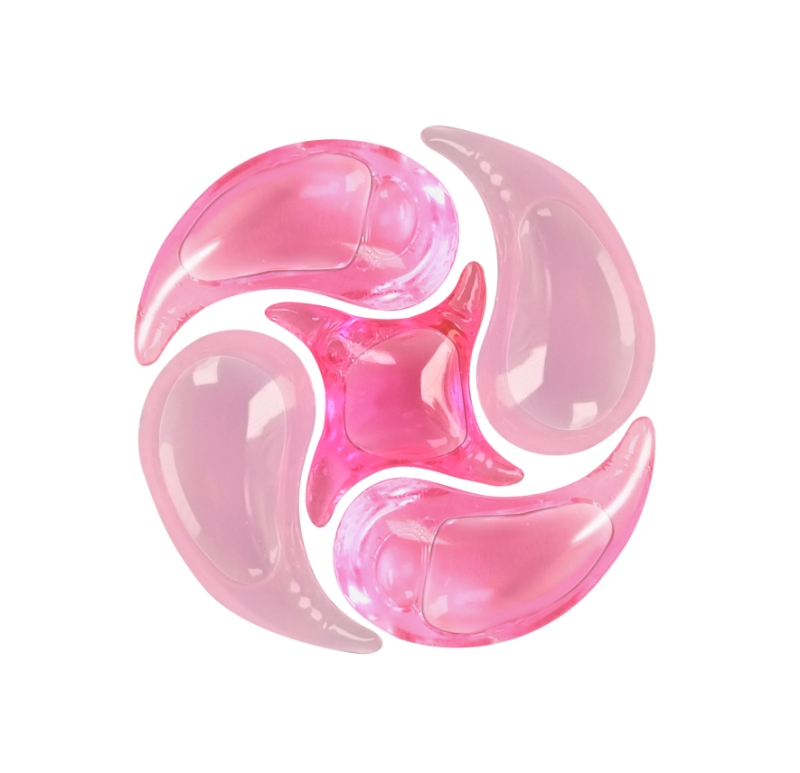
A multi-chamber laundry pod can look identical to a cheaper alternative while behaving completely differently inside a real washing machine. Instead of starting with the ingredient list, look at the chamber geometry: the shape, fill level, and separation between compartments determine whether enzymes, surfactants, and brighteners stay stable and release in the right order. Then move to seam strength and pinholes. Even microscopic pinholes or weak seals allow moisture to migrate between chambers or cause premature drying, which ruins the pod before it ever reaches a consumer. Cold-water dissolution is another non-negotiable. Many suppliers pass warm-water tests but leave undissolved film or clumps in cold cycles. Ask for third-party dissolution data under cold, short, and low-agitation conditions, not just a lab demo. Water hardness changes how surfactants perform, so a reliable supplier should be willing to run a trial batch using your regional water hardness profile rather than shipping a generic formula.
Custom fragrance loads often become an excuse for long lead times, but a competent partner can adjust fragrance levels or introduce a new scent within a reasonable window if their compounding process is flexible. You still need to confirm that the fragrance is chemically stable inside the pod film and does not migrate into the water-soluble membrane. Packaging deserves equal scrutiny. If the pouch or tub cannot handle high humidity during warehousing or shipping, the pods may soften, stick together, or develop pinholes before first use. Request humidity chamber test results and inspect actual packaging samples after conditioning. The best supplier does not sell you just a pod; they show how film, geometry, fragrance, and packaging work together under your specific wash conditions. Avoid vendors that emphasize visual appearance but cannot provide seam inspection reports or cold-water dissolution curves.
Contact Us
Contact Person: Zhao Yanlong
Email: [email protected]
Tel/WhatsApp: 8615832007309
Website: https://www.gzlanjieya.com